Catalogue No.: GP29
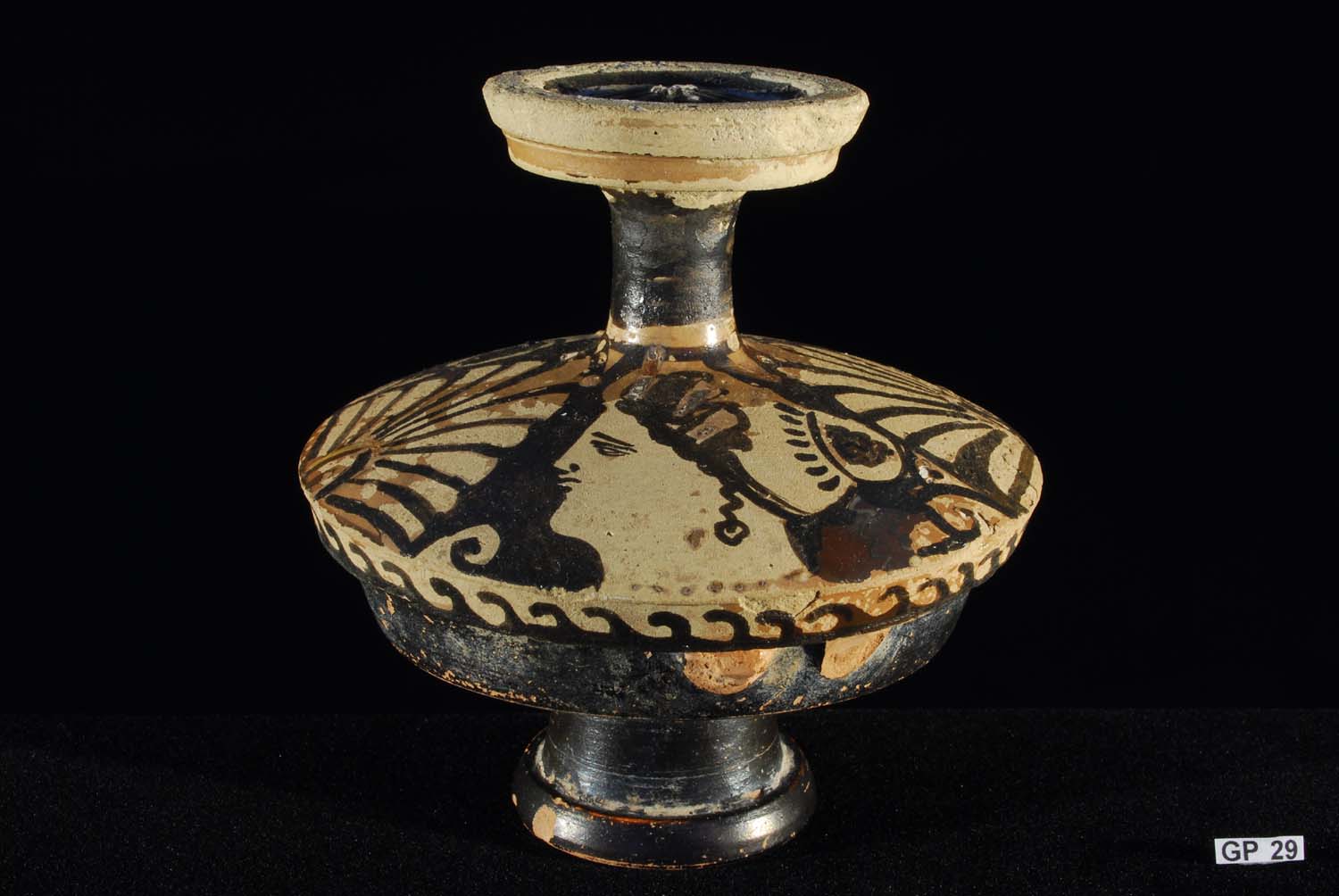
Catalogue No.: GP29
Title: Apulian Miniature Lekanos
Date: 4th Century BC
Culture: Greek
Origin: Apulia, Southern Italy
Material: Fine pink clay with all-over black glaze
Dimensions: 98 mm (Height) x 93 mm (Diameter)
Description
This exquisite Apulian Miniature Lekanos from the 4th century BC exemplifies the pinnacle of Hellenistic pottery craftsmanship from Southern Italy. This vessel, traditionally utilized for storing cosmetics or small precious items, showcases a profound mastery of ceramic artistry, highlighted by its intricate figural decorations and luxurious finishing.
Crafted from fine pink clay, the lekanos is distinguished by a meticulous application of slip coating followed by a lustrous black glaze. This deep, reflective surface superbly contrasts with the vibrant white and golden yellow details of the decorative elements. The lid features finely painted profiles of two “ladies of fashion,” each elegantly depicted with elaborate hairstyles and delicate facial features, embodying the era’s beauty ideals. These portraits are framed by stylized palmettes—a recurring motif in Greek art symbolizing fertility and beauty—enhancing the thematic and visual allure of the vessel.
The black glaze not only enriches the aesthetic appeal but also serves a functional purpose by accentuating the fine details of the painted figures, making them appear illuminated against the dark background. This interplay of contrast vividly highlights the artisans’ skill in drawing attention to the nuanced artistry of the depictions.
Additionally, the circular knob on the lid, adorned with a palmette motif, not only complements the overall design but also echoes the artistic themes observed throughout the piece, seamlessly integrating functional and decorative elements. The sophisticated design sensibilities of Apulian potters are evident in their ability to merge practical utility with substantial decorative appeal, a hallmark of their ceramic tradition.
Historically, vessels like this lekanos served roles beyond mere domestic utilities; they were integral to ritual and social activities, often used in ceremonial settings or as prestigious gifts. The elaborate decoration of this particular piece suggests it might have been designated for significant social or ritualistic purposes within an affluent household.
This lekanos is a testament to the cultural vibrancy of Apulia during the Hellenistic period, showcasing how local artisans adapted classical Greek ceramic traditions to forge a distinctive artistic expression that was both influenced by and distinct from the styles of mainland Greece. The piece not only reflects the technological advancements of the time but also encapsulates the rich tapestry of cultural and artistic innovation prevalent in this era.
Cultural Relevance
This lekanos is a testament to the cultural and aesthetic values of its time, reflecting the social and ritualistic use of such vessels in both daily life and ceremonial contexts. The detailed artistry indicates a society deeply engaged with beauty and craftsmanship, utilizing such objects in everyday life and possibly in gift-giving or ceremonial practices.
Provenance and Legality Documentation
Provenance History
This Apulian Miniature Lekanos is crafted in Apulia’s renowned ceramic centers, famed for their advanced pottery techniques during the Hellenistic period. Influenced by both local traditions and the broader Greek artistic movement, Apulian artifacts like this lekanos were integral to the vibrant trade networks of the era, finding their way across the Mediterranean. This piece’s journey is well-documented in Victor M. Pracas’s records, underscoring its historical path from creation to its current preservation.
Legal Documentation
The lekanos has been thoroughly authenticated and verified for legal ownership and potential exportation, in line with all prevailing cultural heritage laws. Its provenance and legality have been rigorously affirmed through expert evaluations, detailed in the documentation provided by Victor M. Pracas. This includes specific references to authentication processes conducted by noted experts such as Giovanni Gervasoni, ensuring the lekanos’s authenticity and legal compliance for both collection and exhibition purposes.
In drafting this section, care has been taken to align with the detailed provenance and legal statuses outlined in the attached Victor M. Pracas documentation, ensuring the lekanos’s historical integrity and legal clarity for future exhibitions and academic scrutiny.
Investment Consideration
This Apulian Miniature Lekanos is a notable investment opportunity, appealing to both collectors and cultural institutions. Its rich historical significance, coupled with superior artistic craftsmanship and excellent state of preservation, underscores its intrinsic value. Supported by comprehensive documentation and expert authentications, including those by Victor M. Pracas and Giovanni Gervasoni, this artifact holds great promise for appreciating in value, making it a prudent addition to any discerning collection.
Exhibition
The lekanos is displayed in our museum’s collection, featured in exhibitions on Ancient Greek and Italic pottery, highlighting its role in ancient societal practices and its artistic significance.
Educational Value
The lekanos serves as an important educational tool, offering insights into ancient Apulian pottery techniques and the socio-cultural contexts of decorative arts in ancient Greece. It provides a tangible connection to the past, enriching academic discussions and public knowledge of ancient artistic and social practices.
References
The entry is supported by scholarly research on Apulian pottery, exploring the historical context, techniques, and cultural significance of such artifacts. These studies enhance our understanding of the lekanos’s place within the broader narrative of ancient art and its enduring legacy.