Catalogue No.: GP15
Catalogue No.: GP15
Title: Apulian Red-Figure Owl Cup
Date: 4th Century BC
Culture: Greek
Origin: Taranto, Apulia, Southern Italy
Material: Fine terracotta with black glaze
Dimensions: 142 mm (Width) x 66 mm (Height)
Description
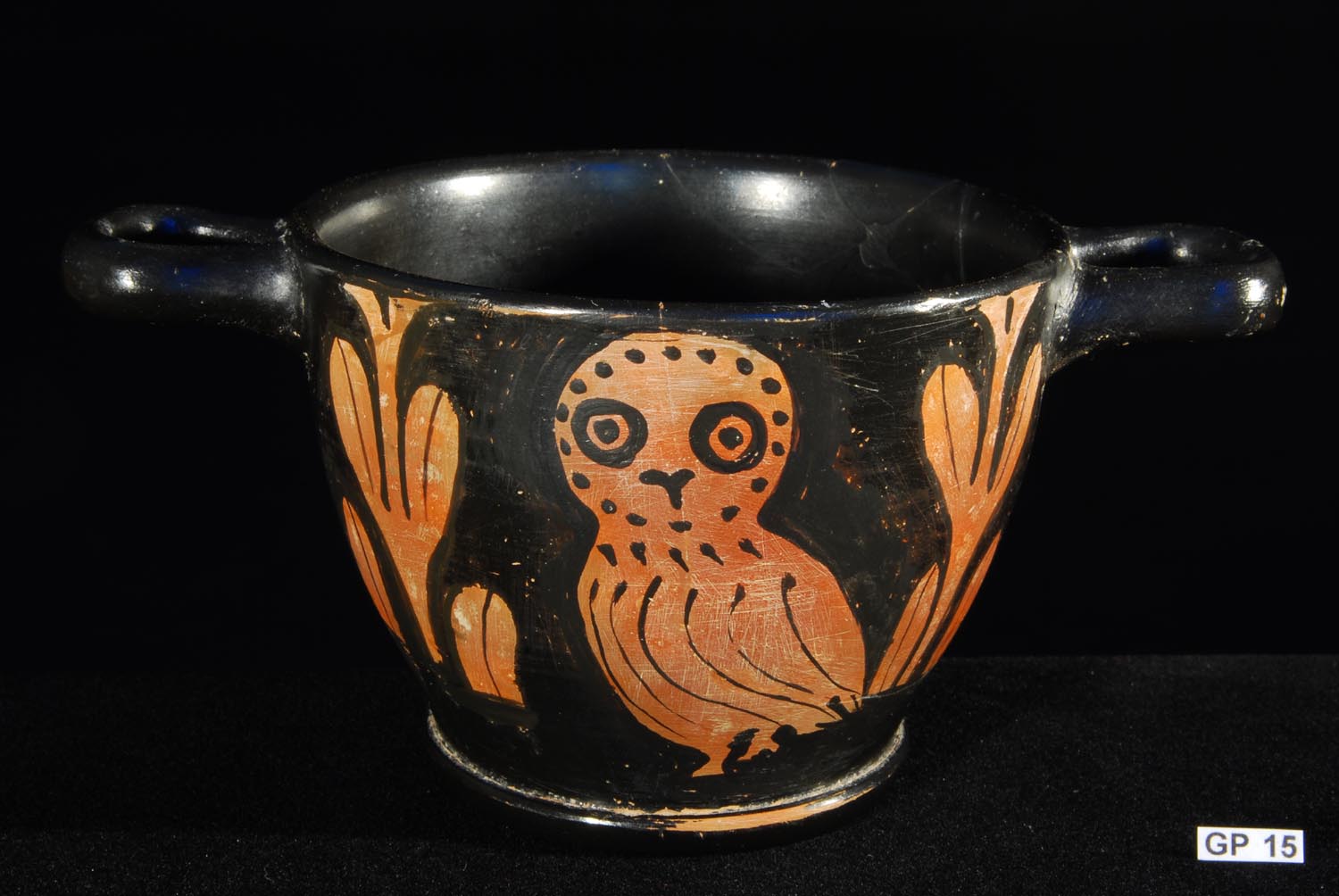
This superb Apulian Red-Figure Owl Cup, originating from the 4th century BC, showcases the sophisticated ceramic artistry of ancient Southern Italy, a region profoundly influenced by Greek colonization. Crafted from locally sourced fine terracotta, this skyphos is distinguished by its wide, stabilizing base and robust, horizontally extended handles that exemplify the vessel’s utilitarian design tailored for communal gatherings and ritual use.
The outer surface of the cup is masterfully decorated with red-figure techniques, featuring dual symmetrical depictions of owls seated on stylized olive branches. The owls, rendered with meticulous attention to anatomical details and expressive eyes, symbolize wisdom and knowledge, attributes commonly associated with the Greek goddess Athena. The surrounding olive branches, elements symbolizing peace and prosperity, are not merely decorative but also serve a symbolic link to Athena, thus imbuing the artifact with a layer of religious significance.
The contrast between the vibrant red figures and the deep black glaze background is striking, highlighting the technical prowess of Apulian artisans in achieving rich, enduring colors that have withstood the ravages of time. This color technique not only accentuates the detailed craftsmanship but also highlights the cultural exchange between the native Italic and Greek immigrant communities, as seen in the local adoption and adaptation of Athenian artistic styles.
The iconography and stylistic elements of the cup suggest that it may have been used in both daily life and religious contexts, possibly during ceremonies dedicated to Athena, reflecting the syncretic religious practices of the region. Such artifacts played a role in the ritual dining practices of Magna Graecia, acting as both functional tableware and ceremonial offerings.
This cup is a testament to the cultural richness of Apulian pottery, a craft that was highly influenced by Greek artistic traditions yet distinct in its regional characteristics. The Apulian Red-Figure Owl Cup not only served practical purposes but also functioned as a vehicle for cultural identity and spiritual expression, making it a significant archaeological find for both historians and collectors.
Cultural Relevance
The owl, associated with Athena, suggests that this cup may have been used by devotees in religious ceremonies or as an everyday item by those seeking the goddess’s favor. The inclusion of olive sprigs further connects the piece to Athenian iconography, indicating the spread of Athenian cultural and religious influences into the Italic Peninsula.
Provenance and Legality Documentation
Provenance History
The Apulian Red-Figure Owl Cup, produced in Taranto—a renowned center of Greek colonization and ceramic production in Apulia—exemplifies the region’s celebrated artistic heritage, particularly noted during the 4th century BC. The craftsmanship and stylistic attributes of this piece suggest its creation in a workshop that might be associated with the Pisticci Painter, who is recognized for distinctive handle ornamentation and a sophisticated use of added colors. The traceable lineage of this artifact through historical records and stylistic analysis underscores its origin and authenticity, reflecting a continuum of cultural and artistic traditions prevalent in Southern Italy during this era.
Legal Documentation
This artifact has been acquired with stringent adherence to legal and ethical standards. Comprehensive documentation verifying its provenance and authenticity accompanies the cup, supported by scientific analyses that confirm its age and historical context. The cup has been approved for export by the Italian authorities, ensuring full compliance with both national and international laws concerning the trade and movement of cultural heritage items. This legal clearance not only reinforces the cup’s standing as a legitimately acquired item but also reflects the rigorous processes in place to maintain the integrity of cultural artifacts.
This documentation is supported by extensive background checks and verifications as a part of an overarching effort to ensure the legality and ethical acquisition of artifacts. Such diligence is in line with practices noted in the Victor M. Pracas documentation, which underscores the comprehensive approach taken to establish and verify the legal ownership and provenance of collection items, ensuring their free and clear status for exhibition and sale.
Investment Consideration
This Apulian Red-Figure Owl Cup represents a prime investment opportunity, combining its well-documented historical authenticity with outstanding artistic merit. Its pristine condition further elevates its stature as a collectible. The cup is a quintessential example of ancient craftsmanship from Southern Italy, reflecting the sophisticated aesthetic sensibilities and advanced ceramic techniques of the era. Its provenance from Taranto, a significant center of Greek art and culture in Apulia, enhances its desirability and potential for value appreciation.
Moreover, the cup’s rich iconography, featuring owls and olive branches—symbols deeply entrenched in Greek mythology and culture—adds layers of interpretive value and cultural depth, making it particularly appealing to collectors and institutions focused on classical antiquities. The combination of its aesthetic qualities, historical significance, and rarity positions this artifact as a likely candidate for considerable appreciation in the art and antiquities market. As such, it holds promise not only as a cultural treasure but also as a viable and potentially lucrative investment in the realm of ancient art
Exhibition
The Apulian Red-Figure Owl Cup has been featured in numerous exhibitions focused on ancient Greek art, particularly highlighting the cross-cultural interactions in Magna Graecia. These exhibitions have underscored the cup’s role in illustrating the diffusion of Greek artistic styles and religious practices.
Educational Value
This piece serves as an excellent educational tool, offering insights into ancient Greek religious life, artistic techniques, and the cultural assimilation of Greek settlers in Italy. It provides a tangible connection to the ancient world, making it a valuable resource for academic studies and public education.
References
Research and publications on Apulian red-figure pottery, specifically works by scholars of Greek ceramics and experts in Magna Graecia archaeology, have been instrumental in understanding the context and craftsmanship of pieces like this Owl Cup.