Catalogue No.: GP27
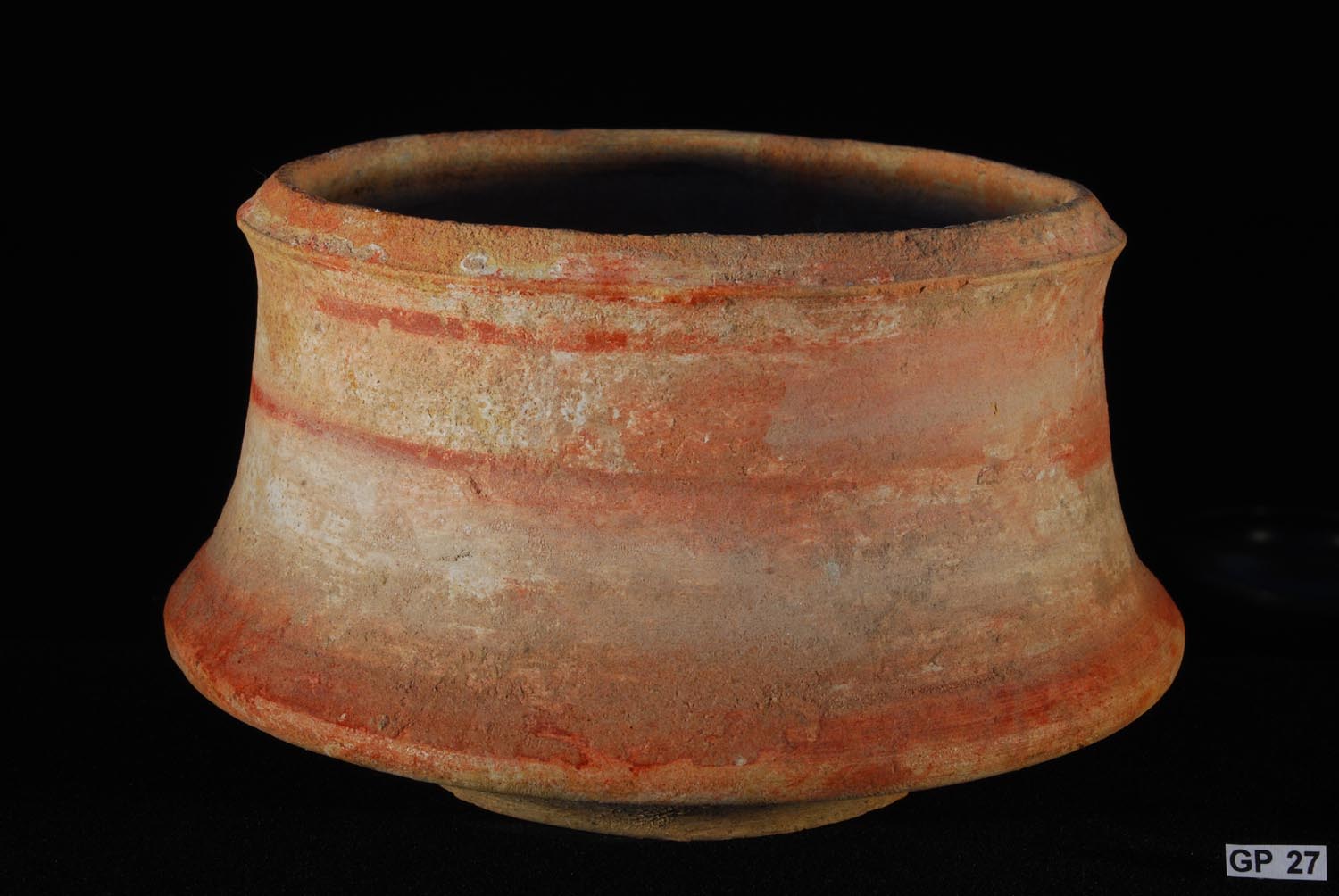
Catalogue No.: GP27
Title: Sicilian Pyxis
Date: 6th – 5th Century BC
Culture: Greek
Origin: Gela, Sicily
Material: Fine buff clay with white clay wash and red decoration
Dimensions: 138 mm (Diameter) x 75 mm (Height)
Description
This remarkable Sicilian Pyxis, originating from the Greek colony of Gela during the 6th to 5th centuries BC, stands as a symbol of the sophisticated ceramic craftsmanship of the period. Crafted from fine buff clay, the vessel is celebrated for its smooth, durable surface which served as a perfect canvas for intricate decorative motifs.
The pyxis’s cylindrical form, typical of classical antiquity, was primarily used for storing personal items like cosmetics and jewelry, reflecting its role in the daily lives of its owners. This piece is distinctively adorned with a striking white clay wash, providing a vivid contrast to the red pigmented vines that encircle the body. These vines are not merely decorative but are laden with symbolic significance, often associated with Dionysus—god of wine, fertility, and ritual ecstasy—suggesting its use in both daily and ritualistic contexts.
The craftsmanship of this pyxis is exemplary of Gela’s ceramic artistry. The precise and controlled application of the red pigment, executed in a continuous loop, showcases the potter’s skill in creating a dynamic visual narrative that remains vibrant over millennia. This method indicates not only an advanced understanding of ceramic techniques but also an aesthetic sensibility influenced by both local and broader Hellenic traditions. Gela’s strategic position as a cultural hub facilitated the melding of artistic styles, making its pottery highly prized in the Mediterranean.
Moreover, the integration of color and form in this vessel highlights the technological innovations of the time. The use of a kaolin clay-based white wash suggests a sophisticated knowledge of ceramic materials, allowing for a durable and lasting coloration that has withstood the tests of time.
This pyxis is a testament to the blend of functionality and aesthetic beauty, encapsulating the essence of Gela’s rich artistic heritage. Its enduring beauty and historical significance make it not only a valuable piece for collectors but also a profound example of ancient innovation and cultural exchange. This artifact beautifully illustrates how Gela adapted and excelled within the established traditions of Greek ceramic art, making it an exceptional piece for both personal appreciation and academic study.
Cultural Relevance
The Sicilian Pyxis is a direct link to the ancient past, offering modern viewers a tangible connection to the cultural and religious practices of ancient Sicily. Its decorative motifs and materials provide insights into the trade and cultural exchanges that occurred in the Mediterranean region, underscoring the interconnectedness of ancient societies. This pyxis not only adorned ancient homes but also participated in the rituals that defined the religious and cultural landscape of its time, making it an invaluable piece for understanding the complexity of ancient Greek life in Sicily.
Provenance and Legality Documentation
Provenance History
The Sicilian Pyxis, originating from the ancient Greek colony of Gela in Sicily, boasts a documented lineage tracing back to significant historical collections. Its journey through the hands of esteemed collectors underscores its legacy of appreciation and meticulous preservation. Key historical sources include acquisitions from the collections of notable entities such as the Paul Freeland Collection, R.J. Upland Esq., and the Lanzoni Estate, among others. These collections have been integral in maintaining the artifact’s pristine condition and historical integrity. This pyxis not only serves as a testament to the rich cultural exchange and ceramic production of ancient Gela but also reflects the depth of its historical and cultural significance through its provenance.
Legal Documentation
The Sicilian Pyxis has undergone rigorous authentication processes, substantiated by certificates of authenticity and thorough evaluations by recognized experts, ensuring its legality for ownership and exportation. With documentation corroborated by the Victor M. Pracas collection’s extensive verification efforts, this artifact complies fully with international cultural heritage laws. The absence of any legal constraints on its disposal or export is further verified by the detailed legal scrutiny it has undergone, facilitated by the comprehensive cataloging and legal review detailed in Victor M. Pracas’s documentation. This meticulous process confirms the Sicilian Pyxis as a legally vetted artifact, cleared for acquisition and display by collectors and institutions globally, underscoring its unblemished legal standing and enriching its historical narrative.
Investment Consideration
The Sicilian Pyxis stands as a prime investment opportunity due to its rich historical significance and remarkable state of preservation. As an artifact from Gela, a key Greek colony in Sicily, it embodies the intersection of cultural and artistic exchanges in the Mediterranean. This pyxis not only exemplifies the advanced ceramic techniques of the era but also carries with it deep cultural narratives that are pivotal for understanding Mediterranean archaeology and ancient Greek art.
For collectors and institutions dedicated to the preservation and study of Mediterranean heritage, this pyxis represents a strategic addition to any collection, offering both aesthetic beauty and scholarly value. Its excellent condition enhances its appeal, ensuring that it retains both its visual and historical integrity. The piece’s ability to illustrate the technological and artistic advancements of its time makes it a particularly attractive asset for educational purposes, exhibitions, and private collections.
Moreover, the increasing rarity of well-preserved and legally vetted artifacts like this pyxis amplifies its investment potential. As global appreciation for ancient artifacts continues to grow, coupled with stricter regulations on the trade of such pieces, the value of legitimately acquired and authenticated items like this is likely to appreciate over time. Investing in the Sicilian Pyxis is not only a contribution to the preservation of global cultural heritage but also a potentially prudent financial decision that could yield significant returns as market demand for rare and significant antiquities persists.
Exhibition
The Sicilian Pyxis is a highlight of our permanent exhibition on Greek ceramics. This display showcases the diverse regional ceramic production techniques and the rich intercultural exchanges within Sicilian Greek colonies, illustrating how these influences shaped the area’s artistic outputs
Educational Value
The pyxis serves as an educational tool, providing insights into ancient Gela’s societal norms, artistic expressions, and the everyday use of artifacts in personal and communal settings. It facilitates a deeper understanding of ancient Greek life and the interconnections of the Mediterranean cultures.
References
Research and literature on Sicilian pottery and its historical context have been extensively utilized to prepare this entry. Studies focusing on ceramic materials, techniques, and the cultural impact of Gela’s artifacts enrich the narrative and understanding of this pyxis’s historical background and value.