Catalogue No.: GP67
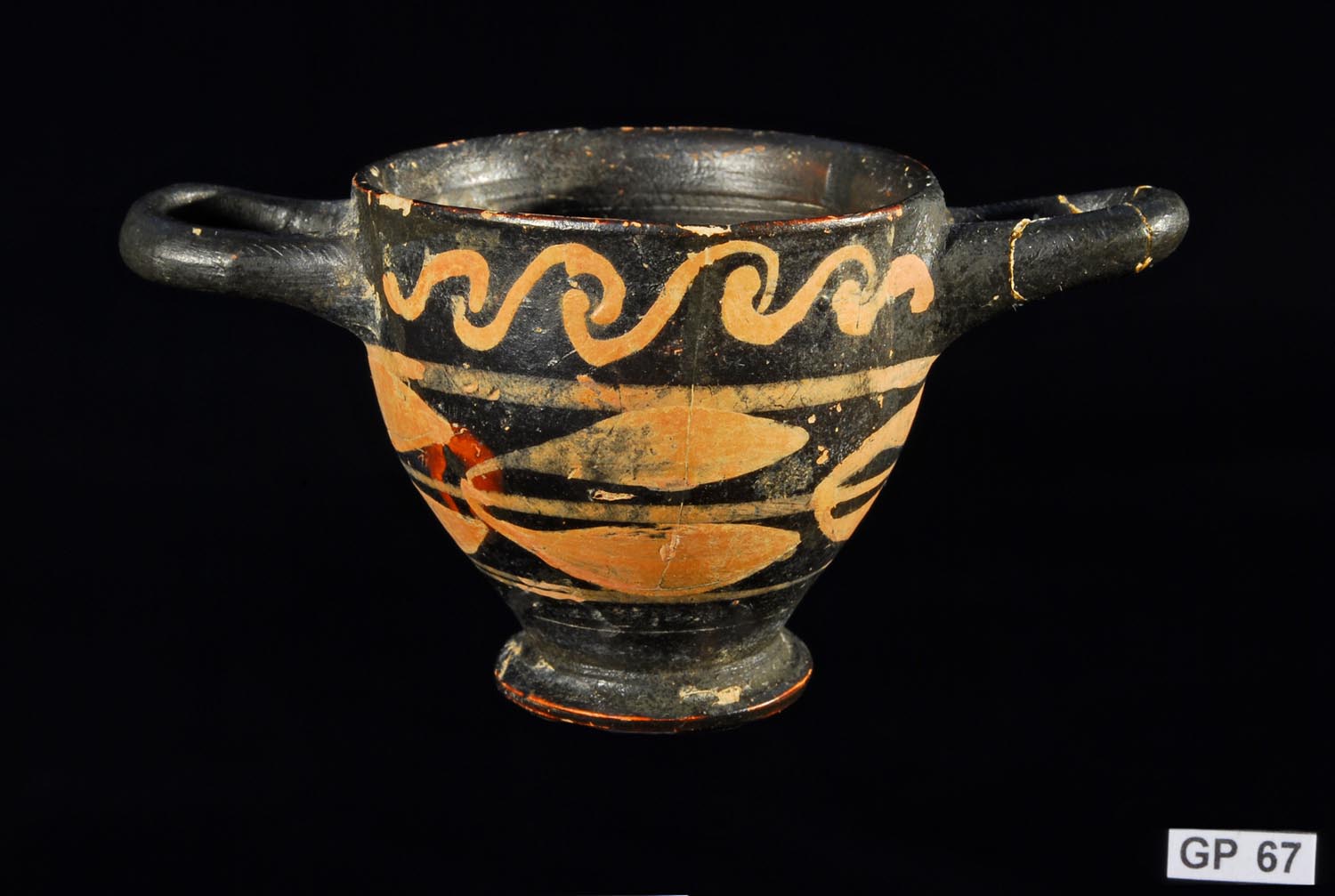
Catalogue No.: GP67
Title: Greek Xenon-ware Miniature Kylix
Date: 4th century BC
Culture: Greek
Origin: Southern Italy
Material: Ceramic, metallic black glaze with orange pigment decoration
Dimensions: 80 mm (Width) x 40 mm (Height)
Description
This exquisite Greek Xenon-ware kylix from the 4th century BC exemplifies the artistic sophistication of ancient Southern Italian ceramics. Its robust form is complemented by a metallic black glaze, which provides a stark, striking contrast to the vibrant orange pigments meticulously applied to its surface. These pigments trace sinuous, wave-like patterns across the body, embodying the fluid dynamics typical of the era’s decorative aesthetics.
The kylix’s structure is marked by a broad, shallow bowl, ideally suited for the communal drinking rituals of ancient symposia, enhancing its functionality as a social artifact. Flanking the bowl are twin handles, elegantly looped and symmetrically positioned, which not only facilitate handling but also contribute to the vessel’s balanced and harmonious design. These handles curve outward and then return to meet the body, creating a visual dialogue between form and function that is both pleasing and practical.
The decoration on the kylix does not merely serve an aesthetic purpose but also reflects the cultural and symbolic motifs prevalent in Greek society. The swirling patterns are reminiscent of the natural world, possibly evoking the swirling rivers and seas that were central to Greek mythology and life. Furthermore, the choice of orange against a dark background may symbolize the perpetual interplay between light and darkness, a theme deeply embedded in Greek philosophical and mythological thought.
This kylix is not just a ceremonial vessel; it is a testament to the cultural richness of its time. Its preservation and the finesse of its execution offer invaluable insights into the daily and ceremonial life of ancient Greeks, highlighting their profound appreciation for beauty, symmetry, and the deep integration of art into everyday life. This piece stands as a significant cultural relic, encapsulating the sophistication of ancient Greek craftsmanship and its enduring legacy in the panorama of classical antiquities
Cultural Relevance
The kylix is quintessentially emblematic of the ancient Greek world, particularly within the context of symposia—social gatherings centered around the sharing and enjoyment of wine. These events were integral to Greek society, serving as platforms for philosophical discourse and literary recitations, thereby reinforcing social bonds and communal identity. This specific kylix, with its intricate design and compact stature, likely transcended its utilitarian purpose to play a significant role in private and possibly sacred ceremonies, possibly acting as a votive offering in honor of Dionysus, the god of wine, fertility, and ecstasy.
In ancient Greece, the kylix was more than just a drinking vessel; it was a conduit for cultural expression and religious observance. The elaborate ornamentation and careful craftsmanship of this piece suggest it was highly valued, possibly reserved for special occasions or used by individuals of high status within the community. The Dionysian motifs underscore the association of the kylix with themes of regeneration, indulgence, and the celebration of life’s ephemeral pleasures.
Furthermore, the use of this kylix in both public and private rituals underscores its versatility and deep cultural significance. It symbolizes the harmonious blend of daily life with spiritual and celebratory practices, illustrating how the Greeks elevated routine acts to artistic and ceremonial heights. Thus, this kylix is not merely a relic of ancient craftsmanship but a vital artifact that offers insight into the complex tapestry of ancient Greek life, where art, culture, and religion were inextricably linked.
Provenance and Legality Documentation
Provenance History
This kylix is part of the esteemed Victor M. Pracas collection, which includes artifacts with well-documented histories of ownership and provenance. Acquired from various notable collections such as the Paul Freeland and R.J. Upland Esq. collections, this piece has a rich history that enhances its value and authenticity.
Legal Documentation
The legality of this kylix is well-established, with no constraints on its disposal or export. It comes with a certificate of authenticity and valuation cross-referenced to the Victor M. Pracas collection’s catalog, affirming its status as a legally acquired and authenticated artifact.
Investment Consideration
This kylix not only stands as a beacon of historical and artistic significance but also represents a substantial investment opportunity. Its rarity, coupled with its exceptional preservation, elevates its appeal to collectors and academic institutions alike, who value the tangible connection to ancient civilizations. As a piece of remarkable craftsmanship that has withstood the test of time, it is poised to accrue significant value, making it an attractive asset for those seeking to enrich their collections with unique and culturally significant artifacts.
Exhibition
Currently featured prominently within our museum’s collection, this kylix serves as a centerpiece that draws visitors into the rich tapestry of ancient Greek civilization. Its display is carefully curated to illuminate the sophisticated ceramic traditions of Greece, providing a window into the artistry and social customs of the era. This exhibition not only showcases the kylix’s aesthetic and historical value but also enhances the cultural experience of our visitors, allowing them to appreciate the depth and breadth of ancient Greek contributions to art and society.
Educational Value
This kylix is an indispensable educational tool that offers profound insights into the daily and ceremonial life of ancient Greece. By examining this artifact, students, scholars, and the general public gain a deeper understanding of the intricate craftsmanship involved in its creation and the societal roles such ceremonies played in ancient Greek culture. The kylix facilitates educational exploration into the rituals of communal drinking and celebration, which were central to Greek social structure and philosophical life. Its presence in academic settings enriches curricula and fosters a comprehensive appreciation of the complexities of Greek antiquities, bridging historical knowledge with practical
References
The authenticity and historical value of this kylix are supported by detailed research and documentation within the Victor M. Pracas collection. Scholarly references, including “Greek Ceramics: Art and Production” by Dr. Thea R. Smithe, provide further context for the significance of Xenon-ware in ancient ceramic art, enhancing our understanding of this artifact’s place within broader archaeological and cultural studies.