Catalogue No.: GP31
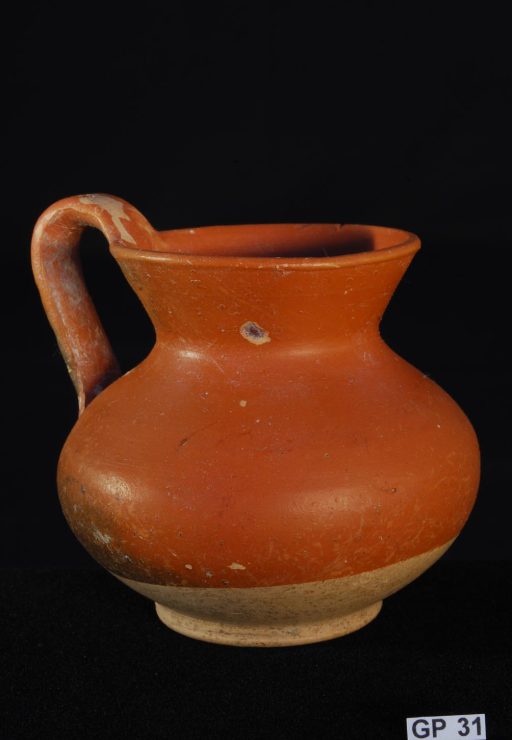
Catalogue No.: GP31
Title: Greek Brown-Glaze Olpe
Date: 4th Century BC
Culture: Greek
Origin: Greece
Material: Fine buff clay with coppery brown glaze
Dimensions: 75 mm (Height) x 72 mm (Diameter)
Description
This exquisitely crafted Greek Brown-Glaze Olpe from the 4th century BC exemplifies the sophisticated craftsmanship and aesthetic refinement characteristic of Hellenistic ceramic art. Standing at a modest height of 75 mm, the olpe’s diminutive form suggests it was intended for individual use, possibly serving wine or water during personal or small-scale ceremonial gatherings. Its classic Greek shape, featuring a wide, welcoming mouth and gracefully arced handle, facilitates ease of use and adds to its elegant profile.
The vessel is most notable for its rich, coppery brown glaze—an uncommon choice within the broader spectrum of Greek ceramics, which traditionally favored black and red hues. This unique coloration not only enhances the olpe’s visual appeal but also highlights the precise contours and symmetrical balance of its design. The unglazed base of the olpe provides a striking contrast, exposing the natural buff color of the clay and emphasizing the meticulous craftsmanship involved in its creation.
The application of the brown glaze involved a complex process, beginning with the careful preparation of the clay body and followed by the application of a slip. Upon firing, this slip transformed into the glossy, metallic finish observed today, a testament to the potters’ mastery over their materials and firing techniques. Such techniques required precise temperature control within the kiln to achieve the desired aesthetic effect and ensure the durability of the glaze.
In ancient Greek households, the olpe would have been both a practical tool and a decorative object, embodying the ideal of kalokagathia—where beauty and goodness are intertwined. Its presence likely enhanced the domestic environment, contributing to the convivial atmosphere that was central to Greek culture. Today, this olpe continues to charm and fascinate, offering a window into the daily life and artistic achievements of ancient Greece, making it a cherished item both for its historical significance and its timeless beauty.
Cultural Relevance
The olpe illustrates the advanced ceramic technologies and aesthetic sensibilities of ancient Greece. Its use and function reflect the societal and cultural practices of the time, where such vessels were central to daily life and communal rituals. The distinctive glaze and form demonstrate the regional variations in pottery and contribute to our understanding of trade and material culture in 4th century BC Greece.
Provenance and Legality Documentation
Provenance History
The Greek Brown-Glaze Olpe, originates from ancient Greece and is an exemplary artifact of the 4th century BC. This piece is part of the Victor M. Pracas Collection, which includes items sourced from various prestigious collections and family acquisitions over several decades. Notable sources include the Paul Freeland Collection, R.J. Upland Esq. Collection, and Lanzoni Estate Collection, among others. These pieces were accumulated through direct purchase and inheritance, reflecting a rich history of ownership and a deep appreciation for cultural artifacts.
Legal Documentation
The legality of this olpe has been rigorously verified, with comprehensive documentation supporting its authenticity and legal title. The Victor M. Pracas Collection has undergone extensive evaluation by experts, including Giovanni Gervasoni, who provided certificates of authenticity. This thorough vetting process ensures that the olpe complies with all current cultural heritage laws, affirming its legality for ownership, exhibition, and potential export. This legal assurance enhances the artifact’s standing as a valuable and ethically acquired item within museum and private collections.
Investment Consideration
This Greek Brown-Glaze Olpe is a prime investment opportunity due to its verified authenticity, significant historical value, and the distinctive rarity of its coppery brown glaze. The vessel’s robust documentation and impeccable preservation enhance its appeal, suggesting strong potential for value appreciation. Ideal for both private collectors and institutional investors, this artifact stands out as a strategic acquisition in the market for ancient art, promising both cultural enrichment and financial return.
Exhibition
The olpe is a featured item in our museum’s collection, displayed in exhibitions that highlight ancient Greek daily life and ceremonial practices, underscoring the integration of functionality and aesthetic beauty in everyday objects.
Educational Value
As an educational artifact, this olpe helps to illustrate the advanced ceramic techniques of ancient Greece, including clay preparation, vessel forming, glazing, and firing. It serves as a practical example of ancient Greek innovation in pottery making, demonstrating how aesthetics were merged with functionality.
References
The catalog entry incorporates extensive scholarly research on Greek pottery, particularly focusing on the technological and artistic developments of the Hellenistic period. Studies on glaze technology and ceramic forms provide a deeper understanding of the olpe’s cultural and historical significance.