Catalogue No.: GP35
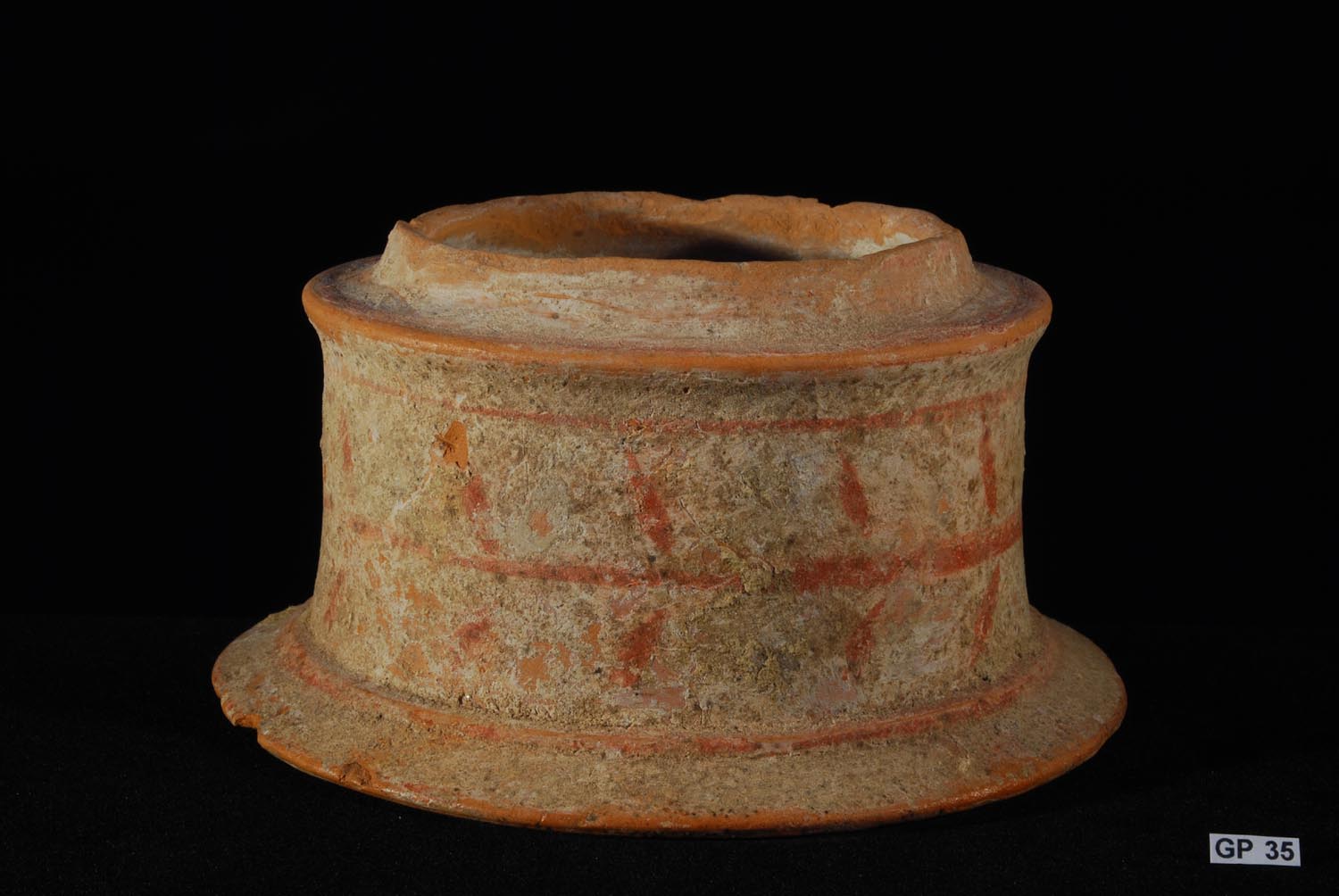
Catalogue No.: GP35
Title: Sicilian Pyxis
Date: 6th – 5th Century BC
Culture: Greek
Origin: Gela, Sicily
Material: Fine buff clay with white clay wash and red banded pigment decoration
Dimensions: 130 mm (Diameter) x 72 mm (Height)
Description
This exquisite Sicilian Pyxis, originating from the 6th to 5th century BC, showcases the advanced ceramic artistry from Gela, a renowned archaeological site in Sicily known for its rich contributions to ancient craftsmanship. Fashioned from fine buff clay, the pyxis exhibits a smooth texture and robustness, making it an excellent canvas for the artistically applied white clay wash and vivid red banded pigment decoration.
The design of the pyxis is characterized by its horizontal bands, which encircle the vessel in a seamless continuity. Each band is meticulously filled with intricate geometric patterns and symbolic motifs, which are not only decorative but deeply emblematic of the religious and cultural ethos of ancient Sicily. These decorations likely served to denote the pyxis’s use in ritualistic contexts or as a treasured household item, reflecting the societal status and spiritual beliefs of its owner.
The colors chosen—striking red against a serene white background—are indicative of the typical color palette used in Sicilian pottery of this era, chosen perhaps for their symbolic meanings as well as their visual impact. The red pigment, often associated with life force and vitality in ancient symbolism, complements the ceremonial use of the pyxis, possibly in rites related to fertility and prosperity.
This pyxis not only embodies the aesthetic preferences of the time but also reflects the technological advancements in ceramic production during the Hellenistic period. The precision in the pigment application and the preservation of the clay’s texture highlight the potters’ skilled manipulation of local materials and their deep understanding of ceramic firing techniques, which were crucial for achieving such durability and color vibrancy.
Cultural Relevance
The Sicilian Pyxis is a testament to the cultural exchange facilitated by Sicily’s pivotal position in the Mediterranean. It reflects the syncretism of local traditions and broader Hellenistic influences, illustrating how regional artistic expressions were integrated into the everyday lives and spiritual practices of the Sicilian populace.
This pyxis is not merely a utilitarian vessel; it is a piece of art that offers insights into the daily and religious practices of ancient Sicily, making it a crucial piece for both historical and cultural studies. Its survival through millennia underscores its significance in the annals of Mediterranean archaeology, offering a tangible connection to the past for modern scholars and enthusiasts alike.
Provenance and Legality Documentation
Provenance History
This artifact was legally acquired from established collections, with a well-documented ownership history that traces back to its excavation in Gela. It has been part of the Victor M. Pracas Collection, noted for its comprehensive assemblage of Mediterranean antiquities.
Legal Documentation
The pyxis has been thoroughly authenticated and verified, with all necessary legal documentation confirming its provenance and legal status for ownership and export. Independent assessments, including those by experts like Giovanni Gervasoni, affirm its authenticity and compliance with international cultural heritage laws.
Investment Consideration
This Sicilian Pyxis, crafted from the archaeological richness of Gela, represents an outstanding investment opportunity for collectors and institutions dedicated to ancient artifacts. Its historical significance, coupled with its exceptional condition and rarity, makes it a valuable piece of cultural heritage with considerable potential for appreciation in value. As a well-preserved artifact that embodies the artistic and cultural heritage of ancient Sicily, this pyxis enhances any collection it joins, promising not only to enrich a collection’s diversity but also to offer substantial returns as a financial investment. The meticulous craftsmanship and enduring materials highlight its lasting appeal and suggest it will continue to attract interest and command a premium in the antiquities market. This pyxis stands out as a potential cornerstone in any serious collection of Mediterranean artifacts, providing both cultural depth and a robust investment likely to accrue in value over time.
Exhibition
This Sicilian Pyxis is a highlight of our museum’s permanent collection, prominently featured in exhibitions focusing on ancient Greek ceramics. It showcases the exquisite craftsmanship and sophisticated ceramic production techniques of Gela, a notable center of artistic innovation in ancient Sicily. Through its display, the pyxis illustrates how Gela’s ceramic arts influenced and shaped Mediterranean cultural exchanges. This artifact not only draws attention to the technical prowess of ancient artisans but also serves as a testament to the widespread impact of Sicilian artistic traditions across the region.
Educational Value
This Sicilian Pyxis is an invaluable educational resource, offering profound insights into the technological and artistic prowess of ancient Sicilian ceramics. Its intricate design and construction techniques shed light on the advanced ceramic practices of the era, reflecting the sophisticated skills possessed by artisans of ancient Gela. By examining this pyxis, students and the general public can gain a deeper understanding of the societal norms and cultural dynamics that influenced everyday life in ancient Sicily. It serves as a critical tool for academic research and enriches public exhibitions, illustrating how historical artifacts can bridge the gap between past civilizations and modern understanding. Through this artifact, educators can effectively convey the complexities of ancient craftsmanship and cultural expression, making it an essential piece for both scholarly exploration and enhanced public appreciation of ancient Mediterranean history.
References
The catalog entry is supported by extensive research from archaeological studies and historical records of Sicilian art and culture, which provide a deeper understanding of the artifact’s significance within its historical context.