Catalogue No.: GP39
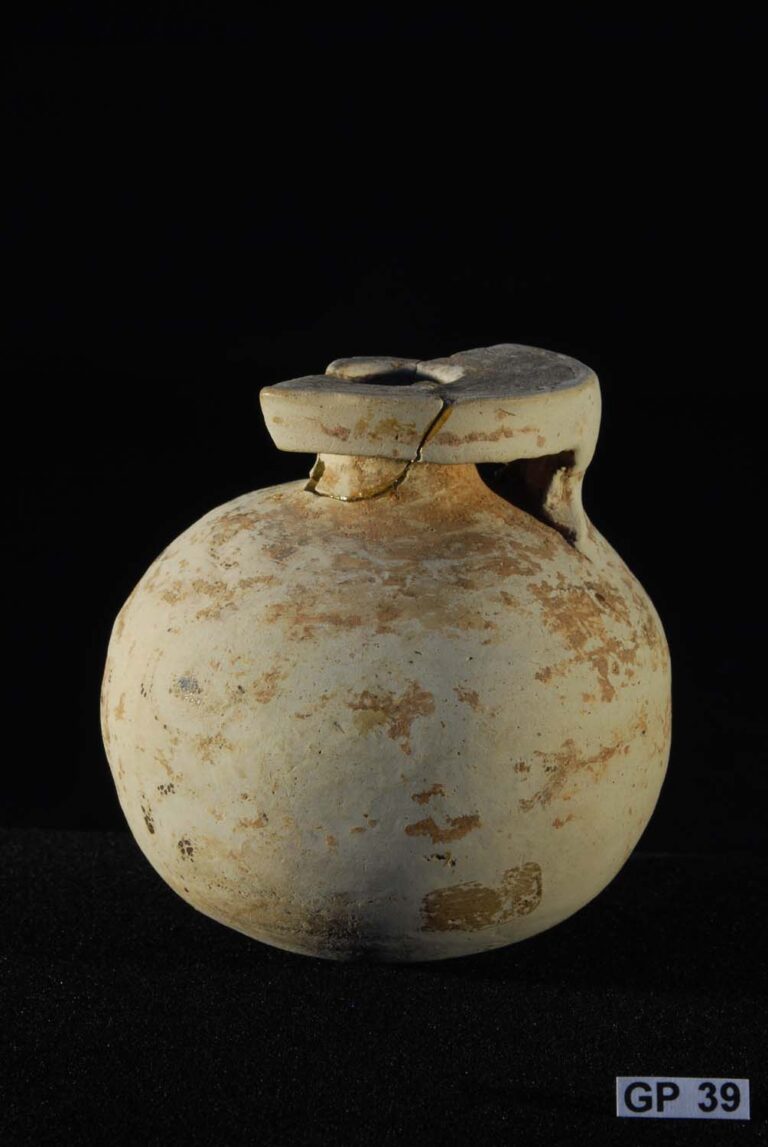
Catalogue No.: GP39
Title: Corinthian Round-Bodied Aryballos
Date: 600 BC
Culture: Greek
Origin: Corinth, Greece
Material: Pottery
Dimensions: 60 mm (Height) x 49 mm (Diameter)
Description
This Corinthian Round-Bodied Aryballos, crafted in approximately 600 BC, is a masterful exemplar of ceramic art from the Middle Corinthian period, renowned for its rich tradition in pottery. The vessel’s spherical form, coupled with a slim neck and expansive, flat rim, epitomizes the era’s precision and attention to both aesthetic and practical details. Made from finely-grained clay sourced from the regions around Corinth, this aryballos is finished with a high-quality slip that imparts a lustrous sheen, reflective of the sophisticated techniques employed by Greek artisans of the time.
The aryballos is ornately decorated with geometric and stylized floral motifs, which remain discernible despite the passage of centuries. The use of dark and light color contrasts—now subdued with age—highlights these intricate patterns, which were likely vibrant at the time of creation. These motifs were not merely decorative; they carried deep symbolic meanings, possibly representing the harmony and order of the cosmos, which were central themes in Greek philosophy and religion.
This vessel was designed for the storage and transport of precious oils and perfumes, essential in both the athletic and aristocratic aspects of Greek life. The narrow neck and precise rim facilitated controlled pouring, a necessary feature for the valuable liquids it contained. Moreover, the aryballos’s size and shape suggest it was intended for personal use, easy to carry in one hand or to be suspended from a belt or strap during travel.
In its original context, this aryballos would not only have been a utilitarian object but also a status symbol, indicative of the owner’s wealth and taste. The sophistication of its form and the complexity of its ornamentation reflect a society that valued beauty and utility in equal measure, where everyday objects were crafted with care and artistic intent.
Now, preserved as a museum piece, this aryballos offers a window into the ancient world, serving as a cultural artifact that conveys significant insights into Corinthian life, art, and spirituality around 600 BC. It stands as a testament to the high level of technological advancement and artistic achievement of its time, making it an invaluable piece for historical and educational purposes. Its presence in a collection not only enhances the aesthetic allure but also deepens the understanding of ancient Greek practices and their profound appreciation for the arts.
Cultural Relevance
The aryballos was a popular personal item in ancient Greece, used widely by athletes and aristocrats alike to store precious oils and perfumes. Its design and function reflect the sophisticated lifestyle and the high value placed on grooming and personal care during that era. Such vessels were often included in the grave goods of the deceased, indicating their importance as symbols of status and personal wealth.
Provenance and Legality Documentation
Provenance History
This Corinthian aryballos is part of the esteemed Victor M. Pracas Collection and boasts a transparent and well-documented provenance. Originally acquired through reputable channels, it has been a part of several distinguished collections, including the Freeland and Northumberland collections, among others. Over the decades, this artifact has been meticulously catalogued and listed in the professionally produced catalog of the Victor M. Pracas Collection, reflecting its well-traced lineage and the care taken in its preservation and documentation.
Legal Documentation
The legal standing of this aryballos is robust, with comprehensive documentation confirming its authenticity and legal ownership. It comes with a certificate of authenticity and has undergone thorough legal evaluations in Australia, affirming its compliance with all pertinent international laws regarding the trade of antiquities. This ensures that the aryballos can be lawfully acquired and displayed, providing assurance to potential acquiring institutions or countries of its legal provenance and the legitimacy of its transfer.
Investment Consideration
The Corinthian aryballos stands out as a premier investment due to its historical importance, exceptional preservation, and the scarcity of such well-maintained pottery from the Middle Corinthian period. This piece not only embodies substantial cultural and aesthetic value but also holds considerable market appeal due to these attributes. Its rarity and the craftsmanship it showcases make it a highly desirable addition for collectors and institutions alike, who seek to elevate their collections with artifacts of unique significance and proven provenance. Acquiring this aryballos offers an opportunity to own a piece of ancient history, promising enduring value and potential appreciation over time.
Exhibition
This aryballos is currently on display in our museum, where it contributes significantly to our collection of ancient Greek artifacts, providing insights into the cultural and historical context of Corinth during the 6th century BC.
Educational Value
The aryballos serves as an important educational tool, offering insights into ancient Greek daily life, trade, and personal habits. It facilitates learning about the historical uses of aromatic compounds and the social rituals of ancient societies, making it a valuable asset for academic research and public education.
References
Extensive scholarly research into Corinthian pottery, especially focused on its influence and utility within ancient Greek society, substantiates this catalog entry. These studies provide a comprehensive scholarly framework that deepens the understanding of the aryballos’ historical and cultural backdrop. By examining the production techniques, decorative styles, and the societal roles of such artifacts, the research underscores the significance of this aryballos not only as a functional object but also as a key cultural symbol during its era.