Catalogue No.: GP45
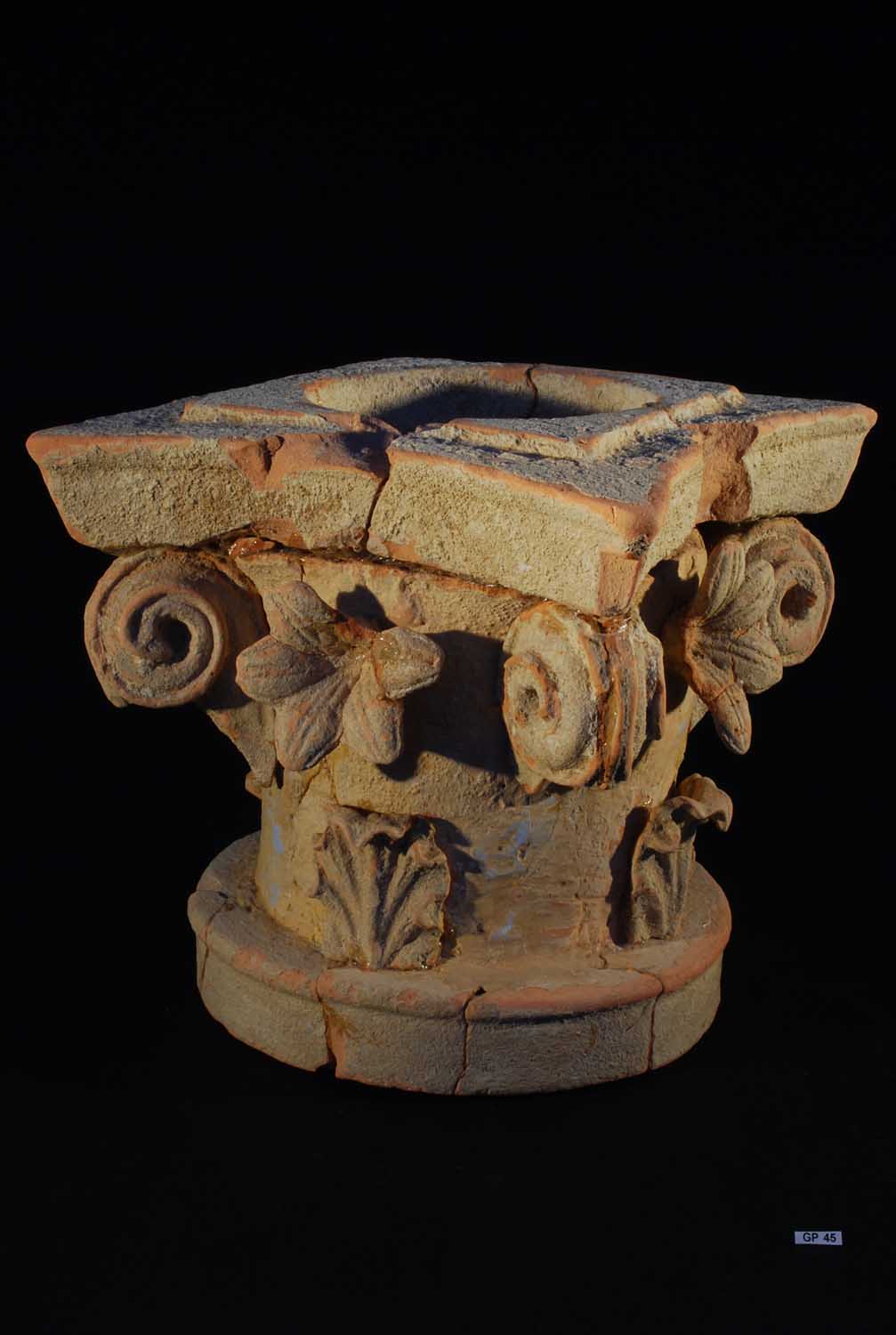
Catalogue No.: GP45
Title: Sicilian Centuripe Capitol
Date: 3rd Century BC
Culture: Greek
Origin: Centuripe, Eastern Sicily
Material: Terracotta with gesso and pigments (in tempera paints)
Dimensions: 320mm (Height) x 220mm (Width)
Description
This Sicilian Centuripe Capitol from the 3rd century BC is a masterful example of Hellenistic architectural ornamentation. Crafted in Centuripe, a town renowned for its vibrant cultural life near Mount Etna in Eastern Sicily, this artifact showcases the exquisite craftsmanship and sophisticated aesthetic sensibilities of the era.
Constructed from high-quality terracotta, the capitol displays a rich tapestry of decorative motifs. Intricate foliate scrolls and acanthus leaves are carved with exceptional precision, demonstrating the artisans’ meticulous attention to detail and mastery over their medium. These naturalistic elements are not merely ornamental but are emblematic of the era’s fascination with nature and its symbolic meanings, particularly fertility and abundance.
Further distinguishing this capitol is its vibrant use of gesso and tempera paints, which, though now subdued, once added a striking polychrome finish. This vivid coloring, typical of Hellenistic architectural elements, was intended not just to beautify but also to signify the structure’s importance within the social and religious spheres of its community.
This capitol likely played a crucial role atop a column or pilaster in a significant public or religious building, where it would have supported beams or architraves. The elaborate design and strategic use of color would have enhanced the architectural grandeur of its setting, reflecting the building’s prominence and the cultural aspirations of Hellenistic Sicily.
Preserved through careful conservation, this capitol allows for a deeper appreciation of the technological advancements and artistic achievements of its time. It serves as a vital link to understanding the architectural practices and aesthetic values of ancient Sicily, offering invaluable insights into the historical and cultural landscape of the Hellenistic period.
Cultural Relevance
The Sicilian Centuripe Capitol not only exemplifies the artistic prowess of the Hellenistic period but also acts as a cultural conduit between ancient and contemporary epochs. This artifact provides critical insights into the architectural norms prevalent in Sicily during this era, distinguished by an intriguing amalgamation of robust local traditions and the refined aesthetic principles typical of broader Greek metropolitan areas. This blend is evident in the capitol’s design, which incorporates both the ornate Greek penchant for detailed motifs and the Sicilian inclination towards robust, earthy materials.
Furthermore, the capitol embodies the social and religious ethos of its time, likely serving as a focal point within civic and sacred structures that were integral to community engagement and spiritual observances. The elaborate design of the capitol suggests it may have been situated in a locale conducive to significant public gatherings or religious rituals, underscoring its role in facilitating communal cohesion and religious devotion.
By examining such artifacts, historians and archaeologists are afforded a richer understanding of how architectural elements were not only structural components but also symbols of cultural identity and spiritual reverence. The Centuripe Capitol, therefore, is not merely an architectural fragment; it is a testament to the dynamic interplay of art, religion, and community life in ancient Sicily. Through its preservation and study, we continue to unravel how public spaces were crafted to reflect and amplify the social order and religious fervor of the time, providing a window into the sophisticated urban landscapes of ancient Hellenistic society.
Provenance and Legality Documentation
Provenance History
This capitol is part of the Victor M. Pracas collection, which includes items with well-documented histories of acquisition. It has been acquired from significant collections, such as the Paul Freeland Collection and the R.J. Upland Esq. Collection, ensuring a clear and reputable provenance.
Legal Documentation
The item has undergone thorough legal scrutiny, ensuring its compliance with international standards for the trade and exhibition of antiquities. Documentation includes certificates of authenticity and detailed evaluations by experts, confirming its legal ownership and provenance.
Investment Consideration
This Sicilian Centuripe Capitol offers a unique investment opportunity due to its remarkable rarity and the exquisite level of craftsmanship it exhibits. Originating from a significant historical context in the 3rd century BC, the capitol’s intricate detailing and the artistry involved are reflective of the advanced aesthetic skills of the Hellenistic period. Such characteristics underscore not only its artistic but also its monetary value.
The capitol’s provenance is well-documented and robust, tracing back to significant historical collections and validated by thorough authentication processes. This clear lineage enhances its desirability and ensures its appeal in the current market, where the provenance of antiquities significantly affects their value. Furthermore, the persistent fascination with and academic interest in Hellenistic art contribute to the capitol’s potential for value appreciation over time.
Given these attributes, the capitol stands out as a particularly appealing piece for both private collectors and institutional investors. Its historical significance, combined with its cultural and aesthetic value, makes it likely to not only retain but potentially increase in value, offering a tangible asset that holds both cultural heritage and investment potential.
Exhibition
The Sicilian Centuripe Capitol is a featured highlight within our museum’s ancient Mediterranean artifacts collection. Its presence significantly enhances the exhibition by providing a vivid illustration of Sicilian artistic and cultural evolution during the Hellenistic period. Displayed prominently, this capitol allows visitors to explore the intricate details and sophisticated craftsmanship of ancient Sicilian architecture, offering a deeper insight into the region’s rich historical narrative.
Educational Value
The Centuripe Capitol serves as a pivotal educational resource, enriching academic and public knowledge of Hellenistic architectural styles and decorative techniques. It offers profound insights into the complexities of ancient artistic expressions and architectural innovations. For students and scholars of ancient art and architecture, as well as those interested in the cultural history of Sicily, the capitol provides a tangible link to the past, facilitating a deeper understanding of the aesthetic and structural elements that characterized ancient societies. Its detailed motifs and craftsmanship also serve as excellent study subjects for courses on art history and archaeology, making it an invaluable tool for educational engagement and scholarly research.
References
Research on the Sicilian Centuripe Capitol is supported by detailed documentation within the Victor M. Pracas collection, which includes authenticated provenance from notable collections such as those of Paul Freeland and R.J. Upland Esq. Expert assessments provided by K.A. Hicks & Associates validate the authenticity and legal status of the artifact, ensuring its compliance with international standards for antiquities. Further scholarly research on Hellenistic architecture and Sicilian archaeology enriches our understanding of the artifact’s historical and cultural contexts.