Catalogue No.: GP48
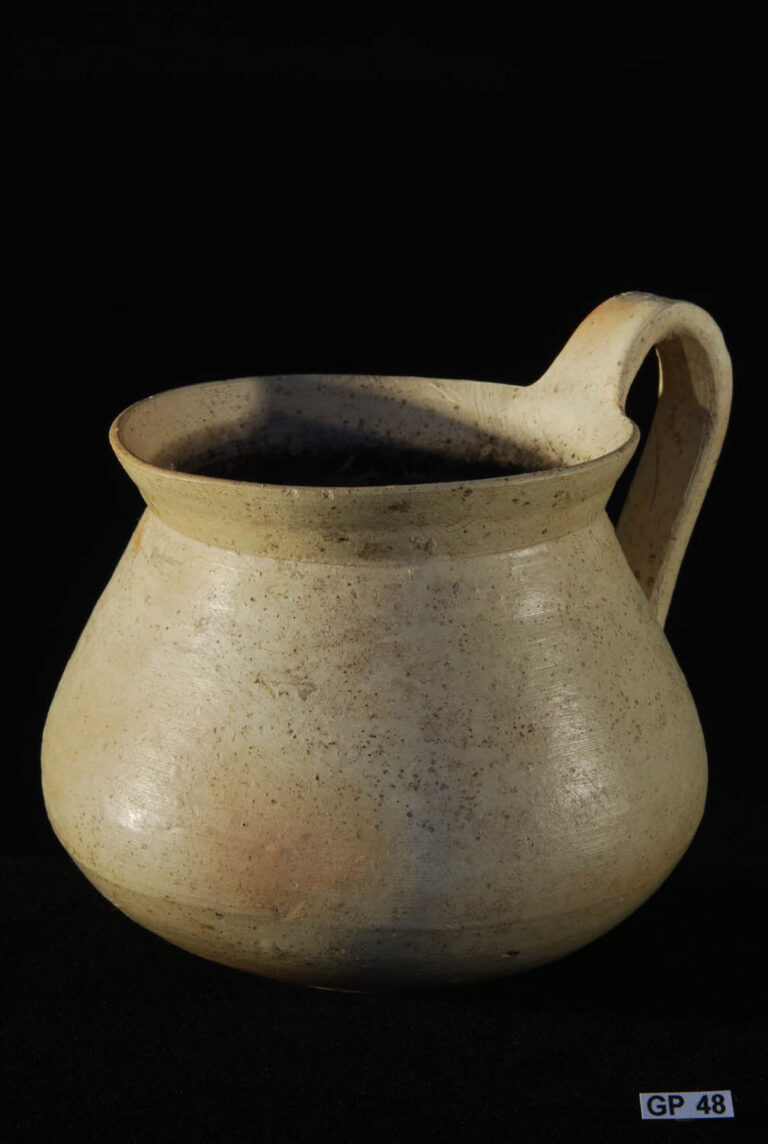
Catalogue No.: GP48
Title: Sicilian Pottery Olpe
Date: 5th-4th Century BC
Culture: Greek
Origin: Sicily
Material: Fine Terracotta
Dimensions: 94 mm (Height) x 94 mm (Width)
Description
This Sicilian Pottery Olpe from the 5th to 4th centuries BC exemplifies the elegance and functionality that define the fine style of Greek ceramic craftsmanship of the period. The vessel features a robust and rounded body, tapering gently towards a stable, flat base designed for solid placement on flat surfaces, which underscores its utilitarian design.
The Olpe is particularly noted for its everted lip, which not only enhances its aesthetic appeal but also serves a practical purpose by facilitating smoother pouring. Complementing this feature is a high, wide strap handle that arches gracefully from just below the lip to the shoulder, suggesting a design optimized for easy handling and stability during use, indicating its likely role in the serving of liquids.
The surface of this fine terracotta piece is adorned with a white wash finish, applied smoothly and uniformly, showcasing the potter’s expertise in finishing techniques. This white base is vividly contrasted by red burnished firing marks, which not only provide a decorative flourish but also showcase the unique reactions achievable through precise firing techniques, likely reflecting the artisan’s mastery over kiln temperatures and atmospheric conditions.
The decoration is simple, focusing on the contrast between the white wash and the red marks, which aligns with the vessel’s practical uses while still offering an understated elegance. Such simplicity suggests that the vessel was intended for everyday activities, such as the storage and serving of wine or water, yet its refined design allows it to stand out as a piece of decorative art as well.
This Olpe, originating from Sicily, captures the intersection of utility and artistic expression, making it a significant piece for both practical and aesthetic appreciation in ancient Greek society. Its minimalistic yet sophisticated decoration and functional form provide a deep insight into the daily life and ceramic technology of the time, offering a valuable piece for any collection that emphasizes cultural history and artistry.
Cultural Relevance
This Olpe vessel holds significant value within the sphere of Greek ceramic art, particularly noted for its role in storing and serving wine—a vital element in both daily life and ceremonial practices of ancient Greece. The piece exemplifies the widespread diffusion of Greek ceramic styles across the Mediterranean, showcasing how these influential designs reached and adapted within Sicily. Here, the integration of local artistic nuances with traditional Greek methods highlights the vibrant intercultural exchanges that characterized the classical period.
The vessel’s style and decoration not only reflect the aesthetic preferences of the time but also the technological advancements in pottery making that were shared among various Mediterranean cultures. Through this Olpe, we can observe how Sicilian artisans embraced and contributed to the evolution of Greek pottery, adding their distinct touch while maintaining the core characteristics that define the classical Greek artistic legacy. Thus, the piece serves as a tangible representation of the cultural synthesis that enriched the Mediterranean basin during antiquity, illustrating the dynamic interactions between differing civilizations of the era.
Provenance and Legality Documentation
Provenance History
This Olpe is a distinguished piece from the Victor Pracas Collection, which is celebrated for its rigorous and detailed provenance tracking. The artifact’s history is well-documented, with a lineage that includes pivotal acquisitions from esteemed collections such as those of Paul Freeland and R.J. Upland Esq. It has been maintained within the Pracas family for several decades, having entered their collection through strategic accession efforts that integrate notable historical pieces. The artifact’s provenance is further authenticated by expert evaluations, including assessments by the renowned Giovanni Gervasoni, who has verified its historical and cultural significance.
Legal Documentation
Legally, this Olpe is fully compliant with all applicable laws regarding the ownership and transfer of cultural artifacts. Victor M. Pracas’s thorough documentation ensures that it holds a clear legal title. The artifact has passed extensive authenticity checks and legal evaluations, confirming its status as a legitimately owned item eligible for international trade. Included within its legal dossier are a certificate of authenticity and comprehensive legal assessments that affirm its exportability without any restrictions. This robust legal documentation supports the artifact’s value, not only as a collectible but also as a compliant participant in global cultural exchanges.
Investment Consideration
This Olpe stands out as a prime investment opportunity due to its notable cultural significance and meticulously verified historical lineage. Ideal for both private collectors and institutional investors, the vessel is distinguished by its rarity and the exceptional detail of its provenance documentation. These factors collectively amplify its potential market value, making it a highly desirable addition to any collection. Its well-established historical authenticity and legal clarity further enhance its appeal, offering a secure and valuable asset in the realm of cultural and historical artifacts.
Exhibition
Currently featured in our museum’s esteemed collection, this Olpe plays a crucial role in fulfilling our educational mission. By showcasing such artifacts, we aim to enlighten visitors about the rich heritage of Greek pottery and its pivotal role in the cultural interchanges across the Mediterranean region. The exhibition of this vessel allows us to provide a tangible connection to the past, enhancing our audience’s understanding of historical artistry and exchange.
Educational Value
This Olpe serves as a vital educational resource, shedding light on the exquisite craftsmanship of ancient Greek potters and the significant role that ceramic vessels played in both the daily and ceremonial aspects of life in ancient Sicily. By examining this artifact, learners can gain insights into the practical applications and cultural importance of pottery, making connections between material culture and historical societal practices. This vessel not only illustrates technical pottery skills but also embodies the cultural narratives of its time, offering a comprehensive educational experience to all who study it.
References
The provenance and authenticity of the Sicilian Pottery Olpe are rigorously documented within the Victor M. Pracas Collection. This documentation is bolstered by expert assessments from Giovanni Gervasoni, who has thoroughly evaluated the historical and cultural relevance of the artifact. Additionally, the vessel’s significance and the broader implications of Greek ceramic techniques are further elaborated in the scholarly publication “Greek Pottery: Form and Function,” by the University of Sicily’s Department of Antiquities.