Catalogue No.: GP54
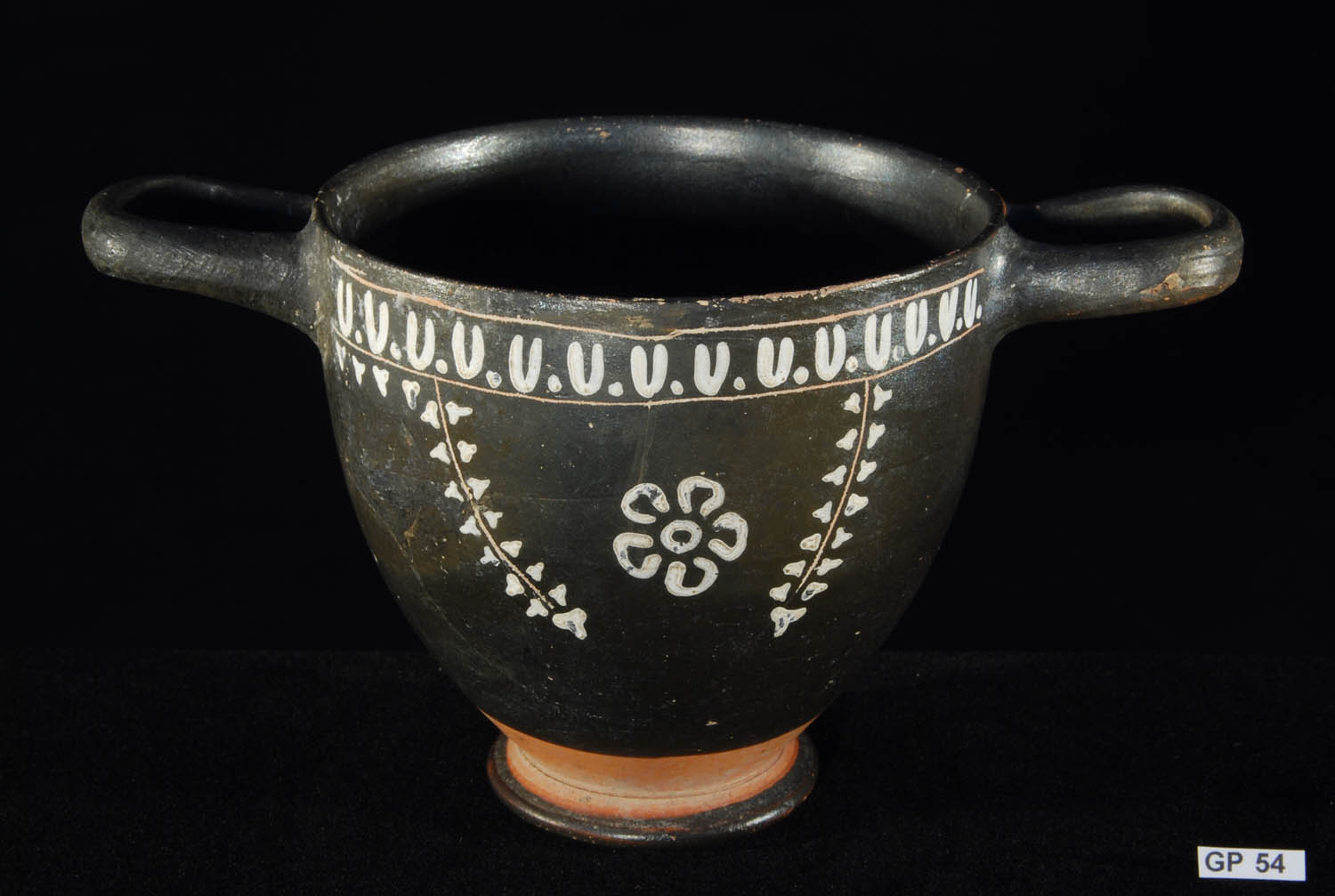
Catalogue No.: GP54
Title: Greek Apulian Gnathia Ware Skyphos
Date: 4th Century BC (c. 330 – 325 BC)
Culture: Greek
Origin: Taranto, Apulia, Southern Italy
Material: Fine clay
Dimensions: 148 mm (Height) x 81 mm (Width)
Description
This Greek Apulian Gnathia Ware Skyphos from the late 4th century BC exemplifies the exceptional ceramic craftsmanship that thrived in Southern Italy during this era. The vessel, notable for its elegant and practical design, is a type of stemless cup traditionally used in ancient Greek rituals and daily activities. It features dual opposing loop handles that not only facilitate ease of handling but also contribute significantly to the symmetrical beauty of its design.
The skyphos is distinguished by a rich black glaze that serves as a canvas for vibrant polychromy decorations in shades of red-brown, white, and yellow. These colors are thoughtfully chosen and strategically applied, not merely for aesthetic appeal but to convey a visual narrative that reflects the mythological and cultural ethos of the time. The motifs and bands that encircle the skyphos are intricately patterned, showcasing the artisan’s mastery in color application and design precision. This detailed ornamentation enhances the vessel’s form and is likely imbued with symbolic significance, resonating with the cultural and ritualistic practices of ancient Apulia.
The construction of the skyphos—with its wide, open top and robust, smoothly curved body—underscores its functionality and widespread use. The decorative bands meticulously follow the contours of the skyphos, emphasizing its stout proportions and refined silhouette. This attention to form and detail not only highlights the skyphos as a utilitarian object but also as a piece of art, reflecting the sophisticated interplay between functionality and aesthetics in Apulian pottery.
Overall, this skyphos is a testament to the advanced ceramic techniques and rich cultural heritage of ancient Southern Italy, offering invaluable insights into the daily and ceremonial life of the time. Its preservation and the finesse in its crafting make it an essential piece for both historical study and aesthetic appreciation in our museum collection.
Cultural Relevance
This skyphos is emblematic of Gnathia ware, renowned for its elaborate painted decorations and significant role in the cultural exchange between Greek settlers and indigenous peoples of Southern Italy. The decorative motifs and color scheme on this piece provide insights into the influences and innovations in ceramic art brought about by these interactions. The vessel’s utility combined with its decorative complexity underscores its dual role in both daily life and ceremonial practices, reflecting its cultural significance in ancient Apulian society.
Provenance and Legality Documentation
Provenance History
This Greek Apulian Gnathia Ware Skyphos is a distinguished member of the Victor M. Pracas Collection, known for its exceptional documentation and authentication. It has a robust provenance, sourced from esteemed collections such as the Paul Freeland and R.J. Upland Esq. Collections. Each piece within the collection has been meticulously traced, ensuring a transparent record of acquisition and verifying its authenticity and legal acquisition, thereby enriching its historical and collector’s value.
Legal Documentation
Accompanying this skyphos is comprehensive legal documentation, ensuring full compliance with international antiquities laws. This includes a certificate of authenticity that attests to its origin and legality. The artifact has undergone detailed vetting processes and has been cleared for both purchase and export, affirming its status as a legally acquired and tradeable piece within the global art market. This rigorous documentation supports the artifact’s eligibility for exhibition and sale, providing assurance to collectors and institutions regarding its provenance and legality.
Investment Consideration
This Greek Apulian Gnathia Ware Skyphos represents an outstanding investment opportunity, particularly attractive to collectors and institutions dedicated to the preservation and study of ancient Mediterranean art and artifacts. Its historical significance, exemplified by the craftsmanship and unique decorative style from late 4th century BC Apulia, enhances its value significantly. The rarity of its polychromy decorations, combined with its well-documented provenance, not only solidifies its status as a highly desirable collectible but also suggests a potential for appreciating value over time. This skyphos is an exceptional piece that promises to be a highlight within any collection, offering both aesthetic appeal and scholarly interest
Exhibition
This Greek Apulian Gnathia Ware Skyphos is a prominent exhibit in our museum’s collection, showcasing the exquisite craftsmanship and rich ceramic traditions of Southern Italy. Its presence not only enhances our display of Greek pottery but also offers visitors a deeper understanding of the artistic and cultural heritage of the region, illuminating the sophisticated techniques employed by ancient potters.
Educational Value
As an invaluable educational resource, this skyphos provides profound insights into the ceramic techniques, artistic choices, and cultural practices prevalent in 4th century BC Southern Italy. It exemplifies how utilitarian items were intricately woven with cultural and symbolic significances, offering a window into the daily and ritualistic lives of ancient societies. Through this artifact, students, academics, and general visitors gain a richer understanding of how everyday objects reflect and influence the customs and values of their times.
References
The provenance and authenticity of the Greek Apulian Gnathia Ware Skyphos are meticulously documented within the Victor M. Pracas Collection. Expert assessments have validated the historical significance and legitimacy of this artifact. Additionally, scholarly research on Greek pottery and Apulian ceramic traditions provides essential insights into the cultural and artistic context of the piece.