Catalogue No.: GP58
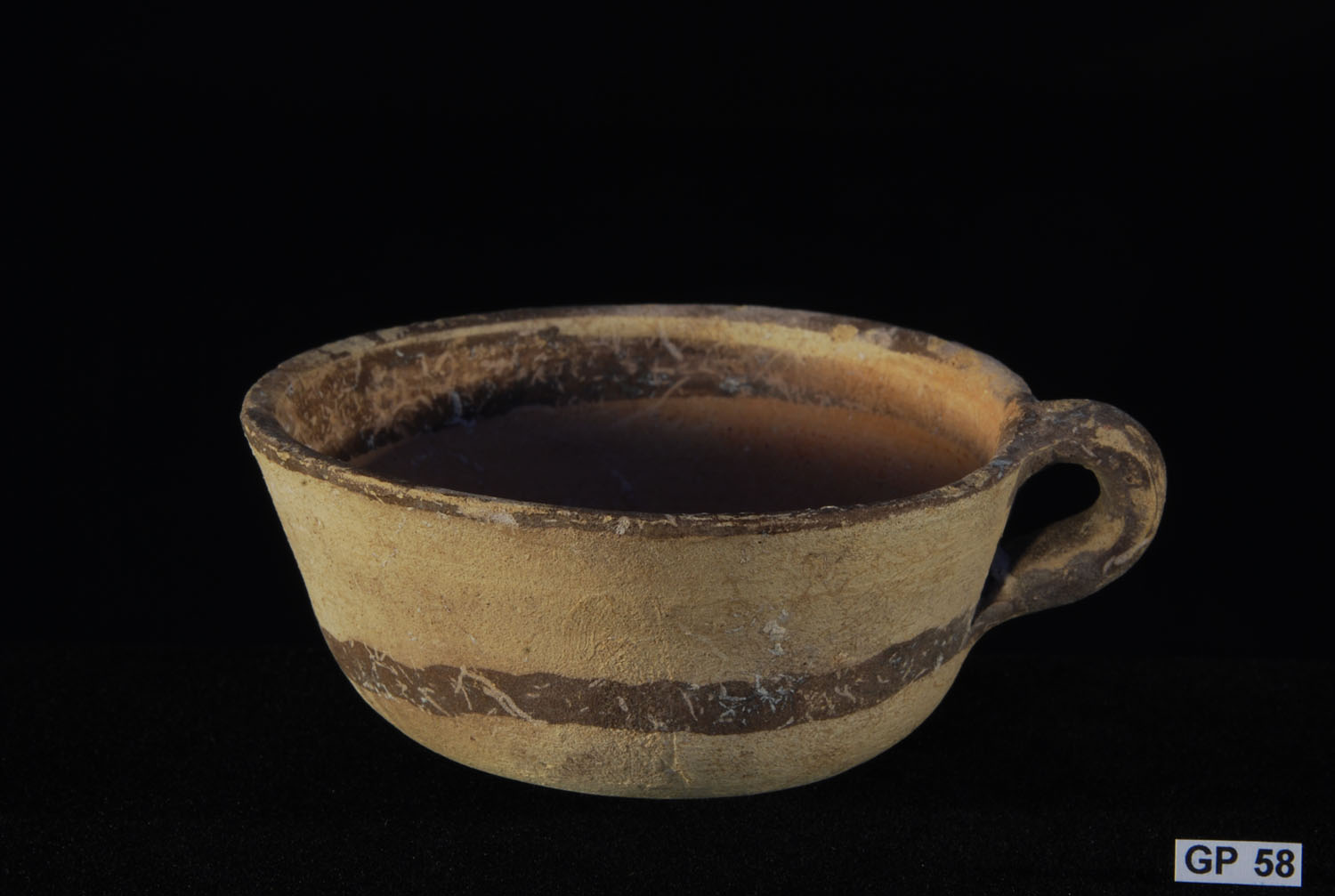
Catalogue No.: GP58
Title: Cypriot White Slip Ware Cup
Date: 6th Century BC
Culture: Cypriot
Origin: Cyprus
Material: Slip Decorated Clay
Dimensions: 91 mm (Height) x 36 mm (Width)
Description
This 6th century BC Cypriot White Slip Ware Cup is a masterful representation of ancient Cypriot ceramic art, showcasing the skilled craftsmanship and aesthetic sophistication of the era. Distinctively coated with a fine white slip—a liquid clay mixture meticulously applied before the firing process—the cup boasts a characteristic pale, smooth surface that acts as a canvas for the elegant geometric patterns encircling the body. These patterns, composed of carefully drawn concentric circles and linear motifs, are not merely decorative but also bear cultural significance, often symbolizing unity and eternity in Eastern Mediterranean art.
The cup’s modest dimensions, measuring 91 mm in height and 36 mm in diameter, imply its use in everyday life, likely for the consumption of wine or water. Such vessels were common in both domestic settings and communal gatherings, underlining their functional and social roles in ancient Cypriot society. The rounded, unassuming form of the cup, combined with its ergonomically placed, delicate handle, illustrates the practical yet thoughtful design choices that catered to frequent handling and use. The tactile quality of the slip gives the cup a smooth feel, which along with its balanced weight, enhances its usability.
The uniform application of the slip, free from drips or uneven spots, highlights the advanced pottery techniques of the time, suggesting a high degree of control and precision in the production process. This level of craftsmanship not only ensured durability and usability but also enhanced the vessel’s aesthetic appeal, making it a valued piece for both its practical utility and its artistic merit. The handle is proportionally sized and designed to balance the cup when filled, reflecting a sophisticated understanding of usability in ceramic design.
The preservation of the cup, with its intact slip and clearly visible patterns, helps in understanding the durability of materials and techniques used, as well as the care with which it was likely maintained through the centuries. Efforts to conserve its condition include careful handling and controlled display environments, ensuring that its historical and aesthetic value is maintained for future generations.
The cultural relevance of this cup extends beyond its visual and functional attributes, embodying the broader trade and cultural exchanges of the 6th century BC Mediterranean. Cypriot ceramics like this cup were widely exported and found in various archaeological contexts throughout the region, indicating Cyprus’s integral role in the ancient trade networks and its influence on the ceramic traditions of surrounding cultures. A comparative analysis with contemporary Greek and Phoenician pottery would show the distinctive features of Cypriot craftsmanship, highlighting its unique contributions to the region’s ceramic art.
This exquisite artifact, with its blend of functionality, artistic expression, and cultural significance, offers a vivid glimpse into the daily life and artistic achievements of ancient Cyprus, making it an invaluable piece for both historical scholars and discerning collectors. Its narrative enriches our understanding of the complexities of ancient Mediterranean civilizations and their interconnectedness through trade and cultural exchange.
Cultural Relevance
During the 6th century BC, Cyprus was a hub of extensive trade, interacting with the Aegean, Egypt, and the Near East. White slip ware like this cup was widely exported, making it an integral part of the trade goods exchanged in the Mediterranean. This cup not only served practical daily purposes but also stood as a cultural symbol of Cypriot craftsmanship and aesthetic values during this period. Its presence in a variety of archaeological sites across the Mediterranean underscores its widespread appeal and the interconnectedness of ancient cultures through commerce and art.
Provenance and Legality Documentation
Provenance History
This artifact is a distinguished part of the Victor M. Pracas Collection, which is renowned for its meticulous documentation and authentication. The provenance of this Cypriot White Slip Ware Cup is well-established, tracing its history back through a lineage of notable collections. Among these are the Paul Freeland Collection and the Duke of Northumberland Collection. Ownership through such esteemed collections significantly enhances the cup’s historical and collector value, providing a clear and traceable lineage that underscores its authenticity.
Legal Documentation
The cup is accompanied by comprehensive legal documentation that certifies its authenticity and confirms legal ownership. This documentation adheres to all international standards and regulations for antiquities, affirming that the cup is free from any restrictions on disposal or export. This legal assurance ensures that the piece is fully compliant for trade and export, making it a secure acquisition for both private collectors and institutional investors. This rigorous documentation process guarantees that the cup is not only a valuable artifact but also a legally vetted item within the international art and antiquities market.
Investment Consideration
This Cypriot White Slip Ware Cup, with its impeccable preservation, distinguished historical significance, and the rarity of its form, represents a compelling investment opportunity for collectors and institutions dedicated to ancient artifacts. The cup’s robust provenance, tracing back through prominent collections, coupled with the exquisite artistry of its white slip decoration, significantly enhances its desirability and potential for appreciation in value. As a standout artifact within the realm of ancient Mediterranean ceramics, it not only offers aesthetic and historical allure but also holds promise for substantial financial appreciation in the discerning global art market.
Exhibition
This Cypriot White Slip Ware Cup is a featured artifact currently on display in our museum. It significantly enriches our collection, offering visitors a unique glimpse into ancient Cypriot culture and the sophisticated pottery techniques of the era. By showcasing this item, the museum not only highlights the artistic achievements of ancient Cyprus but also enhances the cultural richness of its permanent exhibition.
Educational Value
As an educational resource, this cup offers profound insights into the pottery techniques, daily life, and economic activities of 6th century BC Cyprus. It serves as a valuable tool for academic study, helping to illuminate the island’s pivotal role in the ancient Mediterranean trade networks. The cup’s presence in our collection also aids in broadening public understanding of cultural exchange during this period, providing tangible evidence of the interconnectedness of ancient civilizations through commerce and artistry.
References
The documentation of this Cypriot White Slip Ware Cup is thoroughly supported by expert assessments and further historical research within the Victor M. Pracas Collection. Expert validations have confirmed the authenticity and historical importance of this artifact. Additionally, scholarly research detailed in several key publications offers profound insights into the technological and cultural nuances of Cypriot pottery during the 6th century BC.