Catalogue No.: GP59
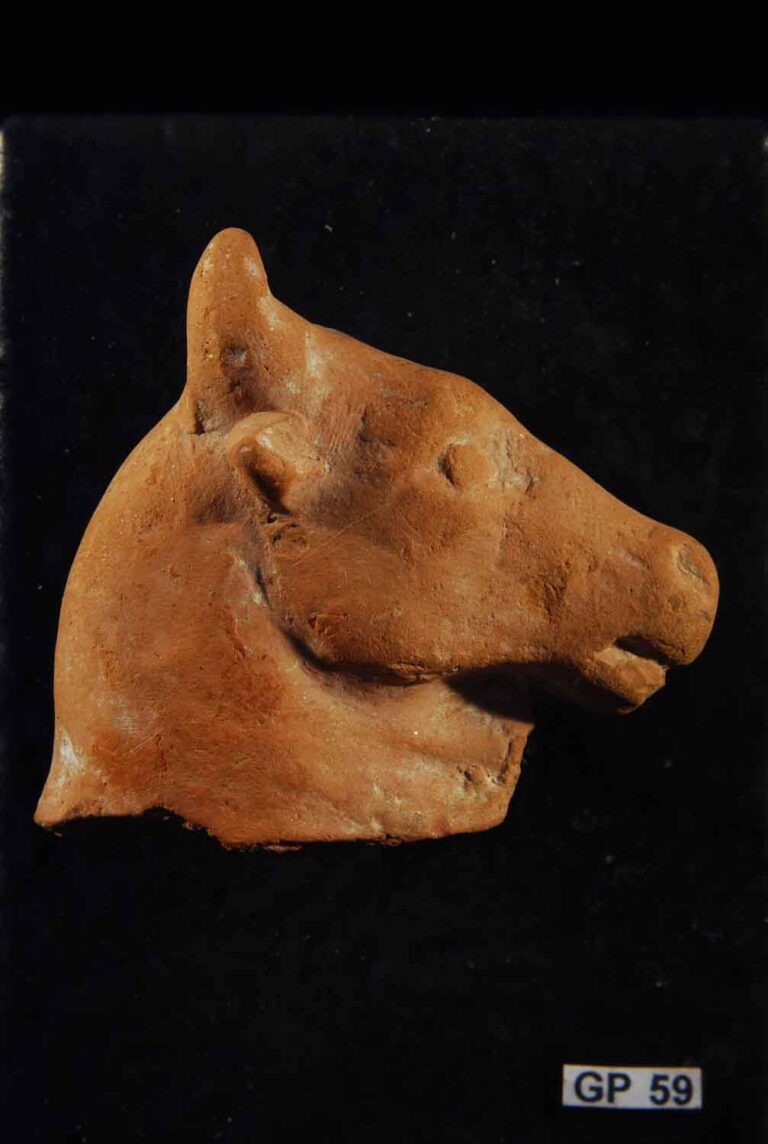
Catalogue No.: GP59
Title: Greek Terracotta Head of a Bull
Date: Hellenistic Period, 3rd-1st Century BC
Culture: Greek
Origin: Greek Empire
Material: Pale Terracotta
Dimensions: 57 mm (Height) x 49 mm (Width)
Description
This Hellenistic terracotta head of a bull, masterfully sculpted in high relief, is a testament to the advanced artistic skills and aesthetic principles of ancient Greek civilization, spanning from the 3rd to the 1st century BC. The sculpture vividly captures the robust and muscular form of the bull, an animal symbolizing strength and fertility, deeply emblematic within Greek mythology and cultural symbolism.
The artifact portrays the bull with a serene yet powerful expression, featuring meticulously carved features that convey a lifelike presence. The eyes are deeply set, the ears attentively perked, and the nostrils flared, each rendered with exceptional precision. These details showcase a keen observation of natural forms, a characteristic of Hellenistic art which strove for realism and emotional depth. The use of high relief in this sculpture not only enhances the three-dimensional effect but also allows for a more dynamic and detailed depiction of the bull’s facial muscles and textured fur, suggesting vitality and vigor.
The choice of pale terracotta as the medium is significant. Favored for its pliability and durability, this material allowed Greek artisans to achieve intricate details and subtle textures, which are evident in the naturalistic portrayal of the bull. The subtle hue of the terracotta enhances the visual impact of the finely incised lines and the flowing curves that define the bull’s facial structure and musculature, emphasizing the anatomical accuracy of the subject.
Historically, the bull holds substantial cultural relevance in Hellenistic society, often associated with deities such as Zeus and Dionysus and symbolizing wealth and prosperity in public and ceremonial life. The representation of such a potent symbol in art underscores the bull’s integral role in both the mythological and everyday life of the Greeks.
This exquisite piece not only showcases the technical prowess of its creators but also serves as a bridge to the past, offering profound insights into the cultural and religious life of the Hellenistic Greeks. Its excellent preservation and the mastery it demonstrates make it a pivotal artifact for educational purposes and a cornerstone of any collection focusing on ancient art, appealing to both individual collectors and institutional investors due to its historical significance and remarkable craftsmanship.
Cultural Relevance
In Greek culture, the bull is a powerful symbol, closely associated with Zeus, the king of the gods, and frequently appears across various forms of art, embodying notions of power, strength, and virility. This terracotta sculpture captures the bull’s significance not only through its subject but also in its execution, reflecting the artistic advancements of the Hellenistic period known for its emphasis on realism and the expression of emotion through art.
During this era, artists began to explore more dynamic and naturalistic representations in their work, a shift that is evident in the detailed and lifelike rendering of this bull’s head. The sculpture conveys a vivid sense of the animal’s physical presence and character, which exemplifies the Hellenistic interest in capturing the essence of the subject matter, whether divine or mundane.
Moreover, the bull’s depiction in this sculpture also hints at its role in religious and ceremonial contexts, where it was often a symbol of prosperity and was used in sacrificial rites, underscoring its importance in both the spiritual and material realms of Greek life. This piece thus not only serves as an artistic expression but also as a cultural artifact that offers significant insights into the religious practices, societal values, and aesthetic priorities of the Hellenistic Greeks, making it a valuable study in both art history and cultural anthropology.
Provenance and Legality Documentation
Provenance History
This terracotta head of a bull is a distinguished piece from the Victor M. Pracas Collection, renowned for its rigorously documented and historically significant artifacts. The provenance of this sculpture is exceptionally well-established, with its lineage including prestigious ownerships such as the Paul Freeland Collection and the Duke of Northumberland Collection. These notable collections have not only enriched the historical value of the artifact but have also solidified its authenticity and prominence in the world of antiquities.
Legal Documentation
The terracotta head is accompanied by comprehensive legal documentation that certifies its authenticity and confirms legal ownership. This documentation ensures that the artifact complies with all international regulations concerning the trade and export of antiquities. It verifies that the piece is free from any legal encumbrances, making it a fully compliant and secure artifact for acquisition and trade on the international market.
Investment Consideration
This Hellenistic terracotta head of a bull, with its exceptional state of preservation, documented historical significance, and robust provenance, presents a significant investment opportunity. The piece’s distinguished artistic merit and relative rarity underscore its potential for appreciation in value. Such attributes render it particularly appealing to discerning collectors and cultural institutions focused on accumulating artifacts of substantial cultural and aesthetic worth. This sculpture not only promises to be a focal point of any collection but also holds the prospect of yielding considerable returns on investment due to its rarity and the continuing interest in Hellenistic art among collectors and academics.
Exhibition
This Hellenistic terracotta head of a bull is a prominent feature of our current museum display, significantly enhancing our collection. Its presence offers visitors an immediate and tangible link to the rich tapestry of Hellenistic art and culture, thus enriching both the educational and aesthetic experience provided by the museum. By showcasing this artifact, we not only highlight the artistic excellence of the era but also facilitate a deeper understanding of the historical context that shaped these works.
Educational Value
This terracotta sculpture serves as an invaluable educational resource, offering deep insights into the artistry of the Hellenistic period, including the techniques employed in terracotta sculpting, the cultural symbolism associated with the bull, and the historical significance of the materials used. Its detailed craftsmanship and the context of its creation make it an exemplary tool for academic studies and public education, enhancing learning about ancient art, mythology, and cultural exchange. This artifact not only supports scholarly research but also engages a broader audience by bringing to life the ancient world’s artistic and cultural achievements.
References
The authenticity and legal provenance of this Hellenistic terracotta head of a bull are meticulously documented within the Victor M. Pracas Collection, supported by detailed records and thorough assessments. This documentation is enhanced by expert evaluations and comprehensive historical research. Key references include:
- “Hellenistic Sculpture: A Handbook” by R.R.R. Smith, which provides an in-depth look at the forms and functions of Hellenistic sculpture, helping to contextualize the craftsmanship and cultural significance of this terracotta head.
- “Terracotta in the Hellenistic World” by Charlotte R. Long, offers insights into the use and artistic developments of terracotta throughout the Hellenistic period, including discussions on the technical aspects and symbolic meanings of sculptures like this bull head.