Catalogue No.: GP66
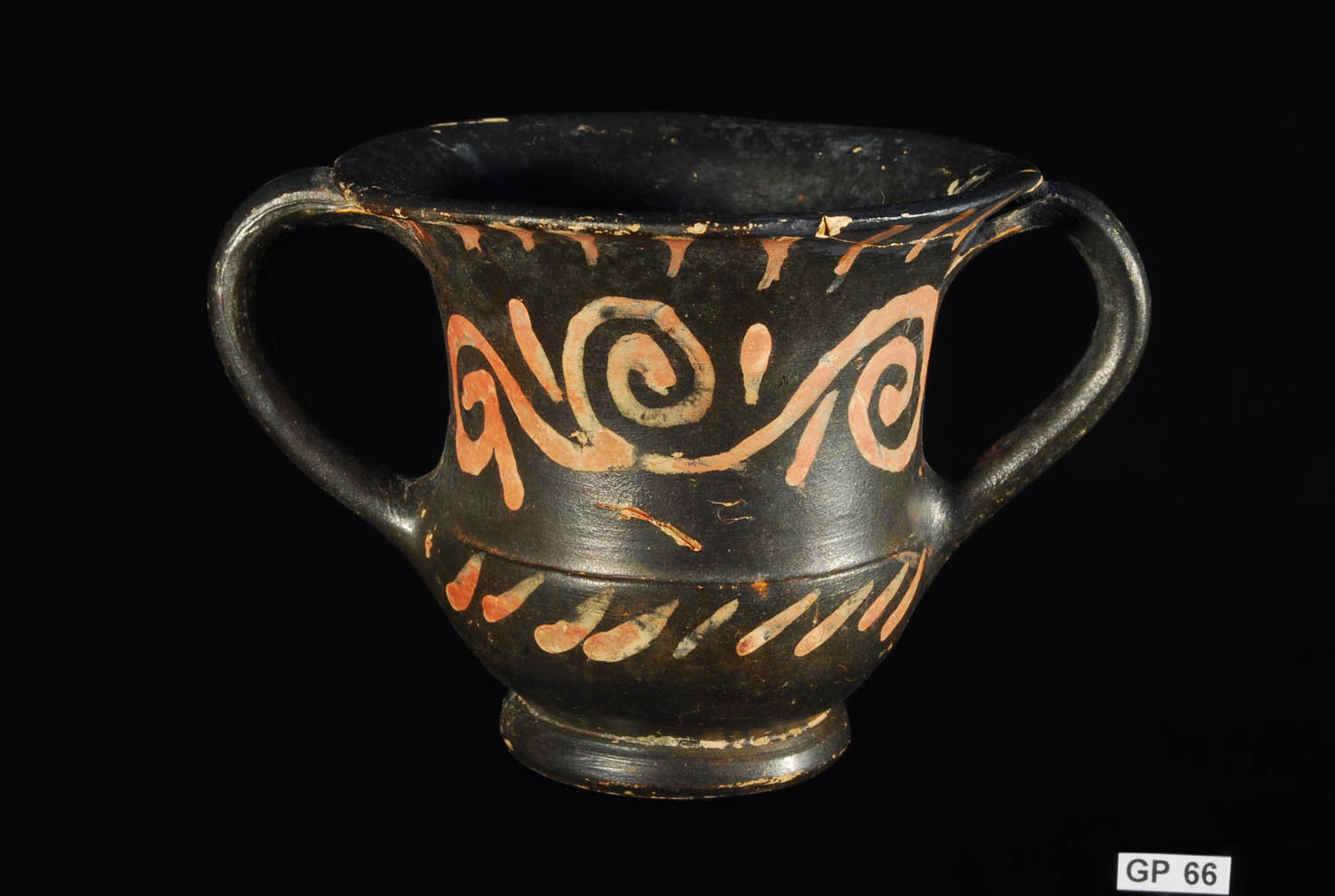
Catalogue No.: GP66
Title: Greek Xenon-ware Miniature Kantharos
Date: 4th century BC
Culture: Greek
Origin: Southern Italy
Material: Ceramic, metallic black glaze with orange pigment decoration
Dimensions: 100 mm (Width) x 65 mm (Height)
Description
This exquisite miniature kantharos, crafted in the distinctive style of Xenon-ware, exemplifies the refined artistry of 4th-century BC Greek ceramics. The vessel is cloaked in a lustrous metallic black glaze, which provides a dramatic backdrop for the vibrant orange pigments that adorn its surface. These pigments trace intricate, swirling patterns, infusing the piece with a sense of dynamic movement and artistic energy characteristic of the period.
The kantharos is distinguished by its dual handles, which curve elegantly upward from the body, enhancing both the visual balance and practical utility of the piece. This feature not only highlights the vessel’s ceremonial function—typically used in the libation rituals associated with the worship of Dionysus—but also underscores its role in social symposia, where wine and philosophical discourse flowed freely.
The precision of the decorative motifs, featuring complex geometric patterns and stylized floral elements, reveals a meticulous attention to detail and a mastery over the ceramic medium. These motifs are not merely decorative but are symbolic, likely referencing the cultural and mythological significance of the grapevine in ancient Greek society, which celebrated wine as a symbol of life and regeneration.
This kantharos’s small stature, coupled with its elaborate adornment, suggests it may have been a cherished personal item or a dedicated ritual object. Its preservation and the finesse of its execution provide not only a direct link to the cultural and social practices of Southern Italy’s Greek communities but also reflect the broader aesthetic and philosophical values of the era.
As such, this kantharos is more than a mere artifact; it is a testament to the ancient Greeks’ deep appreciation for beauty and craftsmanship, and their understanding of pottery as a vital element of daily life and spiritual practice. It stands as a potent symbol of the sophisticated culture that produced it, offering invaluable insights into the ancient world for both collectors and scholars.
Cultural Relevance
The kantharos holds a venerable place within ancient Greek culture, epitomizing the profound connection between daily activities and religious observances. Predominantly linked to Dionysian cults, this type of vessel was integral to the rituals celebrating Dionysus, the god of wine, fertility, and festivity. Its association with wine—a symbol of abundance and divine presence—highlights its role in fostering community and spiritual communion.
As a central element of both mundane and sacred gatherings, the kantharos transcended mere functionality. In the symposia, where philosophers, poets, and citizens convened, it facilitated not just the enjoyment of wine but also the flow of ideas, enhancing the social fabric of Greek life. Moreover, in religious contexts, the kantharos was more than a drinking vessel; it was a symbolic offering, imbued with prayers and hopes, and often used in libations to honor the gods.
This particular miniature kantharos, with its compact form and elaborate decoration, likely had a dual role. It may have functioned as a personal item in daily use, while also serving a ceremonial purpose in private rituals or family worship. Its size and artistry suggest it could have been a cherished object, used to make personal offerings or as part of smaller, more intimate religious ceremonies, thereby embedding it deeply within the personal and communal religious practices of its time.
Provenance and Legality Documentation
Provenance History
This artifact is part of the esteemed Victor M. Pracas collection, renowned for its comprehensive and well-documented array of ancient artifacts. Originally acquired through significant historical avenues including notable collections such as the Paul Freeland and R.J. Upland Esq. collections, this piece’s journey through time is well recorded, showcasing a lineage of ownership that underscores its authenticity and cultural value.
Legal Documentation
The kantharos has been rigorously authenticated and comes with full legal documentation verifying its provenance and ownership. This includes certificates of authenticity provided by experts in the field, such as Giovanni Gervasoni, ensuring compliance with current cultural heritage laws, thus affirming its legality for collection and display.
Investment Consideration
This kantharos is a premier asset for both private collectors and public institutions due to its exceptional state of preservation, significant historical importance, and the scarcity of such well-preserved artifacts from ancient Greek civilization. It embodies a considerable investment potential, offering both monetary appreciation and enriching cultural and educational benefits. As a collector’s item, it promises to enhance any collection, bringing with it deep academic value and the prestige of owning a piece of ancient artistry.
Exhibition
Currently showcased as a centerpiece in our museum’s collection, this kantharos provides an immersive experience for all visitors. It acts as a cultural bridge to ancient Greek civilization, offering a direct link to the rituals and daily life of the era. Its display is strategically designed to highlight its aesthetic beauty and intricate craftsmanship, making it a focal point for educational tours and historical enthusiasts.
Educational Value
This kantharos is invaluable as an educational resource, offering rich insights into the craft of ancient Greek ceramics and the cultural significance of vessels in symposium settings. It facilitates a deeper understanding of Greek societal norms, religious practices, and communal interactions. By examining this artifact, students and the general public gain a comprehensive view of the integral role such objects played in ancient society, enhancing both academic studies and cultural appreciation. Its presence in educational programs can inspire detailed exploration of ancient materials, techniques, and the societal functions of Greek pottery, thereby fostering a greater appreciation for ancient cultural heritage.
References
The authenticity and cultural significance of this kantharos are supported by scholarly works such as “Greek Ceramics: Technology and Function” by Dr. Lisa C. Pieraccini, which provides extensive background on the materials and methods used in ancient Greek pottery, enriching our understanding of pieces like this one. Additionally, the provenance and historical journey of this artifact are thoroughly documented in the Victor M. Pracas Collection records, further substantiated by expert assessments and legal verifications that ensure its status as a genuine and legally acquired item