Catalogue No.: GP69
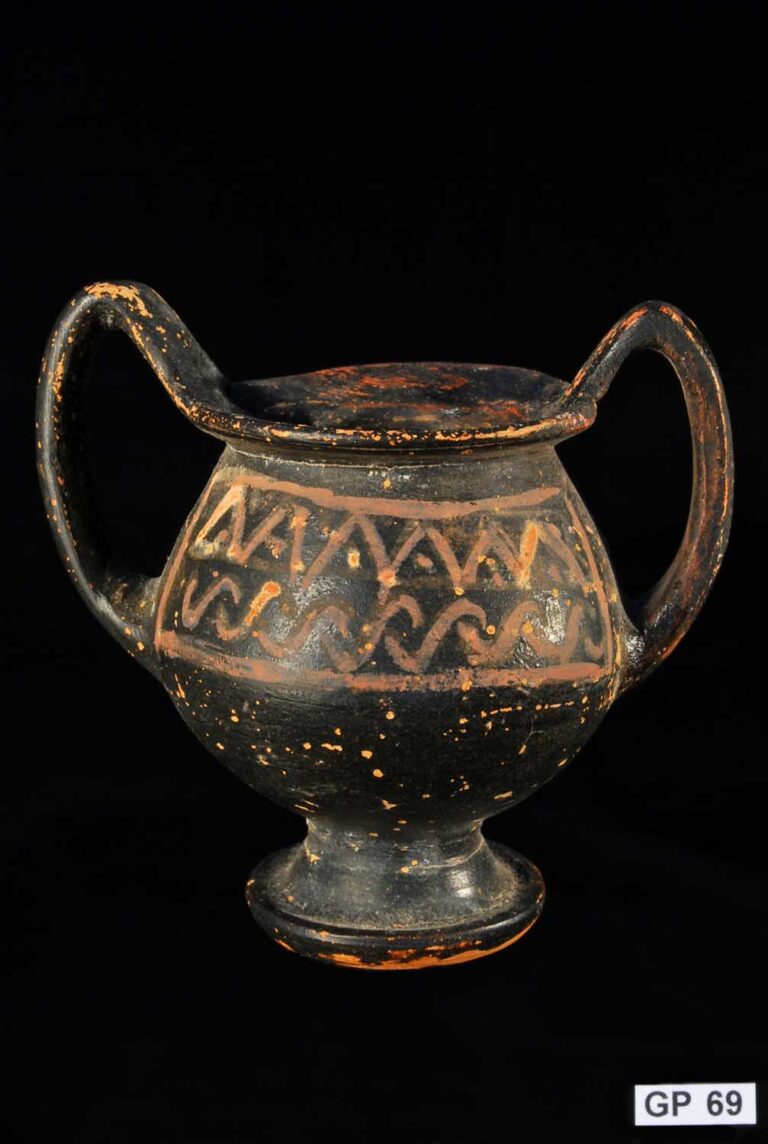
Catalogue No.: GP69
Title: Greek Xenon-ware Miniature Kantharos
Date: 4th century BC
Culture: Greek
Origin: Southern Italy
Material: Ceramic, metallic black glaze with orange pigment decoration
Dimensions: 65 mm (Width) x 65 mm (Height)
Description
This exquisite Greek Xenon-ware Kantharos from the 4th century BC showcases the pinnacle of ancient ceramic craftsmanship from Southern Italy. The vessel is distinguished by its lustrous metallic black glaze, which sets a dramatic stage for the ornate orange pigment decorations—a striking contrast that captures the viewer’s eye. These decorations, meticulously applied, feature an intricate interplay of geometric motifs and stylized animal figures, encapsulating the artistic spirit and technical prowess of the era.
The kantharos presents a classic silhouette, with a deep, rounded bowl designed for functionality as much as for aesthetic appeal. This shape is complemented by elegantly arching handles that rise from the bowl’s lip and reconnect at the rim, creating a seamless and graceful form that enhances handling and aesthetic symmetry. These handles are not only practical but are also richly adorned with orange pigment, emphasizing their sinuous curves and adding a touch of elegance to the vessel’s robust structure.
What makes this Kantharos particularly compelling is its dual role as both a utilitarian object and a ceremonial piece. Traditionally used in symposia and religious rituals, such vessels were central to communal gatherings in ancient Greek society, where wine was shared in celebration or worship. The presence of animal motifs intertwined with geometric patterns on this kantharos suggests a reverence for the natural world and the cultural myths that infused daily life with meaning and beauty in ancient Greece.
Moreover, the craftsmanship visible in the precision of the pigment application and the balanced proportions of the form exemplifies the ceramic artistry of the period. The decorators of this piece employed techniques that have been revered through millennia, highlighting the continuity of artistic excellence and cultural traditions. This kantharos is not merely a piece of pottery; it is a vibrant testament to the rich cultural tapestry of ancient Greek life, offering modern viewers a direct link to the aesthetic and social values of a civilization that placed a high premium on form, function, and beauty.
Cultural Relevance
The Kantharos occupies a central place in ancient Greek culture, emblematic of both the convivial symposia and the sacred rites dedicated to Dionysus, the deity of wine, fertility, and ecstasy. This vessel, with its distinctive form and ornate decoration, is deeply imbued with Dionysian symbolism, reflective of its ceremonial use. During symposia—key social gatherings where philosophers, poets, and citizens discussed intellectual topics over wine—the Kantharos facilitated not just the act of drinking but also symbolized the shared cultural values of joy, community, and the transcendental experience of festivity.
Furthermore, the specific motifs and shapes of this Kantharos are not merely decorative but are chosen for their symbolic resonance with themes associated with Dionysus. The intertwining geometric and animal motifs may represent the natural and the divine—central themes in Dionysian mythology where the god himself is often depicted in animal form, symbolizing the untamed, primal aspects of nature and human experience.
Thus, this Kantharos serves as more than a drinking vessel; it is a cultural artifact that offers insight into the religious and social dynamics of ancient Greece. Its presence in ritualistic settings likely enhanced the spiritual atmosphere, making it a potent symbol of divine presence and cultural identity during significant communal celebrations.
Provenance and Legality Documentation
Provenance History
This piece is part of the esteemed Victor M. Pracas collection, noted for its significant historical artifacts. It has a well-documented provenance, having been acquired from various renowned collections such as the Paul Freeland and R.J. Upland Esq. collections, further enriching its historical narrative and value.
Legal Documentation
The artifact has been thoroughly vetted and is accompanied by legal documentation affirming its authenticity and legal acquisition. It is free from export restrictions, ensuring its eligibility for international trade and exhibition.
Investment Consideration
This Kantharos stands out as a stellar addition to any collection, boasting impeccable preservation, significant historical importance, and profound artistic beauty. Its distinctive attributes and rarity make it a prized asset for both private collectors and museums. Investing in this piece not only means acquiring a segment of ancient history but also expecting a potential appreciation in value, given its uniqueness and the growing market interest in authentic ancient artifacts.
Exhibition
Currently featured as a highlight of our museum’s collection, this Kantharos provides an immersive gateway into the world of ancient Greek culture and artistic excellence. It is displayed with a focus on illustrating its historical and cultural significance, particularly its role in social and religious contexts. Through this exhibition, visitors gain a deeper appreciation of the sophisticated ceramic techniques and the aesthetic values of ancient Greece, enriching their understanding of this advanced civilization.
Educational
Value: This Kantharos serves as an exceptional educational resource, offering profound insights into the ceramic craftsmanship, cultural motifs, and the societal norms of ancient Greece. By exploring this artifact, students and visitors can better understand how art and everyday life were intricately linked in ancient societies, and how these connections influenced broader cultural practices. The Kantharos helps to elucidate the symbiotic relationship between functionality and aesthetics in Greek artifacts, making it an invaluable tool for both scholarly research and public education in the arts and humanities.
References
This Kantharos has been featured in scholarly research and publications that discuss Greek ceramics and their role in antiquity, providing further context and validation for its cultural and historical importance. The comprehensive documentation within the Victor M. Pracas collection supports its authenticity and legal status, making it a well-substantiated piece for further study and appreciation.