Catalogue No.: GP04
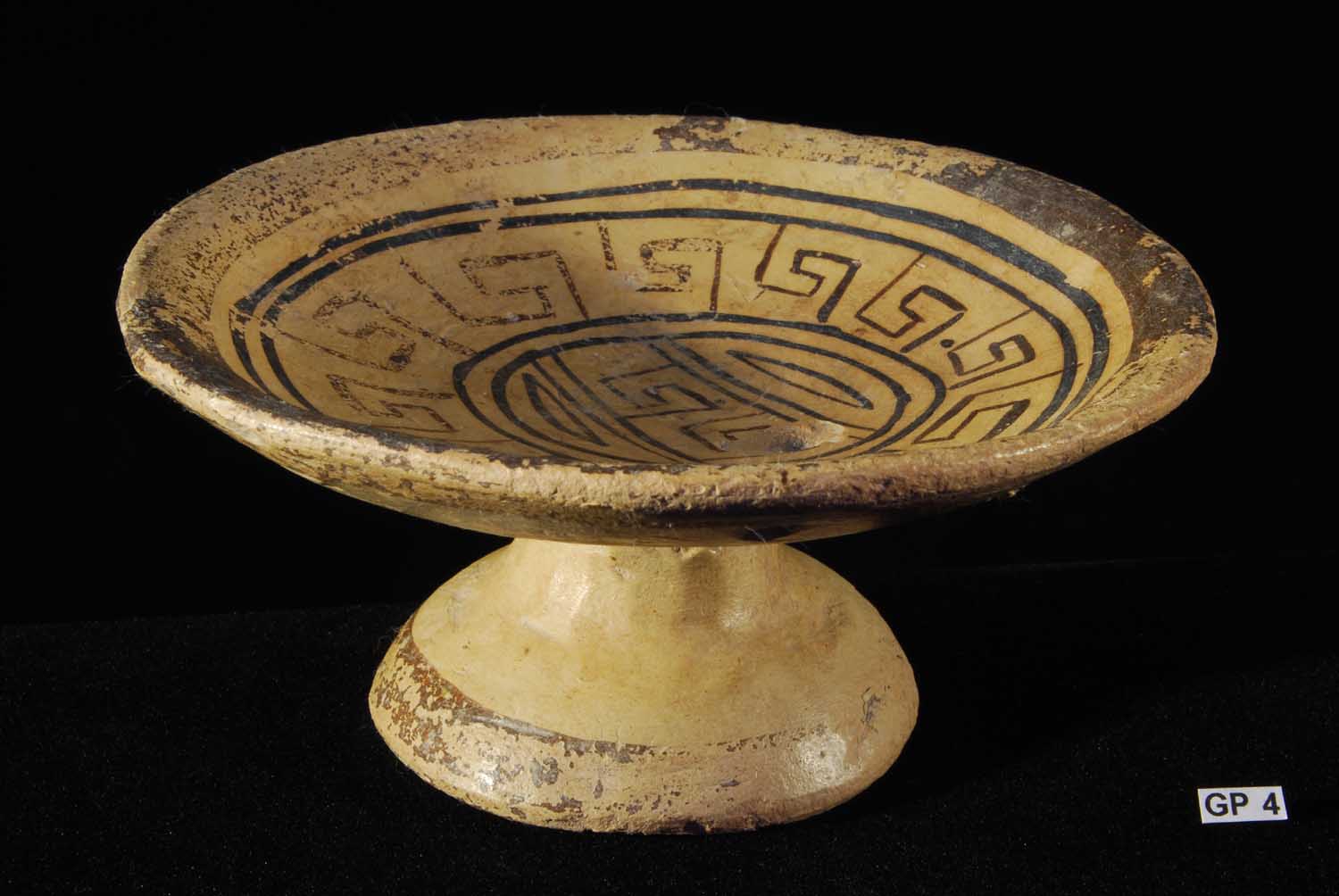
Catalogue No.: GP04
Title: Corinthian Bowl
Date: 7th – 6th Century BC
Culture: Corinthian
Origin: Corinth, Greece
Material: Fine buff clay
Dimensions: 122 mm (Diameter) x 50 mm (Height)
Description
The Corinthian Bowl from the 7th to 6th century BC is an exquisite artifact that exemplifies the zenith of early Greek ceramic craftsmanship. This piece is crafted from fine buff clay, chosen for its durability and quality, which serves as a testament to the Corinthian potters’ adept selection of materials suited for their refined artistry. The bowl stands on a high, cupped foot, a design choice that not only offers stability but also elevates the bowl, literally and figuratively, within any setting it graces.
The main body of the bowl, a shallow and broad dish, is meticulously adorned with an array of geometric patterns, rendered in rich brown and black tones. These patterns are not arbitrary; they are deeply symbolic, crafted with precision to depict bands, meanders, and concentric circles that may represent the eternal flow of life or the meandering journey of the soul in the labyrinth of existence, echoing common philosophical themes of the period.
Intriguingly, the bowl features small piercings along one edge, suggesting it served a dual purpose beyond mere storage or tableware. These piercings hint at the bowl’s ceremonial use, possibly during rituals where it might have been suspended, allowing it to partake in the sacred dances or to be displayed as part of a votive offering in a temple or domestic altar. This multifunctionality highlights the bowl’s role in both the everyday and spiritual life of the Corinthians.
The interplay of colors and the control of glaze application demonstrate an advanced understanding of firing techniques that were revolutionary at the time. The glaze not only enhances the aesthetic appeal of the bowl but also preserves the intricate detailing from wear over centuries. Each design element on the Corinthian Bowl is thoughtfully placed, serving both functional and decorative purposes, and showcases the Corinthian mastery of the art of pottery—a craft that was both a domestic trade and a significant cultural expression.
This bowl, therefore, is not merely a container of objects but a container of meanings, each swirl and line a narrative in the visual language of ancient Greece, inviting contemplation on the part of its beholder. It bridges the practical with the profound, standing as a cultural artifact that offers a window into the complex interweavings of utility, beauty, and sacred significance in Corinthian society.
Cultural Relevance
This bowl embodies the Corinthian tradition of seamlessly blending utility with remarkable aesthetic sophistication, a distinguishing characteristic of their ceramic production. The expertise of Corinthian potters is manifest in their masterful control of color contrasts and the precision of the applied geometric patterns. These elements are not only indicative of high artistic standards but also reflect Corinth’s prominent role as a vital hub of pottery in ancient Greece.
The elaborate designs and meticulous craftsmanship showcase Corinthian artisans’ deep understanding of both form and function, as well as their ability to infuse everyday objects with profound cultural significance. This approach underlines the societal appreciation for beauty and function, and positions Corinthian ceramics as integral to the cultural and economic fabric of the region. As such, this bowl is not merely a utilitarian vessel; it serves as a testament to the rich cultural ethos and artistic prowess that defined Corinth during its zenith.
Provenance and Legality Documentation
Provenance History
The Corinthian Bowl, dating back to the 7th – 6th century BC, originates from Corinth, an ancient city-state known for its significant contributions to Greek art and pottery. This artifact is a stellar example of Corinthian ceramic prowess and was recovered from an archaeological site renowned for yielding a wealth of Corinthian pottery artifacts, affirming its authentic origin and cultural heritage.
The bowl has been a part of the prestigious Victor M. Pracas collection, a well-documented assembly of ancient artifacts that has been critically acclaimed for its range and integrity. The collection has historically sourced items from reputable origins, including auctions, verified dealers, and collections known for their legality and scholarly value. Notable previous collections that contributed to the assemblage of the Victor M. Pracas collection include the Paul Freeland Collection, R.J. Upland Esq. Collection, and Lanzoni Estate Collection among others, which are renowned for their significant holdings of ancient Mediterranean artifacts.
Legal Documentation
The ownership and legality of the Corinthian Bowl are well-documented and verified through a series of legal assessments and expert appraisals that accompany the Victor M. Pracas collection. Each item within the collection, including this bowl, has been cataloged and described with meticulous attention to detail, ensuring that all pieces hold unambiguous provenance and clear legal title.
Comprehensive documentation supporting the legality of the acquisition and ownership of the Corinthian Bowl includes certificates of authenticity, provenance records, and acquisition papers that trace the artifact’s journey from its origin to its current status. These documents are aligned with international standards for the trade and exhibition of cultural artifacts, adhering to laws and guidelines stipulated by UNESCO conventions on the protection of cultural property.
The bowl has been independently evaluated by legal experts specializing in cultural heritage, who have confirmed its compliance with all relevant cultural heritage regulations. This ensures that the bowl can be legally sold, exhibited, and, if necessary, exported under the current international frameworks governing the movement and sale of ancient artifacts.
Investment Consideration
The Corinthian Bowl stands out as a significant asset for collectors and cultural institutions, reflecting its substantial historical and artistic value. Its well-documented provenance and the exceptional state of preservation substantially enhance its allure, marking it as a prime candidate for acquisition. This artifact is not just a piece of ancient artistry; it is a potential vessel for both cultural enrichment and financial appreciation.
The mastery and intricacy evident in its craftsmanship—characteristic of Corinthian pottery—along with its authentic and traceable lineage, make this bowl a highly desirable item in the art and antiquities market. Investing in this bowl represents an opportunity to own a part of ancient Greek heritage, offering both aesthetic enjoyment and the prospect of value appreciation. Such pieces are especially prized in a market that values rarity and historical significance, promising a wise and potentially lucrative addition to any collection.
Exhibition
The Corinthian Bowl is a distinguished piece in our museum’s permanent collection, carefully preserved and displayed to highlight the intricate artistry and utility of ancient Greek ceramics. While it has not been featured in multiple external exhibitions, its ongoing display in our museum serves as a crucial educational and cultural resource. It plays a vital role in illustrating the technological advancements and deep cultural expressions of ancient Greece. By maintaining its presence exclusively within our collection, we ensure that visitors and scholars have continuous access to this exceptional example of Corinthian craftsmanship, thereby enriching their understanding of the historical and artistic significance of such artifacts.
Educational Value
The Corinthian Bowl serves as a vital educational tool, offering insights into ancient Greek ceramic techniques, cultural symbolism, and the socio-economic contexts of its time. It is particularly valuable for academic studies and exhibitions aimed at exploring ancient craftsmanship and artistic traditions.
References
The catalog entry is supported by extensive research from archaeological studies and scholarly articles on Corinthian pottery, providing comprehensive insights into its distinctive characteristics, production techniques, and cultural significance within ancient Greek society. These references are crucial for a deeper understanding of the bowl’s historical context and artistic value.