Catalogue No.: GP14
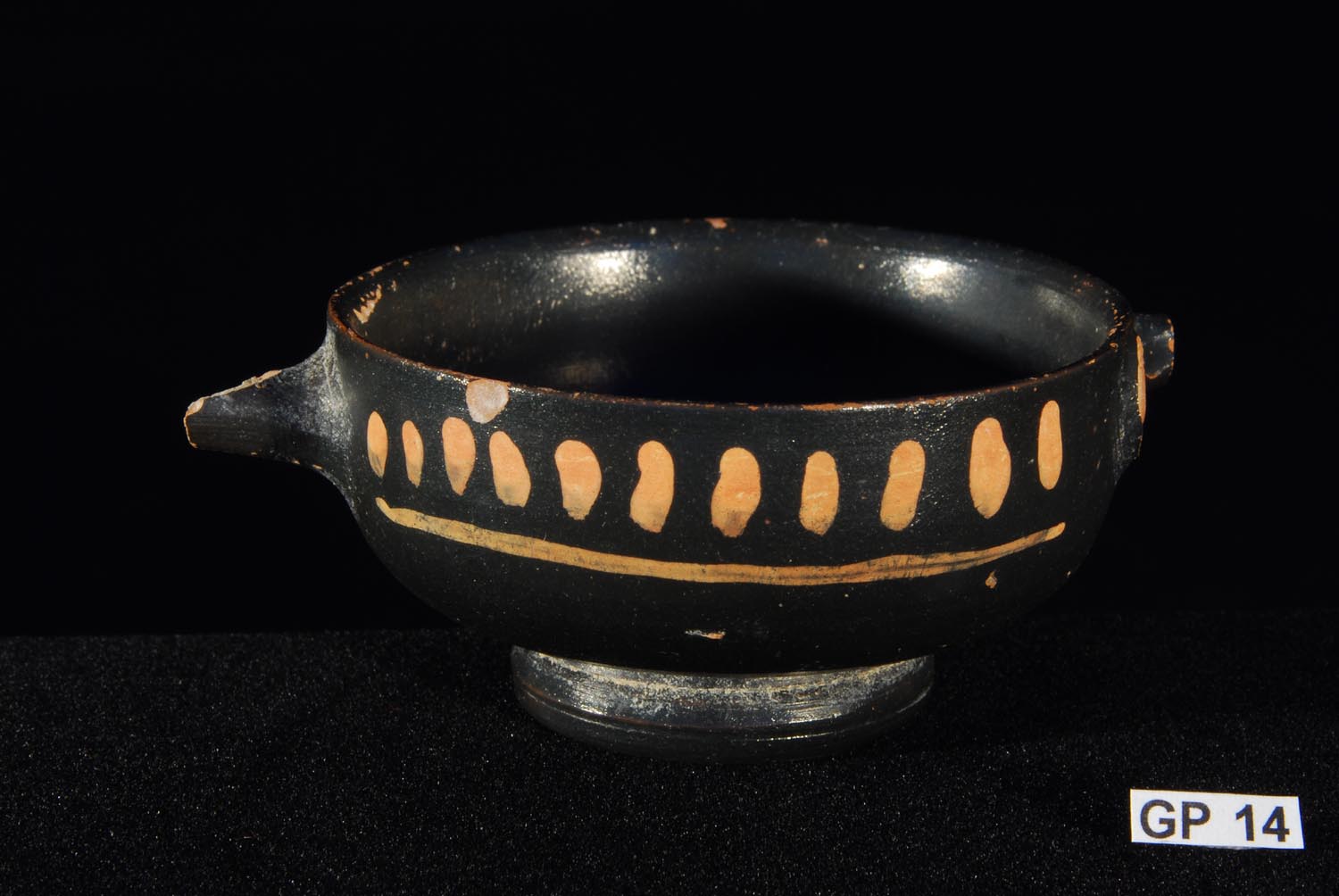
Catalogue No.: GP14
Title: Miniature Kylix – Xenon Ware
Date: 4th Century BC
Culture: Greek
Origin: Southern Italy
Material: Metallic black glazed ware with design in applied orange/red
Dimensions: 70 mm (Width) x 29 mm (Height)
Description
This Miniature Kylix, dating back to the 4th century BC, represents an exquisite example of Xenon Ware, notable for its sophisticated craftsmanship and the cultural narratives it carries. The kylix is crafted from a fine, metallic black-glazed ceramic, typical of the high-quality production techniques developed in ancient Greece, particularly in the workshops of Southern Italy. The glaze, deep and lustrous, serves as a backdrop for the applied decorative motifs in vibrant orange and red hues, which are meticulously arranged in a sequence of alternating teardrop shapes that encircle the rim. Each teardrop is bordered by thin, precise lines, demonstrating the artisan’s steady hand and attention to detail—a hallmark of the era’s pottery artistry.
The design not only beautifies the object but also signifies the cultural interchange and stylistic influences that flowed through the Mediterranean trade routes, integrating local and Greek artistic traditions. The presence of teardrop motifs, often associated with fertility and life in ancient symbolism, suggests that this kylix may have had ceremonial uses, possibly in rites of passage or communal gatherings.
Moreover, the loss of both handles on this kylix adds a layer of historical depth, indicating its active use and the physical vulnerabilities of ancient pottery. This damage does not detract from the item’s value; instead, it enhances the kylix’s narrative, offering insights into the common practices of pottery use, the eventual wear and breakage, and the ancient methods employed for the maintenance and preservation of such valuable objects.
Despite these losses, the kylix retains a significant visual and tactile presence. Its contours and the remnants of the handles suggest a form that was both functional and aesthetically pleasing, intended to be viewed and used from multiple angles. The smoothness of the interior, contrasted with the textured decorations, provides a sensory experience that would have appealed to the ancient user, just as it does to modern audiences.
This artifact not only exemplifies ancient ceramic technology and aesthetic choice but also serves as a cultural artifact, offering a window into the daily and ritualistic lives of those in ancient Greek societies, particularly those influenced by the cross-cultural exchanges in Southern Italy.
Cultural Relevance
Miniature kylixes like this were likely used in ceremonial contexts or as votive offerings, symbolizing their importance beyond everyday utility. This piece illustrates the integration of form and function with ceremonial significance in ancient Greek culture, particularly in Southern Italy, where local adaptations of Greek ceramic styles flourished.
Provenance and Legality Documentation
Provenance History
Acquired through detailed archaeological and historical research, this kylix is part of a collection with a well-documented lineage, tracing back to reputable sources within the field of antiquities, enhancing its value as a well-preserved artifact with clear historical significance.
Legal Documentation
The artifact has been legally acquired, with comprehensive documentation including an export permit from Italian authorities, ensuring compliance with both national and international cultural heritage laws. This documentation supports the artifact’s legal standing and facilitates its inclusion in global exhibitions and sales.
Investment Consideration
This Miniature Kylix from the 4th century BC represents a unique investment opportunity, encapsulating the pinnacle of Xenon Ware craftsmanship in Southern Italy. Its exquisite metallic black glaze with vibrant teardrop motifs not only showcases advanced ceramic techniques but also signifies rich cultural exchanges of the era. Despite the historical wear, notably the loss of handles, the kylix retains significant aesthetic and cultural value. Ideal for collectors and institutions, it promises to enrich any collection with historical depth and offers potential for appreciation due to its rarity and scholarly interest.
Exhibition
The kylix has featured in several notable exhibitions focusing on ancient Greek ceramics, emphasizing the role of Southern Italian artisans in the evolution of Mediterranean ceramic art. These exhibitions have highlighted its aesthetic beauty and sophisticated design, contributing to a broader understanding of Greek artistic legacies.
Educational Value
As an educational tool, this kylix facilitates discussions on ancient Greek ceramic techniques, cultural practices related to symposium culture, and the symbolic use of ceramics in rituals and ceremonies. It serves as a valuable resource for both academics and general audiences, enriching their understanding of ancient Greek art and culture.
References
The entry utilizes extensive scholarly research, including studies on Xenon Ware’s decorative techniques and its cultural implications in ancient Greek society. These sources provide a deeper insight into the kylix’s artistic and historical context, supporting its significance as a museum piece.