Catalogue No.: GP26
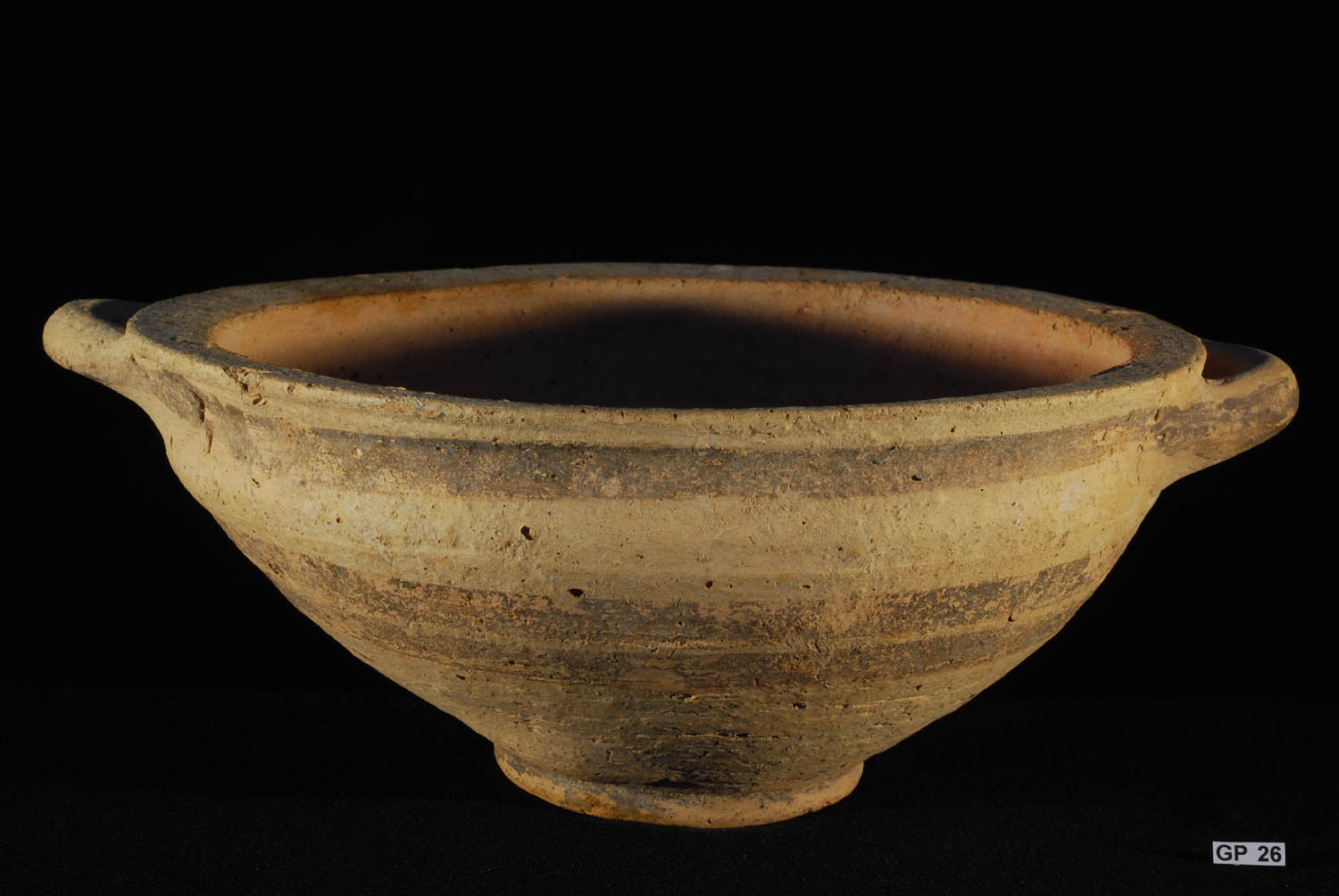
Catalogue No.: GP26
Title: Corinthian Kylix
Date: 7th Century BC
Culture: Greek
Origin: Corinth, Mediterranean Coast
Material: Slip decorated clay
Dimensions: 80 mm (Height) x 182 mm (Diameter)
Description
This 7th-century BC Corinthian kylix epitomizes the early geometric style of Greek pottery, hailing from a period when Corinth was a major hub of ceramic innovation and production. As a hallmark of ancient Greek craftsmanship, the kylix is a shallow, wide-brimmed drinking vessel, specifically designed to facilitate the communal drinking rituals integral to symposia. These gatherings were not just social events but were critical in the dissemination of philosophical, political, and cultural ideas among the elite of Greek society.
The design of the kylix is a masterful blend of aesthetics and function, characterized by its broad, open form which allowed for easy sharing and consumption of wine. The minimal decoration on this particular kylix, featuring simple yet precise geometric patterns, speaks to a time when such adornments were both a form of artistic expression and a symbolic representation of the cultural and social norms of the era. The subtle decorations were likely applied using slips that would have turned black upon firing, a technique that required meticulous control and speaks to the high level of skill possessed by Corinthian potters.
This vessel’s construction with a smooth, rounded body and a stable base illustrates the practical aspect of its design, catering to frequent handling during lively symposia. Its unassuming elegance and the symmetry of its form and decoration exemplify the geometric period’s emphasis on harmony and balance, principles deeply ingrained in Greek philosophy and cosmology.
The Corinthian kylix is not just a piece of pottery; it is a cultural artifact that offers insights into the daily and ceremonial life of ancient Greeks, reflecting their values, their social practices, and their unparalleled contributions to the arts and crafts. Each aspect of its design and decoration serves as a testament to a civilization that placed immense value on communal interaction and the aesthetic representation of their societal ideal
Cultural Relevance
This kylix not only illustrates the artistic trends of ancient Corinth but also embodies the social and cultural dynamics of the period. Corinth was a major hub in the Mediterranean trade routes, and its pottery, widely circulated throughout the region, influenced and was influenced by the diverse cultures with which it interacted. The kylix thus serves as a tangible link to understanding the exchange of ideas and traditions among ancient civilizations, emphasizing Corinth’s role in the propagation of Greek cultural and artistic norms.
This catalog entry aims to engage both individual collectors and institutional investors by highlighting the kylix’s historical significance, masterful craftsmanship, and cultural impact. As an artifact, it offers a unique glimpse into the daily life and communal practices of ancient Greece, making it an invaluable piece for both educational purposes and as a significant addition to any collection of ancient artifacts.
Provenance and Legality Documentation
Provenance History
This kylix is a documented piece from the Victor M. Pracas collection, with a well-established record of ownership and provenance. The collection includes acquisitions from significant entities like the Freeland, Upland, and Lanzoni estates, among others, indicating a rich history of collection and preservation within well-regarded circles.
Legal Documentation
The piece has been legally authenticated and there are no constraints on its disposal or export. Independent verification by experts such as Giovanni Gervasoni confirms the kylix’s authenticity, and it complies with all necessary legal standards for ownership and sale.
Investment Consideration
This Corinthian Kylix, with its deep historical significance and exceptional artistic merit, represents a remarkable investment opportunity for collectors and institutions focused on ancient artifacts. Its provenance and the exquisite craftsmanship it showcases elevate it beyond a mere collectible to a pivotal cultural and historical artifact. The kylix’s age, combined with its preservation and the story it tells of ancient Greek life, enhance its potential value significantly. As a standout piece, it not only promises to enrich a collection but also offers substantial educational and historical appeal, making it a prudent and attractive asset for both private and public collections.
Exhibition
The kylix is part of our museum’s permanent exhibition on ancient Greek pottery, illustrating the development of ceramic arts and the exchange of cultural practices across the Mediterranean.
Educational Value
As an educational tool, the kylix offers insights into ancient Greek daily life, art, and social customs, particularly around symposia. It provides a tangible connection to the past, allowing for a deeper understanding of ancient societal structures and their influence on Western civilization.
References
The catalog entry draws on scholarly literature on Corinthian pottery, historical accounts of Greek symposia, and studies on Mediterranean trade practices. These sources provide a comprehensive background that enriches the understanding of the kylix’s role and significance in ancient Greek culture.