Catalogue No.: GP01
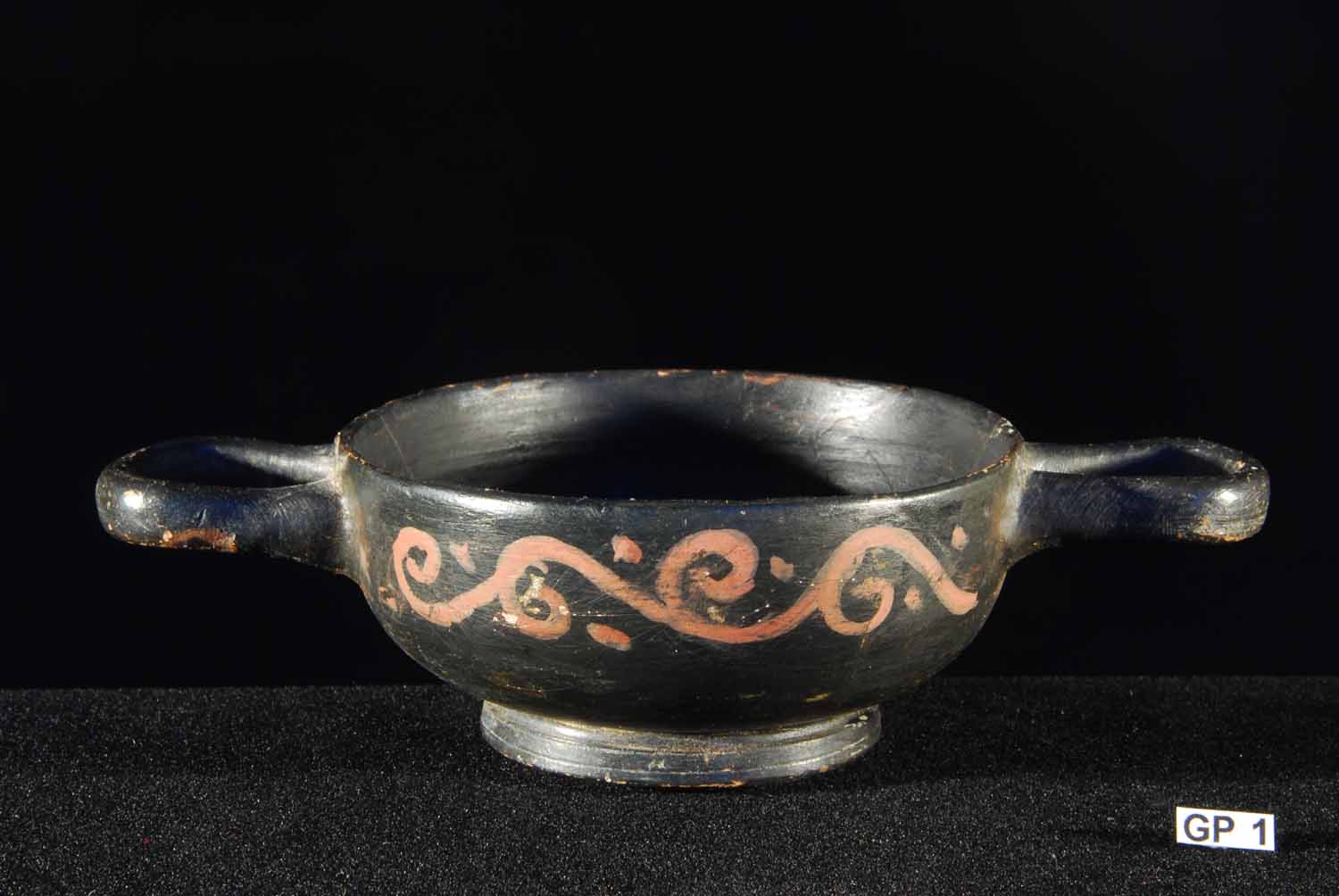
Catalogue No.: GP01
Title: Miniature Kylix – Xenon Ware
Date: 4th Century BC
Culture: Greek
Origin: Southern Italy
Material: Metallic black glazed ware with orange/red scroll design
Dimensions: 119 mm (Width) x 31 mm (Height)
Description
This exquisite Miniature Kylix is a quintessential representation of Greek Xenon Ware, originating from Southern Italy in the 4th century BC. Celebrated for its masterful craftsmanship and artistic refinement, this wine-drinking cup is characterized by a sophisticated metallic black glaze that forms a striking contrast with the red/orange scroll designs, meticulously etched through a sgraffito technique. This method involves incising through a top slip to reveal the underlying body color, highlighting the precision and skill of ancient Greek artisans.
The kylix’s design features a shallow and broad bowl supported by a sturdy base, optimal for use in the communal and ceremonial settings of ancient symposiums. The moderate dimensions and the ergonomic placement of its twin horizontal handles facilitate ease of handling, underscoring its functional design tailored for social gatherings.
The decorative motifs, swirling elegantly around the vessel, are not merely ornamental but are emblematic of the period’s artistic aspirations and the cultural significance of festivity in Greek society. These intricate patterns also reflect the technological advancements of the era, showcasing an advanced understanding of ceramic materials and firing techniques that were pivotal in achieving the kylix’s lustrous finish and durable form.
The historical and cultural significance of this piece extends beyond its aesthetic appeal, encapsulating the essence of Greek social rituals and the zenith of ceramic artistry. As a museum-quality artifact, this kylix is more than an ancient relic; it stands as a testament to the intricate social rituals and artistic achievements of ancient Greece, offering invaluable insights into the sophistication of Greek artisanal culture and technological prowess.
This Miniature Kylix, with its exceptional quality and rich provenance, represents a prestigious and strategic acquisition for any collection, embodying the rich cultural heritage and advanced technological capabilities of ancient Greece.
Cultural Relevance
The Miniature Kylix, crafted in the 4th century BC in Southern Italy, epitomizes the zenith of Greek ceramic craftsmanship, classified under the esteemed category of Xenon Ware. As a fundamental artifact used primarily in symposiums, this wine-drinking cup illuminates the ancient Greeks’ refined approach to communal and ceremonial engagements. The kylix’s architecture—broad, shallow, and easily accessible—was meticulously designed to facilitate the sharing of wine, an act central to fostering dialogue and camaraderie among participants.
In the context of these gatherings, the kylix was more than a mere vessel; it was a symbol of social unity and intellectual exchange. The importance of wine in these settings extended beyond mere consumption, playing a pivotal role in religious and cultural rituals that were integral to Greek society. This included libations to gods and the deceased, marking the kylix as a vessel of profound societal significance.
Furthermore, the presence of such artifacts in symposiums underscores the layered social dynamics of the era, reflecting a culture that deeply valued the interplay of aesthetic appreciation, philosophical discourse, and communal participation. Thus, the Miniature Kylix is not only a testament to ancient craftsmanship but also a mirror reflecting the societal norms and values that shaped and were perpetuated by Greek civilization.
Provenance and Legality Documentation
Provenance History
The Miniature Kylix was recovered from archaeological excavations in Southern Italy and has been part of the Victor M. Pracas collection. The collection has a detailed provenance traceable through notable acquisitions from prominent collections and families who dealt with antiquities. It has been legally acquired from the Paul Freeland Collection, R.J. Upland Esq. Collection, Lanzoni Estate, among others. These pieces were gathered over several decades, beginning from the early 20th century by Victor Pracas’ ancestors, who were recognized dealers in Lisbon. The collection was regularly documented and appraised, ensuring its legal status and authenticity.
Legal Documentation
The piece’s legal documentation confirms clear title ownership by Victor M. Pracas. The collection, including this Kylix, has been fully catalogued and accompanied by certificates of authenticity. As per the assessment conducted by K.A. Hicks & Associates, all necessary steps have been taken to verify the provenance and legal ownership, and there are no restrictions concerning the display or sale of the artifact. The piece’s history of acquisition and continuous documentation supports its legality and clears any potential claims of illicit ownership.
Investment Consideration
This kylix, a distinguished exemplar of 4th-century BC Greek Xenon Ware, stands as a premier asset for collectors and cultural institutions alike, due to its significant historical depth, cultural resonance, and aesthetic excellence. The vessel’s well-documented provenance, coupled with its consistent allure at exhibitions, positions it not only as a captivating display piece but also as a strategic investment.
Owning this kylix offers more than aesthetic pleasure; it represents an opportunity to hold a piece of the rich tapestry of Greek history. The enduring fascination with Greek artifacts ensures that this kylix remains highly desirable in the art and antiquities market, likely accruing cultural prestige and potential financial appreciation over time. For investors and institutions, this piece offers a dual benefit: it enhances a collection’s cultural weight and holds promise for long-term value retention and appreciation, reflecting both the timeless allure of ancient Greek art and the savvy of modern investment in heritage assets.
Exhibition:
The Miniature Kylix is a distinguished piece within our collection, focusing on the role of ancient Greek ceramics in daily life and ritual. It enhances public understanding of ancient Greek cultural practices and artistic expressions without having been exhibited externally. This exclusive display within our collection allows visitors to gain deeper insights into the significance of such ceramics in societal and ceremonial contexts, emphasizing their role not merely as utilitarian objects but as crucial elements of cultural heritage and artistic tradition.
Educational Value:
The Miniature Kylix offers a profound educational experience, illuminating the social, artistic, and technological aspects of ancient Greek culture. Used primarily in symposiums, this wine drinking cup provides insight into ancient Greek social practices, particularly their communal and ceremonial gatherings. It showcases the advanced ceramic technology of the era, highlighted by its metallic black glaze and intricate orange/red scroll designs executed in slip decoration technique. These elements not only display the craftsmanship of 4th century BC Greek artisans but also serve as a gateway to exploring the symbolism in Greek art, the chemical processes involved in pottery, and the broader cultural and religious significance of the era. The Kylix is an invaluable resource for understanding the interplay between daily life and cultural expression in ancient Greece, making it a cornerstone piece for educational exploration in museum settings.
References
The catalog entry for the Miniature Kylix – Xenon Ware utilizes scholarly research that emphasizes the artistic characteristics and cultural importance of Greek Xenon Ware. This research highlights the kylix’s significance as a historical and cultural artifact, enhancing our understanding of Greek ceramic practices in Southern Italy and their broader impact on the region’s cultural traditions.