Catalogue No.: GP13
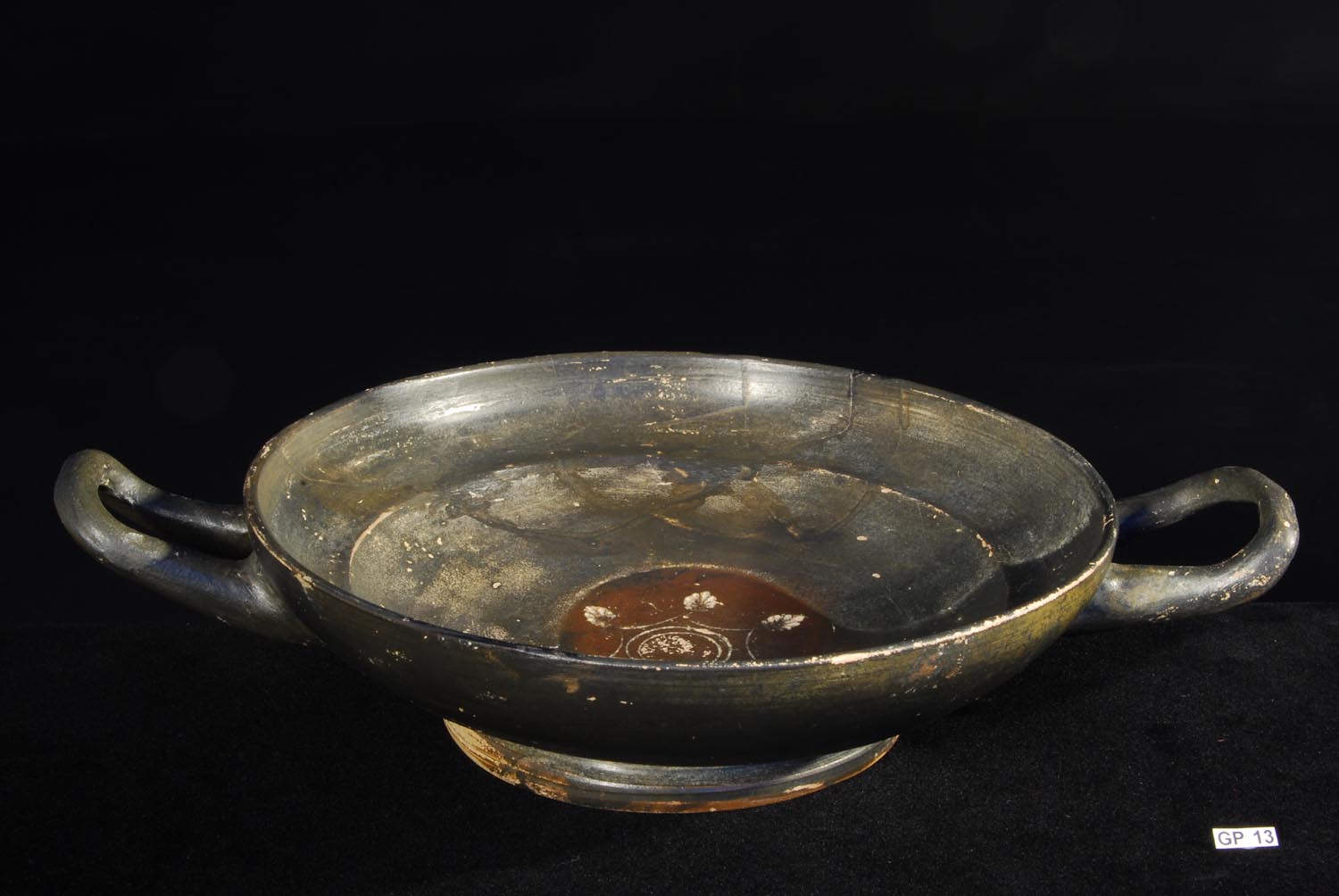
Catalogue No.: GP13
Title: Campanian Black-Glaze Kylix
Date: 4th Century BC
Culture: Greek
Origin: Cumae, Greek Southern Italy
Material: Pale buff clay with black glaze
Dimensions: 247 mm (Width) x 45 mm (Height)
Description
This Campanian Black-Glaze Kylix, from the 4th century BC, is a masterful representation of the advanced ceramic artistry of Greek Southern Italy, specifically from the region of Cumae. The kylix is characterized by its broad, shallow bowl and symmetrically balanced twin handles, making it an iconic vessel in ancient Greek symposia, where it facilitated the communal rituals of wine drinking.
The vessel’s surface is enveloped in a deep, rich black glaze, which not only accentuates its elegant form but also enhances the decorative motifs skillfully applied to the tondo—the central inner part of the bowl. Here, the kylix features a meticulously crafted six-point rosette, encircled by delicate palmettes and intricate geometric patterns. These elements are not simply decorative but are rich in symbolic meanings, often associated with divine protection, fertility, and beauty, reflecting the cultural and religious undertones of the period.
The use of black glaze is both aesthetically significant and functionally advantageous. It contrasts sharply with the finer details of the tondo’s artwork, making them stand out more vividly, while historically, it was also valued for its ability to reveal the clarity of oil and wine residues. This choice illustrates the Greek potters’ knack for marrying practicality with sublime artistry, ensuring that each piece was as useful as it was visually compelling.
This kylix is not just a ceremonial artifact but also a testament to the technological innovations and aesthetic sensibilities of the Campanian potters, who were renowned for their ability to influence the broader Mediterranean pottery styles through their exceptional craft.
Cultural Relevance
The Campanian Black-Glaze Kylix illustrates the intermingling of local Italian and Greek artistic traditions, reflecting the cultural assimilation and exchange that characterized the region of Cumae. The kylix’s design and function highlight its role in social rituals, particularly in dining and ceremonial contexts, offering insights into the communal and celebratory customs of the time.
Provenance and Legality Documentation
Provenance History
This kylix, originating from Cumae, exemplifies the local adaptation of Greek ceramic styles within the Campanian context, representing the region’s significant contributions to the broader Greek artistic legacy. The artifact’s remarkable preservation allows for an enriched understanding of ancient ceramic traditions in Southern Italy. This piece is part of a well-documented collection, with a proven provenance history that includes acquisition from notable collections and by familial inheritance, enhancing its historical and cultural value.
Legal Documentation
This artifact has been legally acquired and its provenance and legality thoroughly documented. The documentation includes an export permit issued by the Italian authorities, complying with both national and international cultural heritage laws. The rigorous vetting process has confirmed the legal ownership and the artifact’s eligibility for export without any legal constraints, ensuring adherence to cultural heritage protections. This comprehensive documentation supports the artifact’s legal standing and facilitates its inclusion in educational and cultural displays internationally.
Investment Consideration
This kylix’s verifiable historical authenticity and outstanding preservation significantly amplify its value as an investment piece. Its cultural and artistic significance, emblematic of classical Greek artistry from Southern Italy, makes it a compelling acquisition for collectors and institutions specializing in classical antiquities. The exquisite craftsmanship and rich symbolic decor not only ensure its appeal as a showcase artifact but also suggest its potential for appreciation in scholarly and collector circles, enhancing any collection it joins..
Exhibition
This Campanian Black-Glaze Kylix is a prominent part of our museum’s permanent collection, which focuses on ancient Greek pottery. It highlights the artistic and functional qualities of Greek ceramics, particularly those from Southern Italy, providing our visitors with a deep dive into the rich ceramic traditions of the region. This Kylix helps illustrate the blend of aesthetic beauty and practicality, showcasing the sophisticated ceramic techniques that were characteristic of ancient Greek artisans.
Educational Value
As an educational artifact, the Campanian Black-Glaze Kylix provides a tangible connection to the past, enriching viewers’ understanding of ancient Greek cultural and artistic practices. It serves as a tool for learning about the complexities of ancient craftsmanship and the societal values reflected in ceremonial artifacts.
References
Scholarly research on Campanian pottery and its integration into Greek ceramic art forms the basis of our understanding of this artifact’s significance. These studies, published in archaeological journals and books, provide essential context for appreciating the kylix’s artistic and historical dimensions.