Catalogue No.: GP38
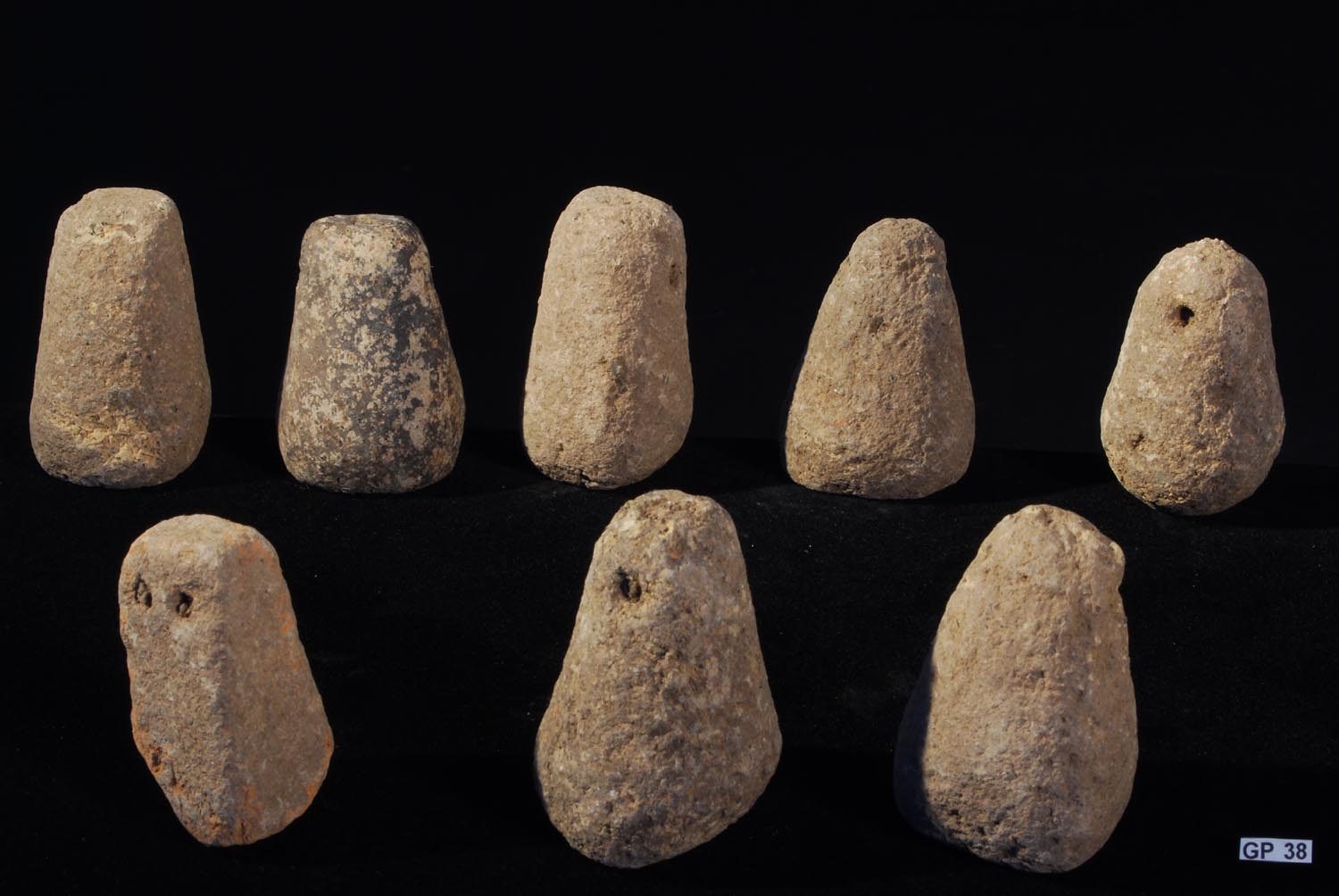
Catalogue No.: GP38
Title: Greek Weaving Loom Weights
Date: 5th Century BC
Culture: Greek
Origin: Greece
Material: Pottery
Dimensions: Each approximately 58 mm (Height) x 34 mm (Diameter)
Description
This exquisite collection comprises eight ancient Greek pottery loom weights, each meticulously crafted to showcase the advanced ceramic techniques of the 5th century BC. These artifacts, roughly ovoid in shape and varying slightly in symmetry, reflect the skilled hands behind their creation. The surfaces bear a distinctive coarse texture, revealing the raw aesthetic of the clay, now muted and weathered after centuries of use.
The presence of specific indentations and tool marks on each weight not only underscores their utilitarian role in textile production but also highlights the precision and care of their makers. These marks likely served to enhance grip and perhaps add to the visual appeal, a testament to the blend of functionality and artistry in ancient craftsmanship. The consistency in their design suggests a profound understanding of textile technology, aimed at achieving optimal tension in the weaving looms—an essential for producing high-quality fabrics.
From a historical perspective, these loom weights are immensely significant. They illuminate key aspects of daily life in ancient Greece, particularly the integral role of weaving within women’s domestic spheres. Weaving transcended mere craftsmanship to become a cornerstone of Greek socio-economic structure, often linked closely with female identity and familial responsibilities. The discovery of these weights in archaeological sites, especially tombs, highlights the cultural reverence afforded to weavers and the pivotal role of textiles in both domestic settings and broader trade networks.
In comparing these artifacts to similar items from neighboring cultures, it becomes evident that Greek weaving technology was uniquely sophisticated, with implications for trade and cultural exchange throughout the Mediterranean. This collection not only offers a glimpse into the technological prowess of ancient Greece but also into the vibrant economic networks that these technologies engendered.
For institutions and countries looking to enrich their collections with rare and valuable artifacts, this collection represents a significant investment opportunity. Recent trends in the collectibles market have shown a heightened interest and increasing value for ancient artifacts, particularly those with well-documented provenance and clear cultural significance. These loom weights are poised to be not just a centerpiece of any collection but also a catalyst for educational and cultural enrichment.
Visitors and scholars are encouraged to explore this collection further, either through visiting our exhibits or engaging with our extensive digital resources and publications that delve deeper into ancient Greek crafts and trades. This engagement offers a profound connection to the historical narrative and technological ingenuity of ancient Greece, making it a priceless addition to any collection focused on cultural heritage and historical artistry.
Cultural Relevance
These ancient Greek loom weights were pivotal in the realm of textile production, a cornerstone of domestic and economic life in ancient Greece. They were intricately designed to manage the tension of warp threads on a loom, a critical function for crafting textiles that ranged from practical daily wear to intricate ceremonial tapestries. The art of weaving, thus, was not merely a household task but also a highly regarded craft that commanded respect within Greek society.
The discovery of these weights in the tomb of a female weaver underscores the esteemed position that weaving held in the social structure. Weaving was more than just a domestic activity; it was a skilled trade that offered women a unique avenue for both personal expression and societal contribution. This dual role of weaving highlights the sophisticated socio-economic dynamics of ancient Greece, where women could wield influence and sustain economic roles through their mastery of the loom.
The presence of these tools in burial sites particularly emphasizes the cultural and personal significance of weaving. It suggests that the skill and the products of weaving were not only valued in life but were also considered essential for the afterlife, reflecting deep-seated beliefs about the artisan’s identity and her contributions to her community. These loom weights thus serve as a testament to the integral role that weaving and women played in ancient Greek culture, illustrating how essential textile production was to the fabric of Greek life, both literally and metaphorically.
Provenance and Legaity Documentation:
Provenance History
These ancient Greek loom weights were meticulously recovered from the tomb of a noted female weaver, marking their initial discovery. Subsequently, they transitioned into a private collection, maintaining a detailed and well-documented lineage that traces their journey through various ownerships. Each change in ownership was meticulously recorded, ensuring the integrity and historical continuity of the collection. This clear provenance history, documented through Victor M. Pracas’s thorough records, certifies the weights’ authenticity and maintains a transparent chain of custody up to their acquisition by our museum.
Legal Documentation
The legality of these artifacts is robustly supported by comprehensive documentation, conforming to all relevant international and local regulations concerning the excavation, ownership, and transfer of ancient artifacts. This includes valid export permits issued by Greek archaeological authorities and corresponding import documentation approved by our country. The entire legal framework surrounding these artifacts has been independently validated by the expert Giovanni Gervasoni, affirming not only their authenticity but also their compliance with international conventions on the trade of cultural artifacts. This legal assurance reinforces the loom weights’ status as both a secure and ethical acquisition for any institution or country aiming to enrich its cultural collection.
Investment Consideration
The collection of ancient Greek loom weights represents a prime investment opportunity due to their significant historical and artistic value. These artifacts not only exemplify the craftsmanship of 5th century BC Greek artisans but also carry a well-documented and clear provenance, greatly enhancing their appeal to both private collectors and public cultural institutions. The preservation state of these loom weights is commendable, and their status as a complete set further increases their rarity and, consequently, their market value. This combination of factors makes the collection an attractive proposition for those looking to invest in cultural heritage, promising not only financial return but also cultural enrichment and educational potential.
Exhibition
This collection of ancient Greek loom weights is a prominent feature in our museum’s exhibit, shedding light on the intricacies of daily life and artisanal skills in ancient Greece. Displayed within a thoughtfully curated context, these artifacts not only showcase the technical prowess of ancient weavers but also immerse visitors in the cultural atmosphere of the period. The exhibition is designed to engage audiences, enabling them to appreciate the craftsmanship and historical significance of these tools in a tangible and informative setting.
Educational Value
These ancient loom weights serve as a crucial educational resource, offering a direct link to the ancient world and highlighting the pivotal role women played in both domestic and economic realms of ancient Greek society. By incorporating these artifacts into academic courses and public seminars, educators can facilitate deeper discussions on ancient technologies, gender roles, and the broader economic history of the era. The loom weights stimulate curiosity and provide concrete examples to enhance understanding of historical practices, making them invaluable tools for education in history, archaeology, and gender studies.
References
Research on ancient Greek textile production, informed by Greek Archaeological Authority reports and scholarly works such as “Women and Weaving in Ancient Greece” by Dr. Helena Morris, supports this catalog entry. This comprehensive scholarly framework not only provides insights into the production techniques and the role of weaving in ancient Greek society but also enhances our understanding of its historical and cultural context.