Catalogue No.: GP42
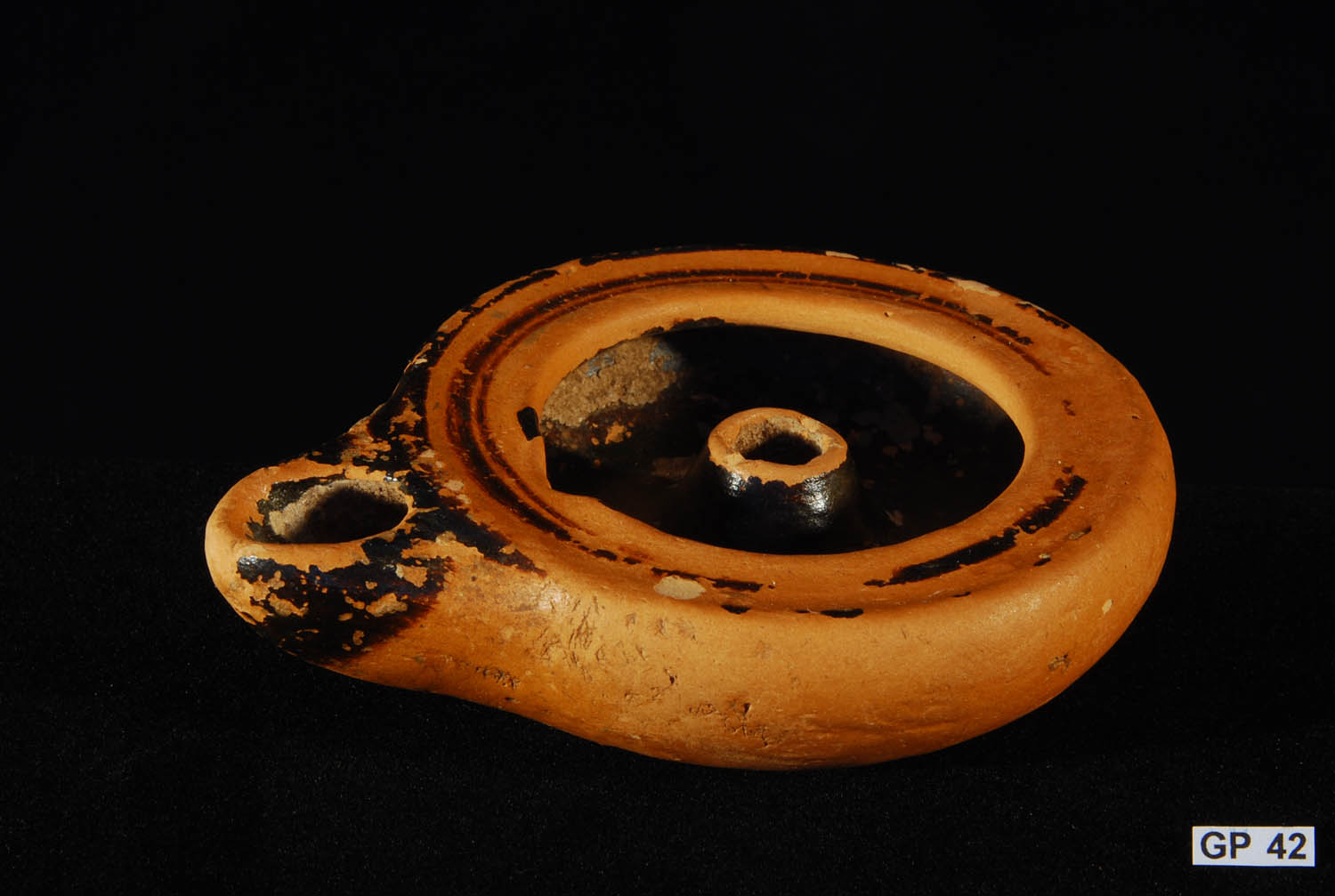
Catalogue No.: GP42
Title: Greek Ionian Shipwreck Pottery Group
Date: Mid 6th Century BC
Culture: Greek
Origin: Southern Aegean Sea
Material: Pottery with black pigment wash
Dimensions: 105mm (Height) x 83mm (Width)
Description
Recovered from a mid-6th century BC shipwreck in the historically significant Southern Aegean Sea, this compelling collection of pottery offers a tangible connection to the ancient Greek world. These artifacts—comprising an oil lamp, a skyphos, and a kylix—highlight the utilitarian ceramics that were commonplace in Greek society, used daily by its people.
The robust pink-orange clay base of these pieces, typical for the region, is accentuated with a rich black pigment wash, giving them a distinctive appearance that captures the aesthetic preferences of the era. The surfaces bear encrustations from saltwater minerals, adding a layer of texture that not only testifies to their time submerged in the Aegean but also enhances their archaeological appeal.
The oil lamp, small and intimate, was used for personal lighting, reflecting the practical aspects of ancient life. The skyphos and kylix, central to Greek dining and ceremonial traditions, facilitated social interaction and communal drinking at symposiums—spaces of philosophical exchange and celebration. The detailed craftsmanship of these vessels, with their elegantly curved handles and proportioned forms, underscores their role in daily and festive occasions.
Noticeable wear and the meticulous restoration of two fragmented items reveal the challenges of preserving such ancient relics. This restoration work has been conducted with a focus on maintaining the authenticity of the original designs, ensuring that the historical integrity of these pieces remains clear.
These pieces are not just remnants of ancient craftsmanship; they are relics of the Greek maritime tradition, reflecting the spread of Greek culture and commerce across the Mediterranean. The artifacts offer a vivid glimpse into the everyday practices of ancient Greek households, providing invaluable insights into the material culture that underpinned ancient Greek civilization
Cultural Relevance
These artifacts, as utilitarian objects from a trading vessel, shine a light on the everyday use of Greek ceramics, contrasting sharply with the more ornate and figuratively decorated vases often discovered in tombs. Their presence aboard a ship underscores their role in the daily and economic activities of ancient Greek society, where pottery was essential not just for storage and transport of goods like oil, wine, and grains, but also for daily domestic functions. These pieces provide a window into the maritime culture of the Greeks, illustrating how such vessels were integral to both the mundane and the broader commercial exchanges that connected various parts of the ancient Greek world. This insight into practical pottery use highlights the duality of Greek ceramic art—both as everyday items and as objects of beauty and ceremonial significance.
Provenance and Legality Documentation
Provenance History
The items belong to the Victor M. Pracas collection, sourced from various established collections, including the Paul Freeland and R.J. Upland Esq. Collections. These artifacts have been documented extensively, showing a clear line of acquisition through family inheritance and reputable dealers.
Legal Documentation
Comprehensive legal documentation supports the collection’s provenance and legitimacy. This includes certificates of authenticity and legal ownership verified through consultations with experts such as Giovanni Gervasoni. The artifacts are free from any legal constraints concerning their disposal or export.
Investment Consideration
These artifacts, derived from a 6th-century BC Greek shipwreck, represent a unique investment opportunity due to their historical significance and exceptional rarity as daily-use pottery. The pieces serve as crucial links to ancient Greek maritime commerce and domestic life, making them highly valuable for both academic research and private collections. Enhanced by a well-documented provenance and their remarkable state of preservation, these artifacts are particularly appealing to investors and collectors. Their ability to offer insights into the broader cultural and economic exchanges of the ancient world adds a layer of intellectual value that complements their material worth, positioning them as both educational resources and potentially lucrative assets in the antiquities market.
Exhibition
The pottery group is prominently featured in our museum’s collection, providing visitors with a direct link to the ancient Greek maritime world. By displaying these artifacts, we not only preserve a piece of history but also enhance public appreciation for the intricacies of ancient Greek seafaring and commerce.
Educational Value
This collection of pottery serves as an invaluable educational resource, enriching our understanding of ancient Greek material culture and maritime history. Each piece offers a snapshot of daily life, economies, and trade practices prevalent in ancient Greece, making this group particularly instrumental for educational initiatives aimed at dissecting ancient socioeconomic structures. By incorporating these artifacts into academic curricula and public exhibits, we facilitate a deeper engagement with the past, catering to both scholars and the broader public interested in the tangible legacies of ancient civilizations.
References
Research on the Greek Ionian Shipwreck Pottery Group is substantiated by Giovanni Gervasoni’s expert assessments, ensuring artifact authenticity, and complemented by provenance and legal documentation from K.A. Hicks & Associates. Victor M. Pracas’s detailed catalog further enriches this understanding by providing extensive histories of each piece. Insights into ancient pottery techniques and materials are supported by maritime archaeology publications and the Historical Ceramics Journal.