Catalogue No.: GP43
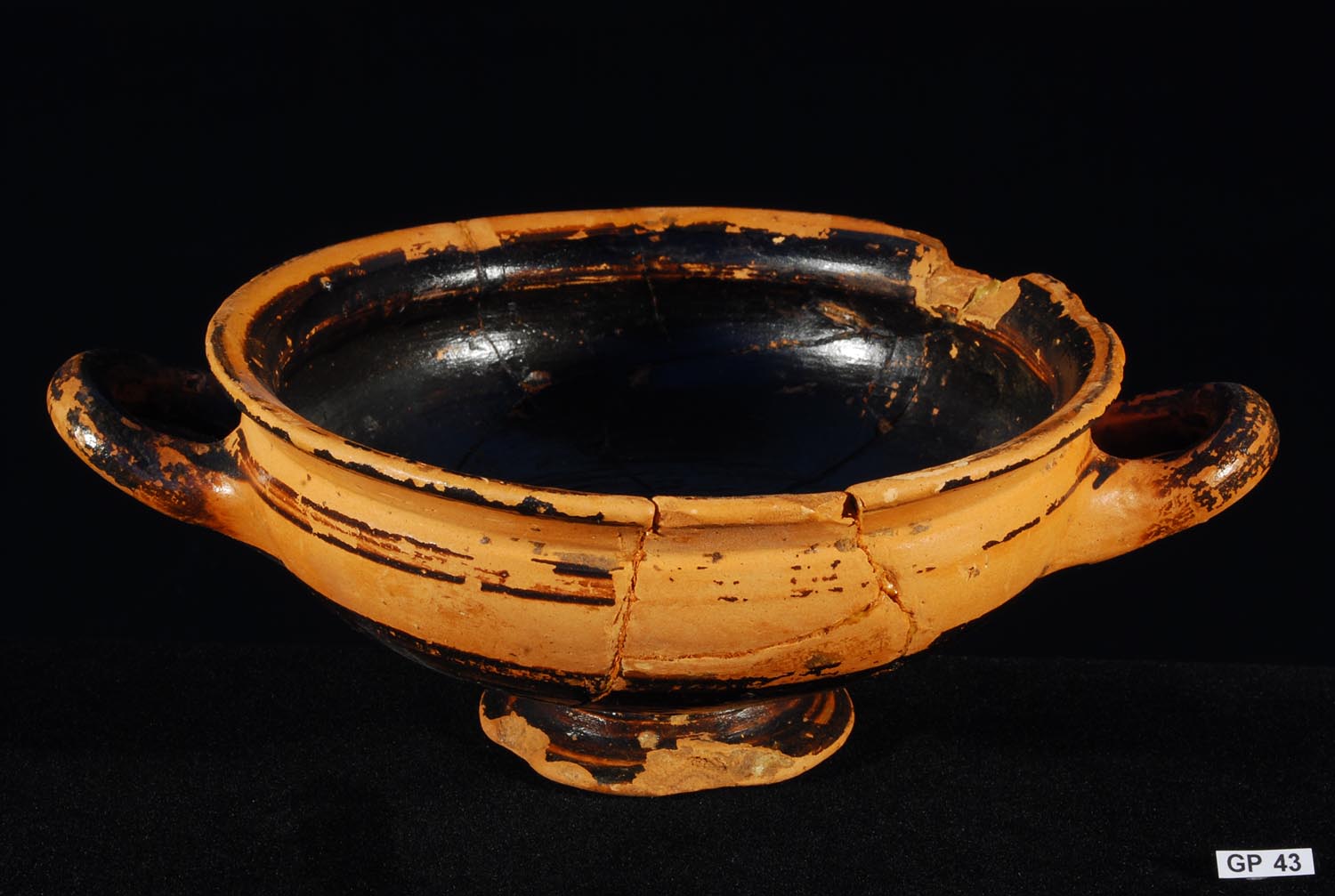
Catalogue No.: GP43
Title: Greek Kylix from the Ionian Shipwreck
Date: Mid 6th Century BC
Culture: Greek
Origin: Southern Aegean Sea
Material: Pottery
Dimensions: 60mm (Height) x 135mm (Width)
Description
This item is part of the Greek Ionian Shipwreck Pottery Group, dating back to the mid-6th century BC. Recovered from the wreckage of a trading vessel in the southern Aegean Sea, this collection comprises an oil lamp, a skyphos, and a kylix. Each piece, including the featured kylix, is crafted from pink-orange clay with a black pigment wash, showcasing the typical aesthetic of the era’s utilitarian ceramics. Unlike the more elaborate figured vases often found in tombs, these items reflect the daily pottery used in ancient Greek households.
The kylix, central to this group, is characterized by its broad, shallow bowl and dual handles, making it ideal for communal drinking during symposia. Despite significant wear and the challenges of time, including saltwater encrustation, the kylix retains a noticeable gloss. This is indicative of the advanced glazing techniques employed by Greek artisans, which allowed for both durability and beauty in everyday items. The visible repairs and reattachments of fragments on the kylix and other items in the group underscore their archaeological recovery and subsequent restoration efforts.
The presence of everyday items like the oil lamp and skyphos alongside the kylix in the shipwreck provides valuable insights into the nature of ancient Greek maritime trade and domestic life. These artifacts highlight the practical applications of pottery, serving not only in daily activities within Greek homes but also in the broader context of trade and cultural exchange across the Aegean Sea. The recovery of such items from a shipwreck adds a layer of historical context, suggesting the robust trade networks that were pivotal to the spread of Greek culture and commerce.
Cultural Relevance
The kylix, prominently used in ancient Greek symposia, was much more than a mere vessel for drinking; it was a symbol of social and intellectual communion. These gatherings were essential to the fabric of Greek society, serving as platforms for philosophical debates, poetic recitations, and the deepening of communal ties through the shared experience of wine. The use of the kylix in such contexts highlights its integral role not only in daily social rituals but also in ceremonial practices that were foundational to the development of Greek cultural and philosophical traditions.
This particular kylix, as part of the broader Greek Ionian Shipwreck Pottery Group, offers profound insights into these ancient customs. It illuminates how such objects facilitated communal interactions that were pivotal in shaping the societal structures and values of the time. By fostering a communal spirit through shared rituals, the kylix and its counterparts played a significant role in the cultural cohesion of ancient Greece, emphasizing the societal importance of unity and intellectual exchange. This artifact, therefore, is not just a relic of ancient craftsmanship but a key to understanding the social dynamics and cultural priorities of its era.
Provenance and Legality Documentation
Provenance History
Acquired from the Victor M. Pracas collection, which includes artifacts sourced from significant historical collections such as the Paul Freeland and R.J. Upland Esq. Collections. This kylix, along with other pieces, was recovered from a shipwreck, providing it with a storied and documented lineage that traces back to ancient maritime routes.
Legal Documentation
The item has been legally documented and vetted, with certifications of authenticity provided by experts including Giovanni Gervasoni, ensuring its legal provenance and the legitimacy of its historical claims.
Investment Consideration
The kylix stands out as an exceptional investment opportunity due to its verifiable historical authenticity and well-documented provenance. This artifact not only holds significant cultural and historical value but also exemplifies the sophisticated craftsmanship of ancient Greek ceramics. For private collectors and public institutions alike, acquiring this kylix represents a strategic addition to any collection focused on ancient artifacts. Its excellent state of preservation and the enduring interest in Greek antiquities suggest substantial potential for value appreciation over time. This piece is particularly appealing to those looking to enrich their collections with artifacts that offer both aesthetic beauty and a rich narrative of ancient societal practices.
Exhibition
This kylix is a highlight of our museum’s Greek artifacts collection, prominently displayed to connect visitors with the ancient Greek maritime world. Its placement in our exhibition not only showcases its aesthetic and historical significance but also serves to educate visitors about the rich cultural heritage and intricate artistry of ancient Greece. By exhibiting this piece, we provide an immersive experience that transports viewers back to the classical era, offering a window into the life and times of ancient Greeks.
Educational Value
This kylix is an invaluable educational resource that brings to life the ancient Greek symposium, a cornerstone of social and intellectual interaction in classical antiquity. Its use in academic settings and public displays helps illustrate important aspects of Greek culture such as daily life, economic practices, and advanced ceramic technologies. For students and visitors, the kylix serves as a tangible link to the past, enhancing educational programs in history and archaeology and fostering a deeper appreciation of the technological and cultural achievements of ancient Greece.
References
Research on the Greek Kylix from the Ionian Shipwreck is anchored by Giovanni Gervasoni’s expert assessments, which affirm the artifact’s authenticity, complemented by provenance and legal documentation from K.A. Hicks & Associates. Victor M. Pracas’s detailed catalog provides extensive historical, acquisition, and authentication details for the item. Additional scholarly articles on Greek symposia and ceramic use in antiquity provide contextual background and comparative analysis. These resources collectively enhance our understanding of the artifact’s cultural and historical contexts.