Catalogue No.: GP44
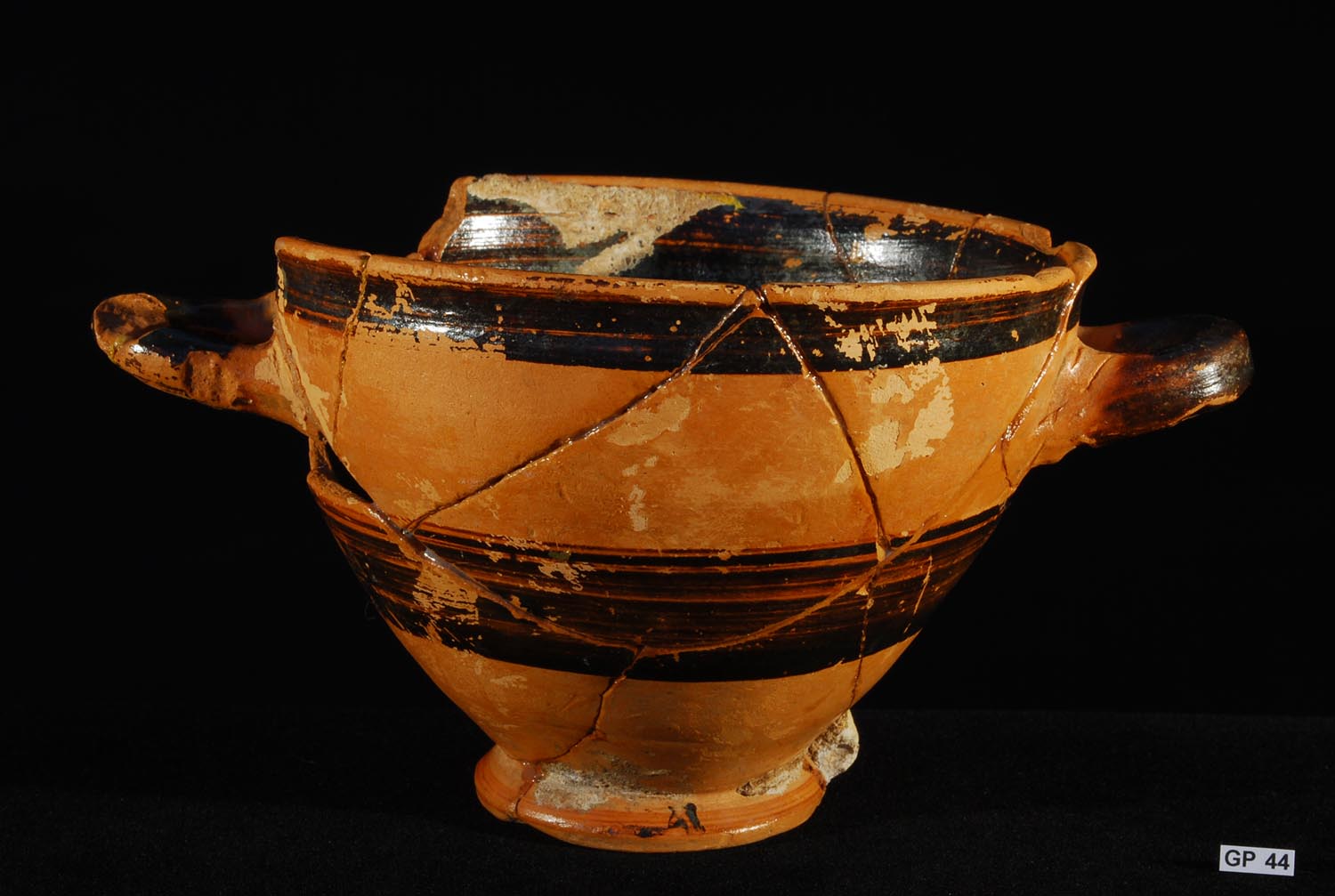
Catalogue No.: GP44
Title: Kylix from the Greek Ionian Shipwreck Pottery Group
Date: Mid 6th Century BC
Culture: Greek
Origin: Southern Aegean Sea
Material: Pottery
Dimensions: 95mm (Height) x 135mm (Width)
Description
This Greek kylix, unearthed from the mid-6th century BC shipwreck in the southern Aegean Sea, is a central piece of the Greek Ionian Shipwreck Pottery Group. This group, which also includes utilitarian items like an oil lamp and a skyphos, illustrates the diversity of ceramic objects used in everyday Greek life as opposed to the more ornate figured vases found in tombs.
The kylix, distinguished by its broad, shallow bowl and dual handles, was specifically designed for the communal consumption of wine at symposia. These gatherings were not only social but also intellectual events where philosophy, politics, and the arts were discussed among Greek elites. The design of the kylix facilitated easy sharing and was integral to the ritual of bonding over wine, which was a cornerstone of these assemblies.
Crafted from local pink-orange clay and finished with a resilient black pigment wash, this kylix demonstrates the sophisticated ceramic techniques of ancient Greek artisans. Despite being submerged for centuries, the vessel retains much of its original luster, though it also shows signs of historical wear. Saltwater encrustation and meticulous reattachment of its fragments bear testimony to its recovery and restoration, highlighting the kylix’s archaeological significance and enduring charm.
In contrast, the oil lamp and skyphos found with the kylix served more daily functional purposes, illuminating spaces and serving as drinking vessels, respectively. These items, while simpler in function, underscore the comprehensive nature of the pottery used aboard Greek trading vessels, reflecting both the domestic and ceremonial aspects of ancient Greek culture.
The discovery of these artifacts together enriches our understanding of the ancient Greeks’ maritime activities, trade practices, and daily life, providing a broader context for the kylix’s role in ancient society. This collection not only offers insight into the practical applications of pottery but also into the social customs that defined ancient Greek civilization.
Cultural Relevance
Kylixes, such as this one, held a pivotal role in ancient Greek society, primarily used during the symposia—a key social institution where the Greek elite engaged in communal drinking as a social and philosophical ritual. The design of this kylix, with its broad bowl and dual handles, was optimized for these gatherings, making it easy to pass among participants as they engaged in dialogue and debate. These events were not mere social affairs but critical cultural practices that reinforced social bonds, facilitated intellectual discourse, and played a central role in the cultural life of the polis. The symposium was also a space for performing arts and literary recitations, making the kylix instrumental in the diffusion of cultural norms and ideas. Thus, this vessel is not just a utilitarian object but a symbol of the sophisticated social interactions that were foundational to ancient Greek civilization. Its continued use and presence in such settings underscore the significant value the Greeks placed on fellowship, dialogue, and cultural continuity.
Provenance and Legality Documentation
Provenance History
This kylix is a significant piece from the Victor M. Pracas collection, which includes artifacts authenticated and documented from a range of notable sources. Initially recovered from a documented shipwreck in the southern Aegean Sea, this artifact traces its lineage through subsequent ownerships, including prestigious collections such as those of Paul Freeland and R.J. Upland Esq. The piece’s journey from discovery to its present status has been meticulously recorded, showcasing a well-documented provenance that enhances its historical value and integrity.
Legal Documentation
Legally, the kylix and its associated pottery group have been subjected to thorough scrutiny to confirm their authenticity and compliance with international heritage and trade laws. The legal documentation encompasses detailed scientific analyses and expert evaluations that verify the age and origin of the kylix, ensuring that it is free from any export or sale restrictions. This rigorous legal vetting process assures potential exhibitors and buyers of the collection’s clear title and legal standing for exhibition and transfer.
Investment Consideration
This kylix represents a significant investment opportunity, not merely as a piece of ancient art but also for its potential for appreciation in value. Its authenticity and historical significance are well-documented, stemming from its recovery from a noted shipwreck. The rarity of such artifacts, particularly those that are as well-preserved as this kylix, enhances its desirability to collectors and institutions alike. The piece’s proven provenance and exceptional condition, combined with the intrinsic cultural value and rarity of items from documented archaeological contexts, position it as a promising asset likely to accrue value over time.
Exhibition
This kylix is a centerpiece of our museum’s exhibit on ancient Greek maritime commerce. Its display provides visitors with a vivid portrayal of the historical and cultural contexts of its era. Showcased within the broader narrative of Greek seafaring and trade, the kylix helps illustrate how such objects were integral to both daily life and the expansive trade networks that connected different parts of the ancient Mediterranean world.
Educational Value
The kylix is an invaluable educational resource, offering deep insights into the fabric of ancient Greek society, particularly the social rituals associated with the symposium. By examining this artifact, learners can explore ancient Greek ceramic technology, understand the economic underpinnings of maritime trade, and discuss the societal norms of the time. It serves not only as a link to the past but also as a springboard for engaging discussions on how ancient innovations and social structures have shaped modern cultural practices.
References
Research on the Greek Ionian Shipwreck Pottery Group, including this kylix, is supported by expert assessments, verifying the authenticity and provenance of the artifacts. Documentation from Victor M. Pracas’s comprehensive catalog provides detailed historical and acquisition information. Additional insights are derived from scientific analyses and historical research on ancient Greek ceramic use and symposia, enhancing our understanding of the artifact’s cultural and historical contexts. These sources collectively form a robust framework, essential for both academic study and public education regarding ancient Greek maritime activities.