Catalogue No.: GP51
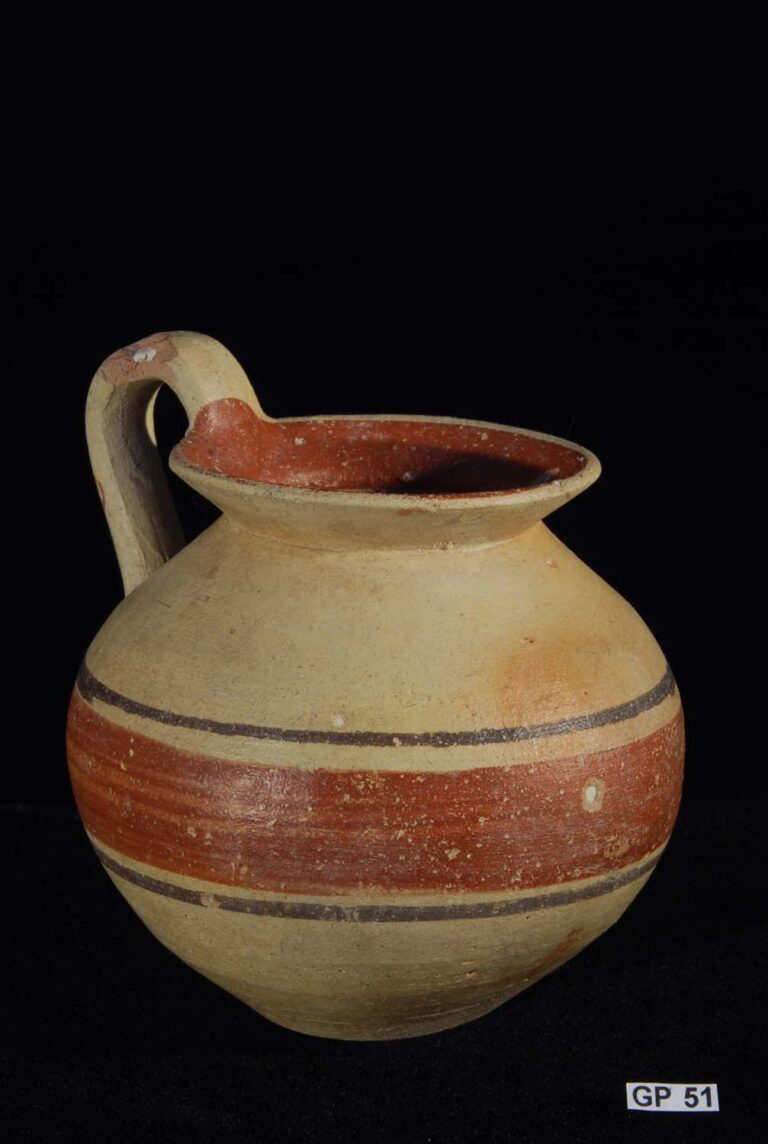
Catalogue No.: GP51
Title: Daunian Ware Pottery Olpe
Date: 4th Century BC
Culture: Daunian
Origin: Southern Italy
Material: Fine buff clay
Dimensions: 86 mm (Height) x 86 mm (Width)
Description
This Daunian Ware Pottery Olpe, dating from the 4th century BC, showcases the exquisite craftsmanship and aesthetic sensibility of the Daunian culture from Southern Italy. The vessel, modest in stature but rich in artistic expression, features a broad, rounded body that gracefully ascends from a firm, stable base to a wide, inviting mouth. This form is both practical for use and pleasing to the eye, indicative of the Daunian people’s ability to merge utility with elegance.
Crafted from fine buff clay, the olpe’s surface is smooth to the touch, reflecting a high degree of finishing skill. It is adorned with horizontally applied bands of red and brown, creating a stark and visually appealing contrast against the light clay background. These bands, strategically placed, accentuate the olpe’s curvaceous profile, drawing the eye upward from the base to the lip. The pigments used are derived from locally sourced minerals, ground and mixed with a medium that has allowed them to endure over millennia.
The single handle of the olpe, affixed from the shoulder to just below the vessel’s rim, is not only functional but also enhances the aesthetic symmetry of the piece. Its design facilitates easy handling and pouring, illustrating the Daunian potters’ thoughtful consideration of form and function. The handle’s smooth, curved silhouette complements the simple yet striking decorative bands, maintaining a balance between ornamental and utilitarian elements.
Internally, the olpe is unadorned, which may suggest a practical approach to its use in daily life, possibly in the serving of water or wine during communal meals. The absence of interior decoration focuses attention on the external artistic details and the tactile quality of the clay, which subtly records the impressions of the artisan’s hands and tools.
This Daunian olpe is a testament to the sophisticated ceramic techniques and the cultural aesthetics of ancient Southern Italy. Its design and decoration not only served practical purposes but also conveyed the Daunian community’s values and artistic identity, making it a valuable piece for both its historical and artistic merits.
Cultural Relevance
In the Daunian culture, vessels such as this olpe were central to both daily life and communal rituals, reflecting the societal importance of communal dining and ceremonial gatherings. The decorative motifs and the form of the olpe are deeply rooted in the cultural identity of the Daunian people, showcasing their artistic traditions and the influence of their interactions with neighboring cultures.
This olpe is not just a utilitarian object but a cultural artifact that offers insights into the social fabric and artistic endeavors of its time. It highlights the Daunian mastery in pottery, which served both practical needs and ceremonial purposes, reflecting the complex interplay between utility and beauty in Daunian society.
Provenance and Legality Documentation
Provenance History
This Daunian olpe is part of the esteemed Victor M. Pracas Collection, renowned for its rigorous documentation standards and the authenticity of its items. The olpe boasts a well-documented provenance, having been acquired from collections known for their meticulous curation and stringent acquisition standards. This rich history not only enhances the value of the olpe but also solidifies its historical authenticity, ensuring that it is a genuine piece representative of Daunian ceramic art.
Legal Documentation
The olpe is accompanied by comprehensive legal documentation, underscoring its compliance with all applicable cultural heritage and export laws. This includes a certificate of authenticity that verifies its origins and legality. The artifact has been thoroughly vetted to ensure there are no restrictions on its export, making it a legally acquired item that can be freely traded and exhibited. This robust legal framework guarantees that the olpe is an investment-worthy and ethically acquired piece, suitable for both private collectors and public institutions.
Investment Consideration
This Daunian olpe stands out as an exceptional investment opportunity due to its well-verified provenance, compelling aesthetic appeal, and superb condition. Its historical significance and artistic integrity position it as a highly desirable piece for collectors and institutions dedicated to the preservation and study of ancient Mediterranean artifacts. The olpe’s blend of cultural importance and visual beauty enhances its potential market value, making it a strategic acquisition for those seeking to enrich their collections with authentic and significant archaeological items.
Exhibition
This Daunian olpe is a highlight of our museum’s collection, where it plays a key role in the exploration of ancient Mediterranean ceramic traditions. Displayed prominently, it offers visitors a tangible connection to the past civilizations of Southern Italy, enriching their understanding of the region’s rich historical tapestry through its exquisite craftsmanship and design.
Educational Value
As an educational tool, this olpe provides valuable insights into the ceramic techniques, design choices, and cultural practices of the Daunian people. It serves as a window into the historical context of its creation and use, fostering a deeper appreciation among academics and the general public for the sophisticated artistry and ingenuity of ancient craftsmen. This artifact not only teaches about the technical aspects of pottery making but also about the social and cultural dimensions that these objects embody.
References:
The provenance and authenticity of the Daunian Ware Pottery Olpe are rigorously documented within the Victor M. Pracas Collection. Expert assessments and detailed records ensure the artifact’s historical validity. Additionally, scholarly research on Daunian pottery and the cultural practices of Southern Italy provides essential context and insights into the artifact’s significance.