Catalogue No.: GP57
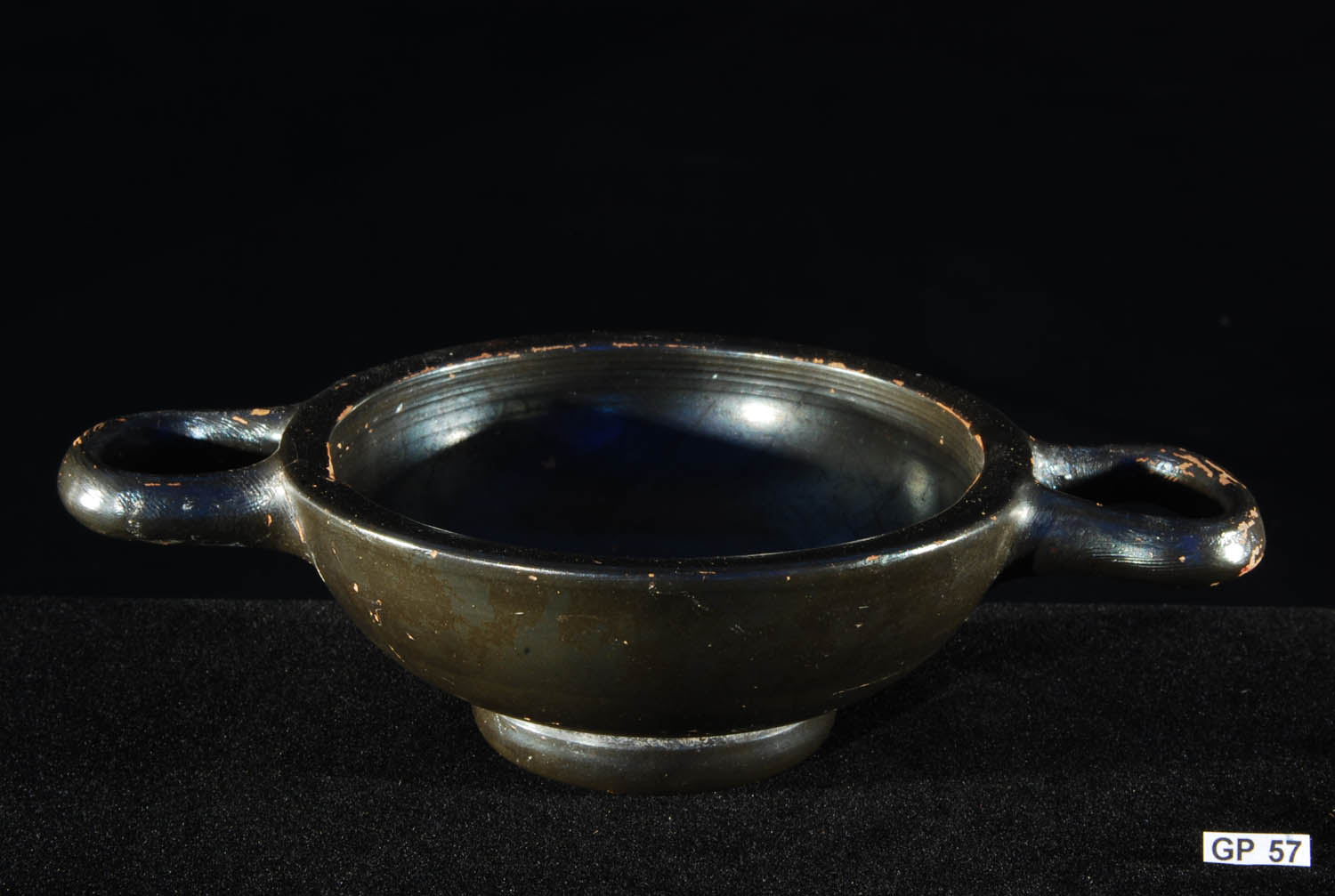
Catalogue No.: GP57
Title: Greek Black-Glaze Kylix
Date: 4th Century BC
Culture: Greek
Origin: Magna Graecia
Material: Fine red clay with metallic black glaze
Dimensions: 146 mm (Height) x 35 mm (Width)
Description
This exquisite Greek Black-Glaze Kylix from the 4th century BC stands as a pinnacle of ancient Greek ceramic artistry, demonstrating the era’s sophisticated craftsmanship and aesthetic refinement. The kylix, primarily a wine-drinking cup, boasts an elegant, shallow bowl and refined symmetry, balancing aesthetics with practical design, ideal for social rituals such as the symposium—a setting for communal drinking and intellectual discourse among the Greek elite.
Crafted from premium fine red clay, the kylix is supported by a pronounced high ring foot that not only ensures stability but also elevates the vessel, signifying its likely use in significant ceremonial occasions. The dual gracefully arched loop handles, symmetrically opposed, enhance handling and contribute to the vessel’s overall visual harmony, embodying the Greek ideals of symmetry and functional beauty.
The vessel is cloaked in a lustrous metallic black glaze, achieved through advanced firing techniques that involved precise temperature control and the use of iron-rich clay, which results in the deep, reflective sheen. This finish not only highlights the kylix’s sleek contours but also serves a protective function, sealing the porous clay and enhancing the vessel’s longevity.
In addition to its functional and aesthetic qualities, the kylix serves as a cultural emblem. The black glaze, often associated with the themes of fertility and rebirth in Greek mythology, adds a layer of symbolic significance, connecting the vessel to broader spiritual and cultural narratives.
Moreover, this kylix is a testament to the rich ceramic traditions of Magna Graecia, an area known for its cultural synthesis and innovations in pottery, influenced by local Italic traditions and the expansive Hellenistic world. The specific stylistic elements of the kylix—such as its form, the technology of its glaze, and its ceremonial implications—are quintessential to understanding the region’s contribution to Greek ceramic art.
This artifact’s excellent state of preservation, including meticulous restorations where necessary, offers invaluable insights into ancient craftsmanship. Details of its provenance and the museum’s acquisition history, which carefully document the kylix’s journey from excavation to display, are testament to the artifact’s authenticity and historical value.
As a piece of history and a work of art, this kylix appeals to individual collectors and institutional investors alike, offering a unique opportunity to own a significant artifact that beautifully encapsulates Greek ceramic excellence and cultural richness.
Cultural Relevance
The kylix was a central piece in ancient Greek culture, commonly used during symposia for both drinking and ceremonial purposes. Its design is tailored to communal drinking experiences, indicative of its role in social and religious rituals of the time. This particular piece, with its refined aesthetics and ceremonial features, underscores the cultural importance of communal gatherings and ritualistic practices in ancient Greek society.
Provenance and Legality Documentation
Provenance History
This kylix is a distinguished piece from the Victor M. Pracas Collection, renowned for its comprehensive documentation and the integrity of its artifacts. The provenance history of this kylix is meticulously recorded, detailing its previous inclusion in major private and institutional collections as chronicled by Victor M. Pracas. Each transition in ownership has been legally documented, affirming a transparent and continuous chain of custody. This clear and well-documented provenance history not only enhances the kylix’s historical value but also ensures confidence in its authenticity and legal ownership.
Legal Documentation
Accompanying this kylix is a full suite of legal documentation, including a robust certificate of authenticity, meticulously prepared in accordance with international standards for the trade of antiquities. This documentation guarantees that the kylix complies with all pertinent international laws, making it fully eligible for trade, purchase, and export. The legal documentation reinforces the kylix’s status as a compliant and ethically acquired piece, securing its eligibility for inclusion in both private collections and public exhibitions without legal encumbrances.
Investment Consideration
This kylix, characterized by its historical import, pristine condition, and the distinctive metallic black glaze, presents a premier investment opportunity. It holds immense appeal for collectors and institutions dedicated to the preservation and study of ancient Mediterranean artifacts. The rarity of its glaze, combined with its exemplary provenance and robust legal documentation, enhances its market value, making it a standout addition to any collection focused on Greek antiquities. This piece not only embodies the artistic and cultural zenith of ancient Greece but also offers substantial potential for appreciation in cultural, academic, and financial value.
Exhibition
This kylix is a prominent feature in our museum’s exhibit, playing a crucial role in the display of ancient Greek pottery. Its presence enhances our extensive collection of Mediterranean artifacts, providing visitors with a tangible connection to the artistic and functional aspects of ancient ceramics. Positioned within our curated displays, this kylix helps to contextualize and illuminate the rich ceramic traditions of the ancient Mediterranean world.
Educational Value
As a cornerstone of our educational programs, this kylix facilitates a deeper understanding of ancient Greek pottery techniques, cultural practices, and the historical milieu of the 4th century BC. It serves as an invaluable resource for both academic research and public education, offering scholars and enthusiasts alike a detailed look at the craftsmanship and daily life of ancient Greece. Through interactive displays and educational outreach, the kylix enriches learning experiences and fosters a greater appreciation of historical artifacts.
References
The kylix’s documentation is supported by expert assessments and further historical research, detailed in publications and records associated with the Victor M. Pracas Collection.