Catalogue No.: GP61
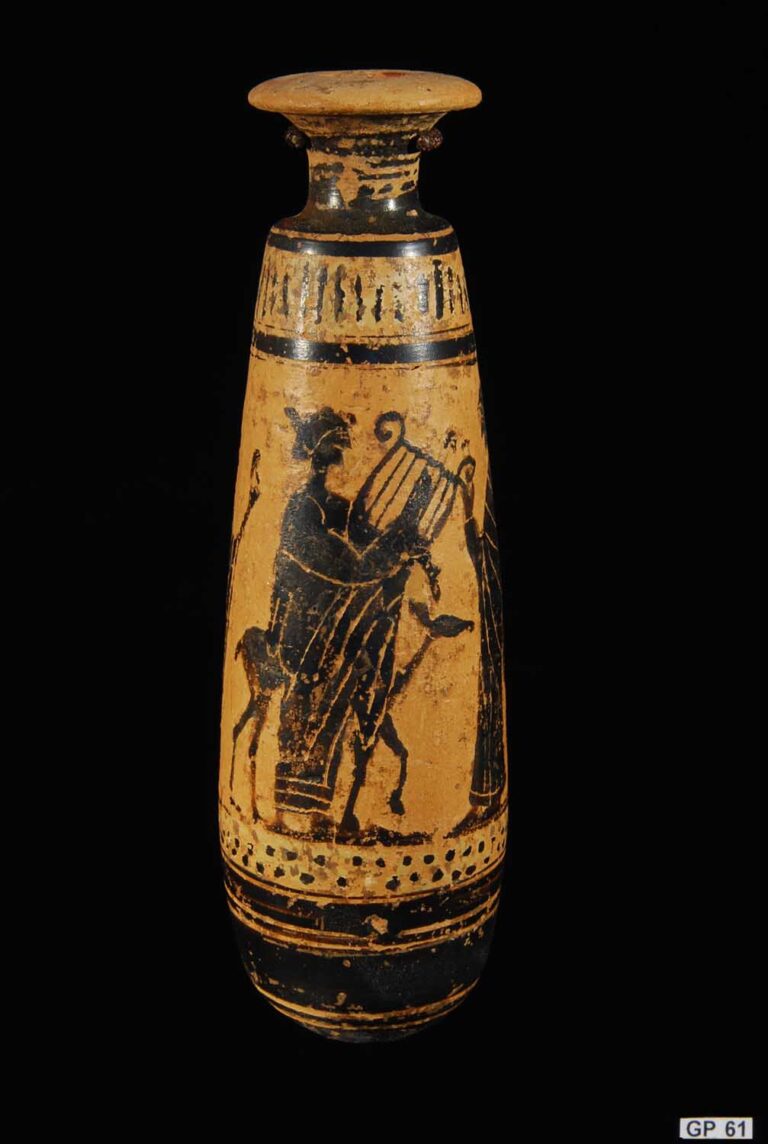
Catalogue No.: GP61
Title: Attic Black-Figure Alabastron
Date: Early 5th Century BC
Culture: Greek
Origin: Attica
Material: Fine Buff Clay with Black and White Pigments
Dimensions: 153 mm (Height) x 46 mm (Width)
Description
This early 5th century BC Attic black-figure alabastron is a masterwork of ancient Greek pottery, showcasing the refined artistry and intricate techniques of the era. Crafted from fine buff clay, this alabastron is distinguished by its sophisticated cylindrical form, gracefully tapering to a narrow neck and flared mouth, which exemplifies the precision and skill of its creators.
The body of the alabastron is adorned with a meticulously detailed frieze featuring five figures, painted against a buff-colored natural ground and encircled by elegant black concentric bands that enhance the visual depth of the design. The scene is a vibrant tableau of divine reverence, depicting gods including Hermes and Apollo in a moment of homage to Hera. Hermes is easily recognizable with his characteristic caduceus, while Apollo is depicted with a kithara, a musical instrument associated with this god of music and the arts, and a fawn, symbolizing his connection to nature and the wild.
The figures are rendered in the black-figure technique, where the silhouettes of the gods are brushed in a glossy black slip that turns deep black upon firing, while finer details are incised into the figures, allowing the buff color of the clay to show through. This technique highlights the exquisite line work and attention to detail, such as the delicate patterns on the clothing and the expressive postures of the figures, which convey a narrative of celestial dignity and grace.
The use of black and white pigments not only provides stark visual contrasts but also emphasizes the sophisticated compositional arrangement and the skillful execution of the ancient craftsmen. The pigments have remained vivid through the centuries, suggesting the use of high-quality materials and advanced pottery techniques of the time.
This alabastron is not merely a vessel; it is a piece of cultural narrative, encapsulating the religious and artistic values of its time. It reflects the pervasive influence of mythology in everyday Greek life, where such beautifully adorned objects would have been used in both daily activities and ceremonial contexts, possibly for holding precious oils or perfumes. The imagery on the alabastron serves as a testament to the interconnectedness of art, religion, and daily life in ancient Greece, making this artifact a valuable piece for both its historical significance and its breathtaking craftsmanship.
Cultural Relevance
The cultural significance of this alabastron is profound, as it captures the essence of ancient Greek life, weaving together elements of mythology, religion, and daily practices. The artifact’s intricate decoration, featuring deities such as Hermes and Apollo, highlights the pervasive influence of mythological figures in Greek culture. These figures were not mere artistic embellishments but were integral to the spiritual and societal fabric, reflecting their roles in rituals and everyday activities.
The presence of these divine figures on an alabastron—a vessel commonly used to store precious oils and perfumes—illustrates the deep connection between daily life and religious observance in ancient Greece. Oils and perfumes held significant value, utilized not only for personal grooming and health but also as offerings in religious ceremonies, reinforcing the sacredness of the physical body and its care within Greek religious practices.
Additionally, the alabastron itself, with its elegant form and practical functionality, symbolizes the integration of beauty and utility. This duality was characteristic of Greek society, where even the most utilitarian objects were crafted with an eye toward aesthetic delight and symbolic depth. By incorporating such rich imagery and functionality, the alabastron served as a vital cultural artifact within both domestic spheres and sacred temple contexts, underscoring its importance across various facets of Greek life.
Provenance and Legality Documentation
Provenance History
This alabastron boasts a well-documented and illustrious provenance, having been part of several esteemed collections over the years, including the notable Paul Freeland Collection and the Duke of Northumberland Collection. The inclusion in these prestigious collections not only enriches its historical value but also serves as a robust verification of its authenticity, enhancing its standing in the realm of ancient artifacts.
Legal Documentation
Accompanied by comprehensive legal documentation, this alabastron is verified for both its authenticity and legal ownership. The artifact fully complies with all international legal standards governing the trade and export of antiquities. This rigorous documentation ensures that the alabastron is a legally compliant piece, making it an attractive and secure option for acquisition by collectors and institutions alike.
Investment Consideration
The historical significance, remarkable state of preservation, and unique artistic depiction of this alabastron make it an exceptional investment opportunity for collectors and cultural institutions. Its exquisite craftsmanship and solid provenance substantially increase its potential for value appreciation. As a rare and authentic piece of ancient art, it represents a tangible connection to the cultural heritage of ancient Greece, promising not only aesthetic and scholarly rewards but also financial benefits as its rarity and desirability continue to grow in the art market.
Exhibition
This alabastron is a centerpiece within our museum’s collection, dramatically showcasing the rich artistry and deep mythology of ancient Greece. By displaying this piece, the museum offers visitors a profound insight into the complex interplay of art and myth that characterized Greek culture, thereby enhancing their appreciation and understanding of Greek artistic and cultural achievements. Its presence helps narrate the story of ancient Greek society, making it a crucial educational and cultural artifact.
Educational Value
This alabastron serves as a powerful educational tool, providing deep insights into the pottery techniques, iconography, and mythological themes prevalent in ancient Greece. It is particularly valuable for academic studies, offering scholars and students alike a direct link to the artistic methods and cultural narratives of the past. Through its detailed depiction and preservation, this artifact enhances public understanding of the role of pottery in daily and ceremonial contexts in ancient Greece, thereby enriching the educational content of collections and exhibitions it features in.
References
- “Greek Vase-Painting and the Origins of Visual Humour” by Alexandre G. Mitchell provides context for the iconography and stylistic elements seen in black-figure pottery.
- “The Art of Ancient Greece: Sources and Documents” by J.J. Pollitt, which compiles key historical texts relating to Greek art and pottery.