Catalogue No.: GP62
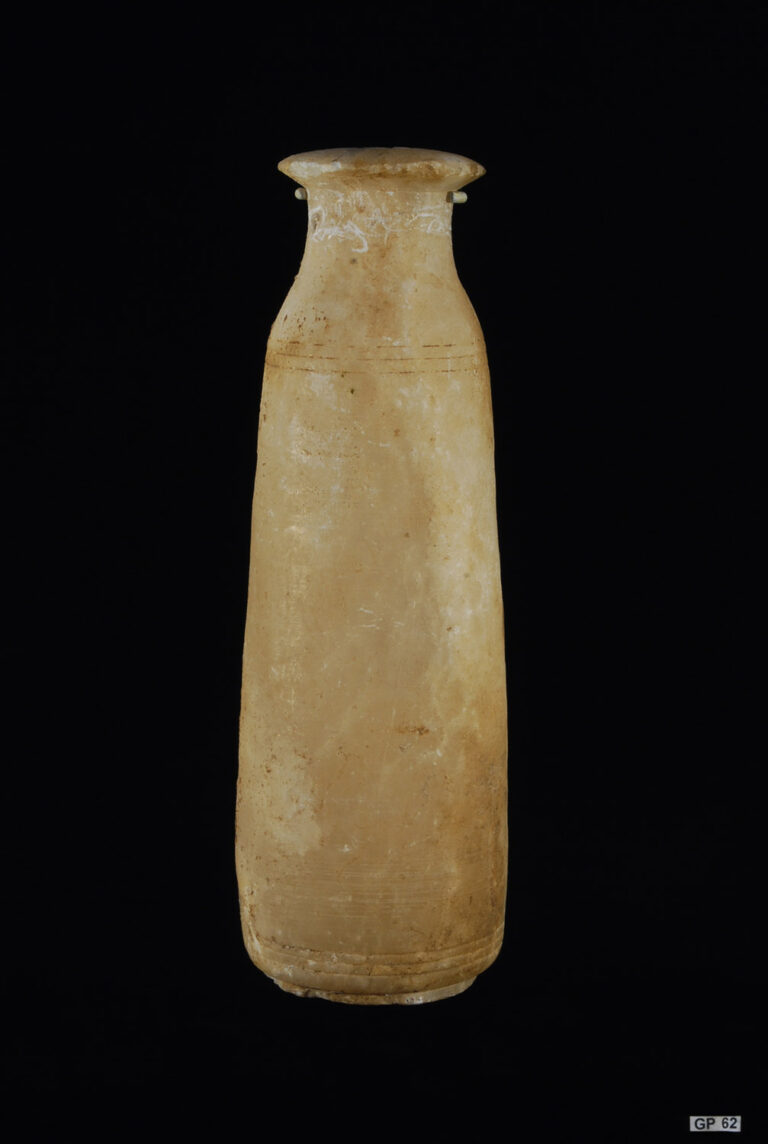
Catalogue No.: GP62
Title: Ancient Eastern Greek Alabastron
Date: 4th-3rd Century BC
Culture: Greek
Origin: Magnae Graecia
Material: Calcite
Dimensions: 185 mm (Height) x 61 mm (Width)
Description
This ancient Eastern Greek alabastron from the 4th to 3rd century BC exemplifies the elegance and functionality that typify Hellenistic period craftsmanship. Crafted from fine calcite, a material chosen for its durability and aesthetic appeal, this vessel stands out for its tall, slender form and polished surface, which showcases the natural beauty and subtle glow of the stone.
The alabastron is adorned with a minimalistic yet sophisticated design feature: a series of three incised lines that encircle the shoulder and the base of the vessel. These lines not only enhance the alabastron’s visual appeal but also underscore the precision and attention to detail of the artisans of that era. The broad, rounded lip and the flat, stable base are characteristic of alabastra, which were traditionally used to store and dispense aromatic oils and perfumes—substances integral to daily grooming and religious rituals in ancient Greece.
The calcite’s natural translucency is particularly striking, allowing light to pass through and illuminate the vessel’s contents, adding a magical quality to its appearance and use. This feature would have made the alabastron not just a container for precious substances but also an object of beauty and fascination, enhancing the ritualistic and everyday significance of its use.
Historically, alabastra like this one were more than mere containers; they were a part of the daily lives of their owners, featuring prominently in both domestic settings and sacred spaces. The choice of calcite as a material, with its glowing translucence and smooth texture, speaks to the cultural appreciation of beauty and craftsmanship, as well as the practical and ceremonial uses of such vessels.
This alabastron is not only a testament to the technological advancements of its time but also a reflection of the cultural and artistic sensibilities of ancient Greece. Its preservation and the craftsmanship it demonstrates make it a pivotal artifact, offering deep insights into the interplay between daily life and artistic expression in an era rich with history and innovation.
Cultural Relevance
This alabastron, crafted from fine calcite, embodies the profound integration of art, culture, and daily life characteristic of ancient Greek society. Alabastra were essential to the Greeks not only for their practical uses in storing aromatic oils and perfumes—substances vital for grooming, medicinal purposes, and religious ceremonies—but also as objects of aesthetic and cultural significance. The choice of calcite, prized for both its enduring beauty and physical robustness, underscores the cultural value attributed to such vessels, elevating them beyond mere utility to symbols of personal elegance and social status.
The minimalist yet refined design of this alabastron reflects a period in Greek history where craftsmanship was deeply intertwined with everyday life and spiritual practice. The vessel’s elegant form and the luminous quality of the calcite highlight the ancient Greeks’ appreciation for beauty and their mastery in merging it with functional design. Such objects were not only used in private homes but were also integral in public and religious settings, facilitating the communal aspect of grooming and ritual observance.
Through its material and form, this alabastron serves as a testament to the sophisticated aesthetic sensibilities of the era, illustrating how the ancient Greeks placed immense value on the harmonious balance between practicality and visual appeal in their material culture.
Provenance and Legality Documentation
Provenance History
This alabastron’s provenance is meticulously documented as part of the esteemed Victor M. Pracas Collection. It has passed through several notable collections, including the Paul Freeland Collection and the Duke of Northumberland Collection. The detailed history of ownership not only enhances its value as a collectible but also solidifies its historical authenticity, making it a prized asset for both scholarly study and private collection.
Legal Documentation
Accompanied by comprehensive legal documentation, this alabastron has been thoroughly vetted to ensure its authenticity and legal ownership. It complies with all international legal standards for the trade and export of antiquities, confirming that it is a legally acquired and compliant artifact. This rigorous documentation process guarantees that the piece is ready and secure for acquisition by collectors and institutions, providing peace of mind regarding its provenance and legality.
Investment Consideration
This alabastron, with its significant historical relevance, outstanding state of preservation, and rarity due to the material and craftsmanship involved, represents a valuable asset for both collectors and institutions. The provenance of the piece, coupled with a consistent interest in Greek antiquities, not only assures its authenticity but also suggests a strong potential for appreciation in value over time. As such, it is considered a sound investment in the realm of ancient artifacts, promising both cultural enrichment and financial return.
Exhibition
Featured prominently within our museum’s collection, this alabastron offers a profound glimpse into the artistry and daily life of ancient Greece. Its display enhances the museum experience by providing visitors with a tangible connection to Greek cultural and artistic practices, highlighting the sophisticated use of materials and decorative techniques prevalent during the period.
Educational Value
As an educational resource, this alabastron is invaluable in teaching about ancient Greek pottery techniques and the innovative use of materials such as calcite. It provides significant insights into the cultural context surrounding its use, from daily functionalities to ceremonial significance. This makes it an excellent tool for academic research and public education, helping to deepen understanding of the interplay between material culture and societal values in ancient Greece.
References
- “Greek Art and Archaeology” by John G. Pedley provides a detailed exploration of Greek pottery and materials, including the use of calcite.
- “The Context of Ancient Drama” by Eric Csapo and William J. Slater offers insights into the cultural significance of objects like alabastra in ancient Greek rituals and daily life.