Catalogue No.: GP64
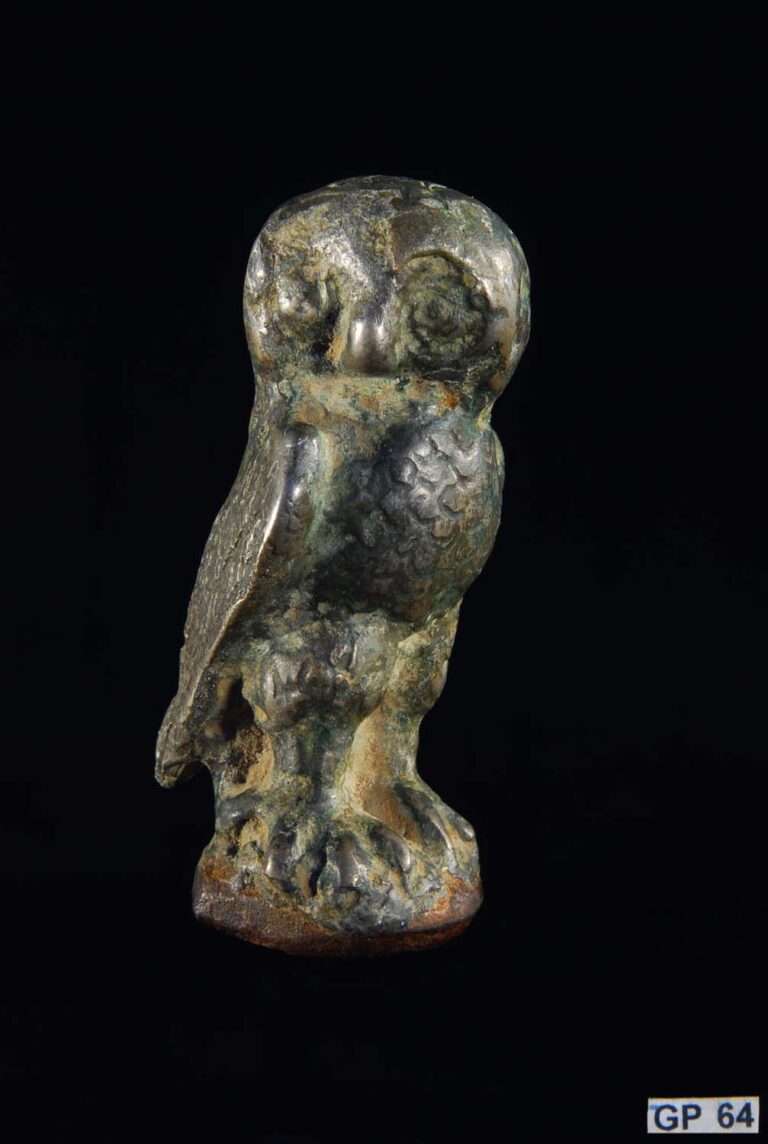
Catalogue No.: GP64
Title: Athenian Owl Statuette
Date: c. 5th century BC
Culture: Greek
Origin: Athens, Greece
Material: Silver figure on an iron pedestal
Dimensions: 76 mm (Height)
Description
This Athenian owl statuette from the 5th century BC represents the pinnacle of ancient Greek craftsmanship and artistic expression. Cast in silver and set upon an iron pedestal, the statuette exemplifies the advanced metallurgical skills of the era. Measuring 76mm in height, the statuette is a compact yet striking representation of the owl, a creature deeply emblematic of wisdom and protection in Greek mythology, particularly associated with Athena, the goddess of wisdom, the arts, and strategic warfare.
The owl’s design showcases a high level of detail, with each feather intricately cast to capture the texture and layering of a real owl’s plumage. The eyes of the owl, large and commanding, are a central feature, reflecting the animal’s symbolic attributes of foresight and vigilance. These features not only enhance the realism of the statuette but also serve to embody the protective qualities attributed to Athena, making the owl a symbol of guidance and safeguarding.
Structurally, the statuette is designed for stability and prominence, indicated by its iron pedestal which grounds the piece firmly, suggesting its use in either architectural elements or as a standalone ornamental piece in ancient settings. This dual functionality highlights the statuette’s role not only as a decorative artifact but also as a bearer of cultural and religious significance.
The cultural relevance of this piece is profound, as owls were considered auspicious symbols in ancient Athens, thought to impart wisdom and protect their bearers. This statuette, therefore, would have been highly valued not merely for its aesthetic appeal but for its spiritual and protective associations as well.
In summary, the Athenian owl statuette is an exceptional artifact that showcases the sophisticated artistry and symbolic depth of ancient Greek civilization. Its detailed craftsmanship, combined with its rich cultural symbolism and historical significance, make it an invaluable piece for both individual collectors and institutions. Displaying this statuette in a museum or educational setting would not only enhance the cultural value of the collection but also provide a tangible connection to the ancient world, enriching any educational or cultural display with its historical and artistic integrity.
Cultural Relevance
The owl, particularly the little owl (Athene noctua), holds deep emblematic ties to Athena, goddess of wisdom, in ancient Greek culture. It is a motif that recurs across a broad spectrum of media, from pottery to coinage, reflecting its pervasive role in both the mundane and spiritual spheres of Greek life. This statuette of the owl exemplifies its cultural importance, illustrating how this revered bird symbolized wisdom and protection for the Athenians.
In Athens, the owl was not only a symbol of intellectual and mystical insight but also a herald of good fortune. Believed to possess protective qualities, owls were omnipresent in both public monuments and private dwellings, serving as guardians against misfortune. This widespread use underscores the owl’s integral role in daily life and religious practices, symbolizing the Athenians’ respect for wisdom as a protective force.
This Athenian owl statuette, therefore, embodies more than artistic mastery—it encapsulates the profound spiritual and cultural values of ancient Greece, where art and symbolism converged in objects of everyday life. Displaying this piece offers viewers not only a glimpse into the artistic practices of the era but also into the symbolic heart of Athenian society.
Provenance and Legality Documentation
Provenance History
The Athenian owl statuette is part of the esteemed Victor M. Pracas Collection, known for its rigorously documented and significant artifacts. This particular piece boasts a traceable lineage that includes its presence in several high-profile collections, notably the Paul Freeland Collection and the Duke of Northumberland Collection. These collections are celebrated for their extensive arrays of historically and culturally significant artifacts, which substantiate the authenticity and enrich the narrative of this statuette’s provenance.
Legal Documentation
Legally, this statuette adheres to all international standards required for the trade and export of antiquities. It is accompanied by thorough legal documentation that confirms its authenticity and legal ownership, ensuring compliance with legal norms for cultural heritage objects. This documentation facilitates the statuette’s lawful sale and export, providing potential buyers and institutions with assurance of its legality and provenance. This robust legal framework not only protects the statuette but also ensures that its transfer between owners and across borders is transparent and secure.
Investment Consideration
This Athenian owl statuette is an exceptional investment, underpinned by its profound historical and cultural significance, its rarity, and its iconic connection to the goddess Athena. Its well-documented provenance and the enduring fascination with Greek antiquities enhance its desirability, suggesting it holds substantial potential for appreciation in value. Collectors and institutions alike may find this piece not only a compelling addition to their collections but also a potentially lucrative asset in the long term, given the consistent demand for authentic and significant artifacts from ancient Greece.
Exhibition
Currently, this owl statuette graces our museum’s collection, playing a pivotal role in educating visitors about ancient Greek culture and artistic achievements. Its presence helps to deepen visitors’ appreciation of the sophisticated craftsmanship and rich symbolism that typified Greek civilization, particularly in its representation of deities and their associated attributes in everyday objects.
Educational Value
As an educational resource, the owl statuette provides profound insights into ancient Greek symbolism, religion, and artistic practices. It serves as an invaluable tool for academic exploration and public education, enriching curricula and exhibitions with its detailed embodiment of Greek cultural identity. This statuette not only supports the learning of ancient art forms but also helps in understanding the integration of art, religion, and daily life in ancient Athens, making it an essential element of educational programs focused on classical studies
References
Documentation and research confirm the statuette’s authenticity and historical significance, supported by academic works on Greek art and mythology that discuss the symbolic importance of owls in ancient Greece.