Catalogue No.: GP68
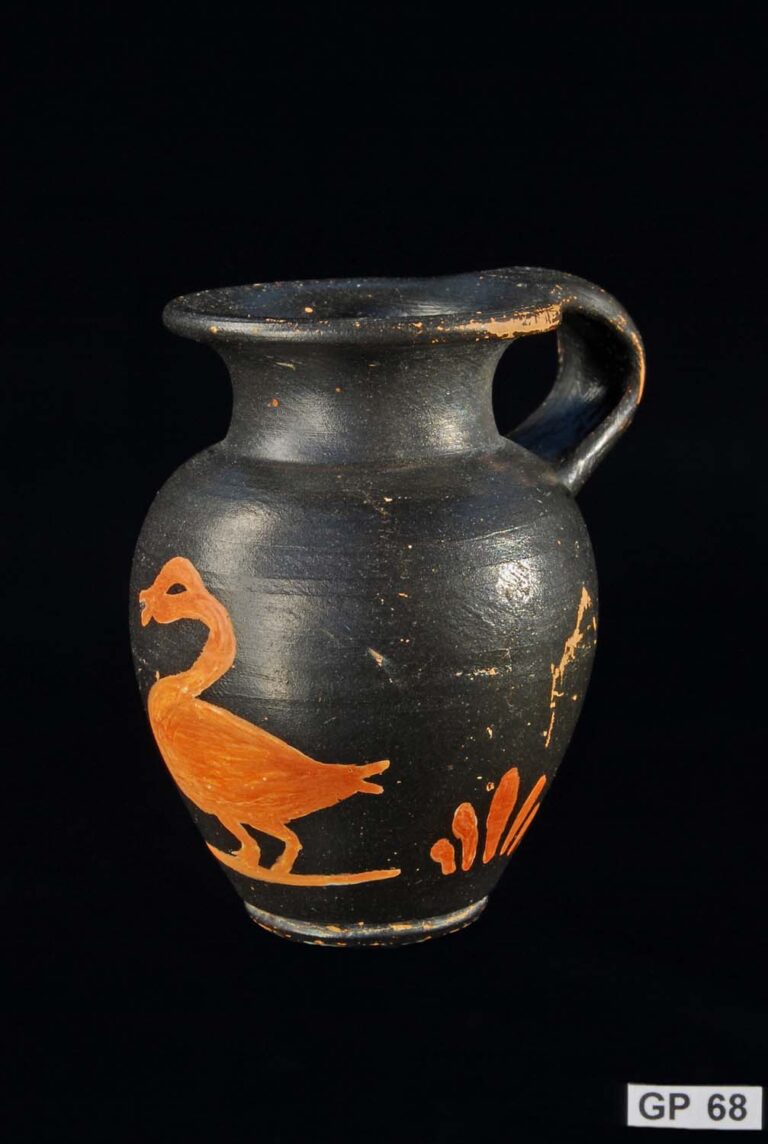
Catalogue No.: GP68
Title: Greek Xenon-ware Miniature Oenochoe
Date: 4th century BC
Culture: Greek
Origin: Southern Italy
Material: Ceramic, metallic black glaze with orange pigment decoration
Dimensions: 55 mm (Width) x 50 mm (Height)
Description
This exquisite Greek Xenon-ware oenochoe from the 4th century BC is a testament to the advanced ceramic techniques and artistic expression of Southern Italy. The vessel is characterized by its metallic black glaze, a signature of Xenon-ware, which serves as a dramatic backdrop to the vibrant orange pigment that adorns its surface. The decoration features a stylized bird, elegantly rendered with flowing lines that suggest motion and vitality, symbolizing the Greeks’ reverence for nature and their belief in the transformative power of art.
The oenochoe’s form is both functional and aesthetically pleasing. It boasts a rounded body that gently tapers to a narrow foot, allowing for stability and ease of handling. The gracefully arched handle is meticulously crafted, balancing the piece and facilitating ease of pouring. The flared spout, designed to control the flow of liquid, exemplifies the practical considerations inherent in Greek pottery design, ensuring that form and function are in perfect harmony.
The decoration on the oenochoe goes beyond mere ornamentation; it is deeply imbued with cultural significance. The bird motif, often associated with freedom and the soul’s journey, may also connect to Dionysian imagery, where birds are frequently symbols of the god’s liberating and chaotic energy. This imagery invites contemplation of the oenochoe’s role not just in daily life but in the spiritual and ritualistic practices of the time.
This piece is not merely a container for wine; it is a symbol of the sophisticated interplay between utility and beauty in Greek ceramics. The careful balance of its proportions and the skill evident in its decorative motifs speak to a culture that valued symmetry and detail. As such, this oenochoe offers invaluable insights into the ancient world, providing a window into the daily and ceremonial practices that defined Greek life, making it an essential piece for both collectors and scholars interested in the richness of ancient Mediterranean art and culture.
Cultural Relevance
The oenochoe was an integral component of ancient Greek culture, serving both practical and ceremonial purposes. It was essential for transferring wine from large storage kraters to individual drinking cups, facilitating the communal sharing of wine that characterized both everyday meals and elaborate symposia. The presence of the oenochoe at these gatherings underscores its importance in social interactions and hospitality rituals of the time.
The decorative bird motif on this particular oenochoe enriches its cultural significance. In Greek mythology, birds are often seen as messengers of the gods or as symbols representing the human soul’s journey, adding a layer of spiritual meaning to the vessel. This imagery could suggest a connection to Dionysian rituals, where the consumption of wine served as a medium for ecstatic liberation and communion with the divine. Such associations indicate that the oenochoe was more than just a functional item; it was imbued with symbolic meanings that resonated with the spiritual and mythological landscape of ancient Greece.
This oenochoe thus stands as a testament to the sophisticated blend of daily utility and profound symbolism in Greek ceramics. It offers invaluable insights into how artistry and functionality were interwoven in the material culture of ancient Greece, reflecting the civilization’s intricate beliefs and the aesthetic values that permeated even the most routine aspects of Greek life. Through its study, we gain a deeper understanding of the ancient Greeks’ approach to life, where beauty and utility seamlessly converged in objects that served both earthly and divine purposes.
Provenance and Legality Documentation
Provenance History
This piece comes from the Victor M. Pracas collection, noted for its diverse and well-documented artifacts acquired from significant historical collections including the Paul Freeland and R.J. Upland Esq. collections. The documented history enhances its authenticity and enriches its narrative.
Legal Documentation
The oenochoe has been thoroughly vetted and comes with documentation certifying its authenticity. It complies with all applicable laws for acquisition and display, ensuring that it can be legally owned and potentially exported without restriction.
Investment Consideration
This oenochoe is a prime acquisition for both private collectors and public institutions, distinguished by its historical significance and exceptional craftsmanship. Its excellent state of preservation and artistic merit not only enhance its aesthetic appeal but also increase its potential for appreciation in value over time. As a well-preserved example of ancient Greek ceramics, it represents a wise investment in the cultural heritage sector, likely to yield significant returns as interest in antiquities continues to grow.
Exhibition
The oenochoe is a centerpiece within our museum’s collection, where it plays a crucial role in educating visitors about the intricacies of ancient Greek life and ceremonial practices. Its display is thoughtfully curated to highlight its aesthetic qualities and historical context, making it a key artifact that enhances the museum’s ability to provide a comprehensive and engaging connection to the ancient world. This prominent exhibition not only attracts scholars and enthusiasts but also enhances the general public’s understanding of Greek culture.
Educational Value
As an educational resource, this oenochoe is invaluable. It provides profound insights into the techniques employed in ancient Greek ceramics and illustrates the cultural importance of wine in religious and social contexts. By showcasing this artifact, we offer a tangible exploration into the symbolism prevalent in Greek society, such as motifs found in Dionysian rituals. This oenochoe serves as a catalyst for deeper academic research and enriches educational programs, making it an essential tool for both scholarly inquiry and public education. Its presence in educational settings prompts a broader discussion about the socio-religious practices of ancient civilizations, thereby fostering a richer appreciation for historical and cultural studies.
References
The authenticity and significance of this oenochoe are well-supported by academic research and publications on Greek ceramics, particularly those focusing on Xenon-ware. Scholarly works by experts in ancient Greek pottery provide a deeper understanding of the artifact’s stylistic and functional contexts within the broader framework of Mediterranean archaeological studies.