Catalogue No.: GP02
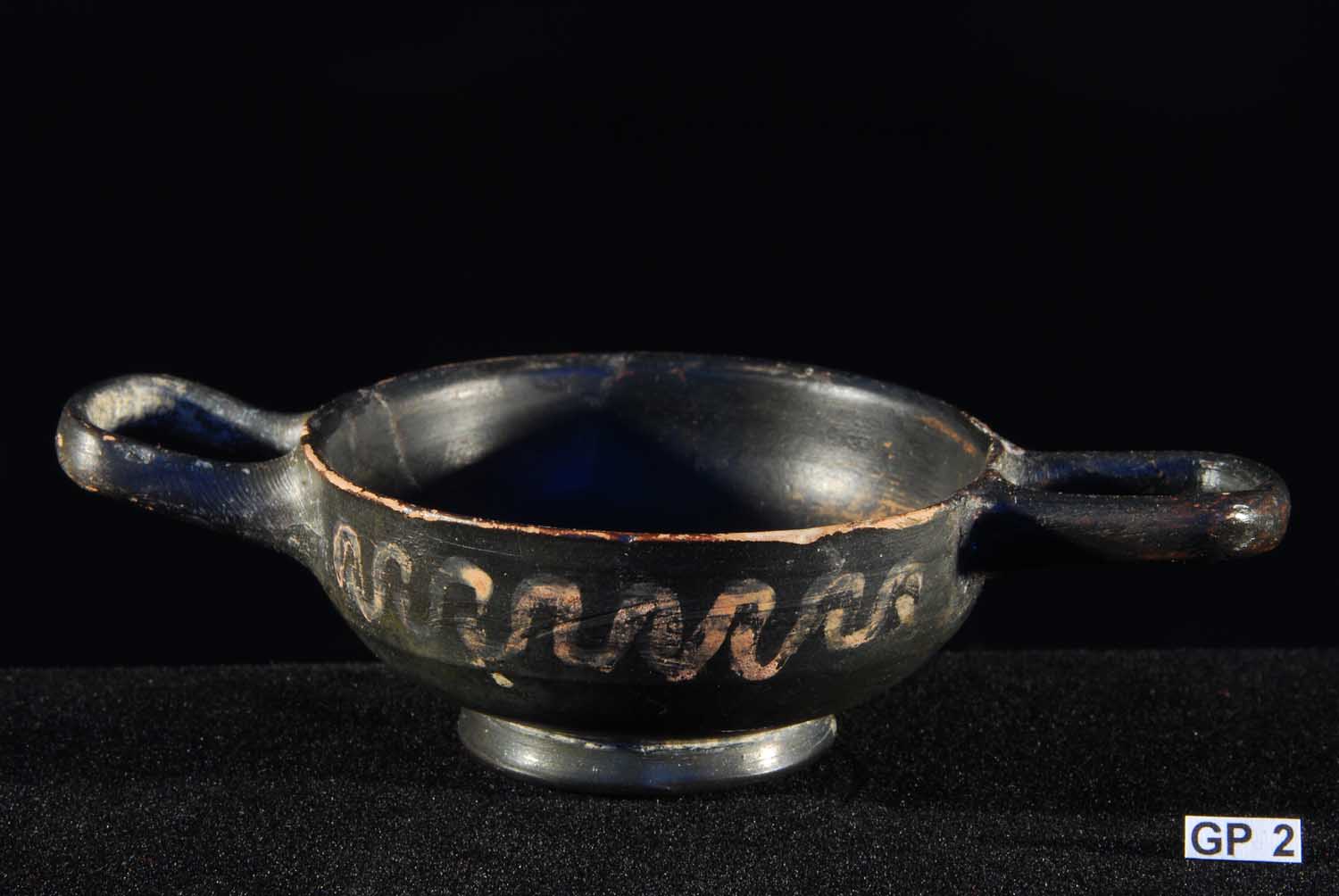
Catalogue No.: GP02
Title: Miniature Kylix – Xenon Ware
Date: 4th Century BC
Culture: Greek
Origin: Southern Italy
Material: Metallic black glazed ware with orange/red scroll design
Dimensions: 104 mm (Width) x 25 mm (Height)
Description
This Miniature Kylix, originating from the 4th century BC in Southern Italy—a region distinguished by its vibrant ceramic traditions influenced by Greek colonization—serves as an exquisite example of Greek Xenon Ware. The kylix is distinguished by its metallic black glaze, a hallmark of advanced ceramic technology that creates a reflective surface, enhancing the visual impact of the vibrant orange/red scroll designs that encircle the vessel. These scrolls, applied with precision using the slip decoration technique, reflect the high level of artistic skill and technological sophistication of the period’s artisans.
Structurally, the kylix embodies the classic design favored in ancient Greek symposia—social gatherings integral to cultural and philosophical exchanges, where wine played a central ceremonial role. Measuring 104 mm in width and 25 mm in height, its miniature stature, combined with a broad, shallow body and twin horizontal handles, suggests a specialized, possibly ceremonial use. The handles are meticulously crafted to provide a balanced grip, facilitating the ease of both drinking and passing the cup during communal rituals. The compact size and design may also indicate its role as a votive offering, potentially dedicated to Dionysus, the deity of wine and festivity.
The ornamental scrollwork on this kylix extends beyond mere decoration to carry symbolic significance. In ancient Greek art, scroll motifs often symbolize waves or flowing water, representing movement, fluidity, and the continuity of life. This symbolism, intertwined with the kylix’s function in symposia, evokes themes of life’s ephemeral nature and the communal sharing of experiences. This kylix, therefore, not only offers significant aesthetic appeal but also provides profound insights for scholarly study, reflecting the cultural values and artistic priorities of its era and enriching our understanding of the ceremonial life of the ancient Greeks.
Cultural Relevance
The Miniature Kylix provides insights into the ancient Greek symposium, an integral part of Greek social and cultural life where philosophy, politics, and arts were discussed over wine. The kylix’s form and decorations reflect its role not only as a utilitarian vessel but also as a symbol of social status and artistic expression, highlighting the interconnection of daily life and art in ancient Greek society.
Provenance and Legality Documentation
Provenance History
The Miniature Kylix was discovered during archaeological excavations in Southern Italy, a region historically influenced by ancient Greek colonization. This artifact is a part of the Victor M. Pracas collection, which is renowned for its meticulously documented and authentically verified artifacts. This collection includes pieces from several notable and historical collections such as the Paul Freeland Collection, R.J. Upland Esq. Collection, and the Lanzoni Estate Collection, among others. These pieces have been accumulated over decades, often passing from one esteemed collection to another, thereby maintaining a continuous and traceable lineage that enhances the artifact’s historical value and authenticity.
Legal Documentation
The legal status of the Miniature Kylix is thoroughly documented and robust, with no disputes regarding its authenticity or ownership. The artifact has been part of the Victor M. Pracas collection, which has been subjected to extensive legal scrutiny to ensure the legitimacy of ownership and provenance. Legal documentation includes certificates of authenticity, detailed catalog records, and valuations referenced in the collection’s official printed catalog and index. These documents have been cross-referenced and verified by reputable authorities in the field, including K.A. Hicks & Associates, who have confirmed the collection’s legal status and the absence of any legal constraints regarding the disposal or export of the kylix from Australia.
This careful documentation ensures that the artifact not only adheres to all applicable laws regarding cultural heritage and antiquities but also positions it as a legally secure investment for potential buyers, collectors, or institutions interested in acquiring historically significant pieces with clear, undisputed provenance. The comprehensive legal and provenance documentation supports the artifact’s eligibility for exhibition and sale, making it a valuable and secure addition to any collection, whether public or private.
Investment Consideration
This Miniature Kylix represents a significant investment opportunity due to its historical importance and exceptional preservation. Its authenticity, coupled with its aesthetic and historical value, positions it as a highly desirable acquisition for investors and institutions dedicated to preserving cultural heritage. The artifact’s well-documented authenticity and provenance enhance its appeal, making it a standout piece in any collection.
For collectors and cultural institutions, this kylix not only offers a direct link to ancient traditions and sophisticated ceramic techniques but also serves as a potential appreciable asset. Its association with the rich social fabric of Greek symposiums and its exquisite craftsmanship make it a strategic addition, likely to garner scholarly interest and public admiration. Investing in this kylix is an investment in a legacy of cultural preservation and appreciation, promising both intellectual enrichment and financial rewards over time.
Exhibition
While this kylix has not been exhibited externally, it remains a central piece within our collection, utilized to educate and fascinate visitors about Greek ceramic art and its role within ancient Mediterranean cultures.
Educational Value
The Miniature Kylix serves as an educational tool, providing valuable insights into ancient Greek ceramic techniques, cultural practices, and the socio-economic contexts of its time. It is instrumental in academic studies and exhibitions, enriching understanding of ancient Greek heritage.
References
The catalog entry includes citations from scholarly texts that explore the characteristics and cultural significance of Greek Xenon Ware, supporting a deeper academic study of such artifacts and their historical contexts.