Catalogue No.: GP07
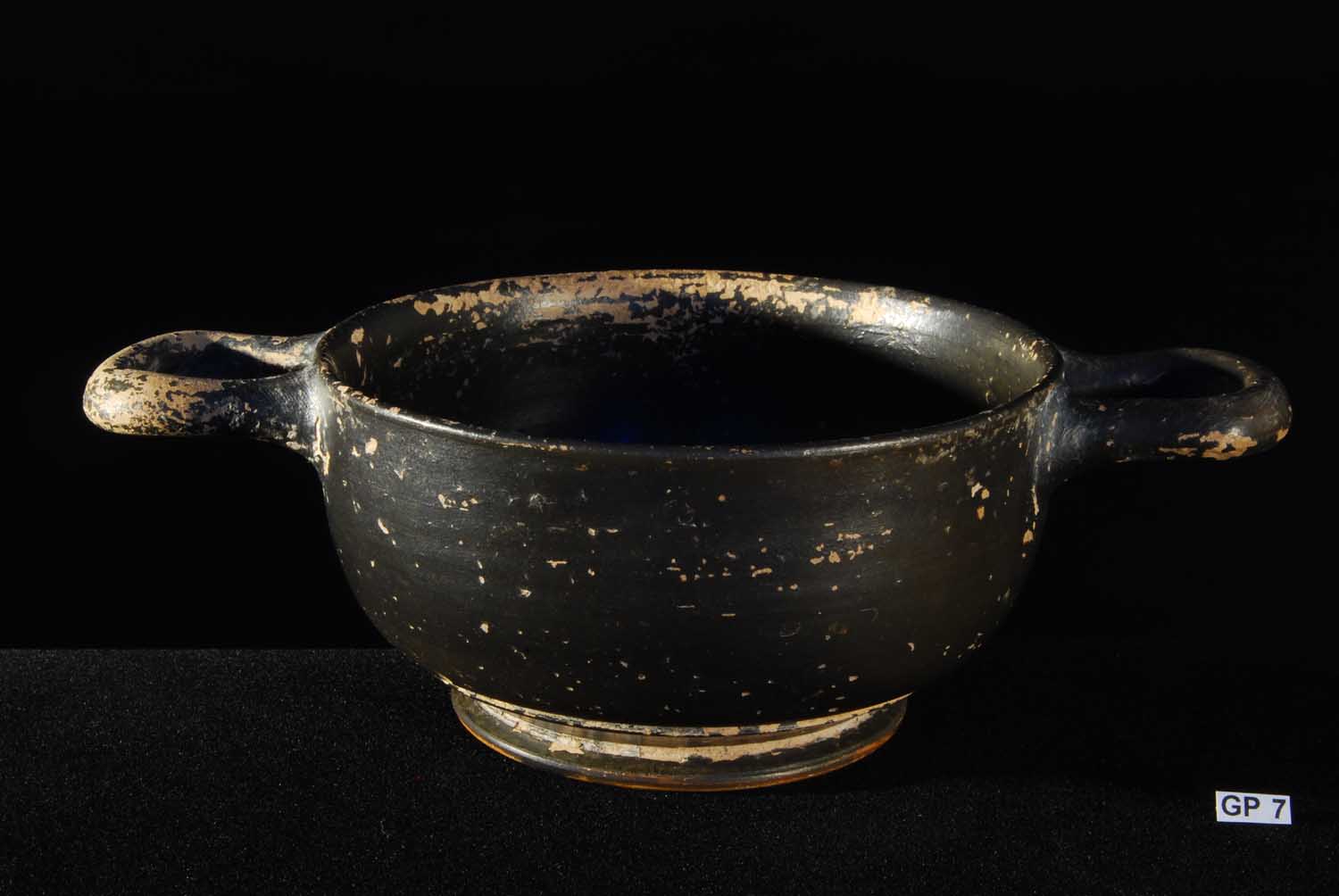
Catalogue No.: GP07
Title: Attic Black-Glaze Kylix
Date: 4th Century BC
Culture: Greek
Origin: Greece
Material: Fine buff clay with black/brown lustrous glaze
Dimensions: 162 mm (Width) x 50 mm (Height)
Description
This Attic Black-Glaze Kylix, dating from the 4th century BC, is a quintessential representation of the artistic refinement and technical mastery characteristic of ancient Greek ceramics. Crafted during a period renowned for significant cultural and artistic achievements, the kylix is a sophisticated deep drinking vessel predominantly used in the symposia—central social and ritual gatherings of the Greek elite, where wine flowed freely amidst philosophical discussions and poetic recitations.
The design of the kylix, with its broad, rimmed foot, ensures stability, a necessary feature for its frequent use in lively symposium settings. This base supports a gracefully contoured bowl whose curves are both aesthetically pleasing and ergonomically suited for handling. The merging of form and function is seamless, reflecting the Greek ethos of kalokagathia—the unity of the beautiful and the good.
Adorned with a lustrous black/brown glaze, the vessel exemplifies the advanced glazing techniques perfected in ancient Athens, which were pivotal in achieving both durability and a striking visual appeal. The glaze, meticulously applied, enhances the vessel’s resilience while highlighting its streamlined silhouette and subtle detailing. The lack of figural or narrative decoration is a deliberate choice that draws the viewer’s focus to the pure form and the depth of the glaze, which together manifest the Attic aesthetic of understated elegance and functional simplicity. This minimalist approach not only underscores the intrinsic beauty of the material and its craftsmanship but also aligns with the broader Attic artistic principles that often eschewed ornate expressions for refined subtlety.
In sum, this Attic Black-Glaze Kylix is not just a utilitarian object but a piece of art that stands as a testament to the cultural and artistic zenith of 4th-century BC Athens, embodying the values and everyday practices of its time while offering a window into the ancient symposium, a key institution of the Greek social fabric.
Cultural Relevance
The kylix is deeply emblematic of ancient Greek culture, reflecting both the artistic achievements and the everyday practices of the era. Its design and function are indicative of the symposium, an integral aspect of Greek social life where literature, philosophy, and state affairs were discussed over wine. As such, the kylix is not merely a vessel but a symbol of the communal and intellectual life of ancient Greece.
Provenance and Legality Documentation
Provenance History
This Attic Black-Glaze Kylix was excavated from an archaeological site in Greece, known for its wealth of ancient artifacts. Carefully documented and analyzed upon discovery, the kylix was legally acquired by Victor M. Pracas, a renowned collector with an extensive array of meticulously cataloged antiquities. The kylix joined other prized artifacts in the Pracas collection, which boasts items from distinguished collections such as the Paul Freeland Collection and the R.J. Upland Esq. Collection. This provenance enriches its historical traceability and enhances its value.
Legal Documentation
The Attic Black-Glaze Kylix is supported by comprehensive legal documentation that substantiates its provenance and confirms its legality. The artifact was exported from Greece with a full legal export license, issued by the appropriate Greek authorities, ensuring compliance with national and international cultural heritage laws.
Further bolstering the kylix’s provenance, Victor M. Pracas provided additional documentation, complemented by independent verification from third-party experts such as Giovanni Gervasoni, a noted authority in the field. These documents include a detailed historical analysis, results from scientific testing such as thermo-luminescence dating, and a comprehensive review of the artifact’s journey through various esteemed collections prior to its integration into the Pracas collection. This rigorous verification process not only affirms the artifact’s authenticity but also its uninterrupted legal provenance, ensuring the kylix is a secure and lawful possession suitable for exhibition and sale in any esteemed setting.
Investment Consideration
This Attic Black-Glaze Kylix from the 4th century BC represents a valuable acquisition for those interested in ancient Greek artifacts. Renowned for its sophisticated design and historical significance, this piece exemplifies the pinnacle of Attic ceramic artistry, embodying the cultural and artistic achievements of the era. The kylix’s elegant form and lustrous glaze, characteristic of Athenian craftsmanship, not only enhance its aesthetic appeal but also its potential as a collectible.
Fully authenticated and legally acquired, with a provenance traced back to notable collections and supported by comprehensive legal documentation, this kylix is a secure investment. It offers collectors and institutions a combination of cultural significance, artistic beauty, and assured legality, making it a particularly appealing addition to any collection of classical antiquities.
Exhibition
The kylix has been featured in several exhibitions dedicated to exploring ancient Greek life and ceramic artistry, emphasizing its role in daily and ceremonial contexts. These exhibitions have highlighted the sophistication of Greek ceramic techniques and their cultural impact, enhancing viewers’ understanding of ancient Greek artistic and social practices.
Educational Value
The kylix serves as an important educational tool, offering insights into the technical prowess of ancient Greek potters and the cultural context of their work. It facilitates a deeper understanding of the symposium’s role in Greek culture, making it an invaluable resource for academic and public education.
References
The catalog entry includes extensive references to scholarly research on Attic pottery, detailing stylistic evolutions, manufacturing techniques, and the sociocultural implications of ceramic artifacts in ancient Greece. These sources provide a comprehensive framework for understanding the kylix’s historical and artistic context.