Catalogue No.: GP16
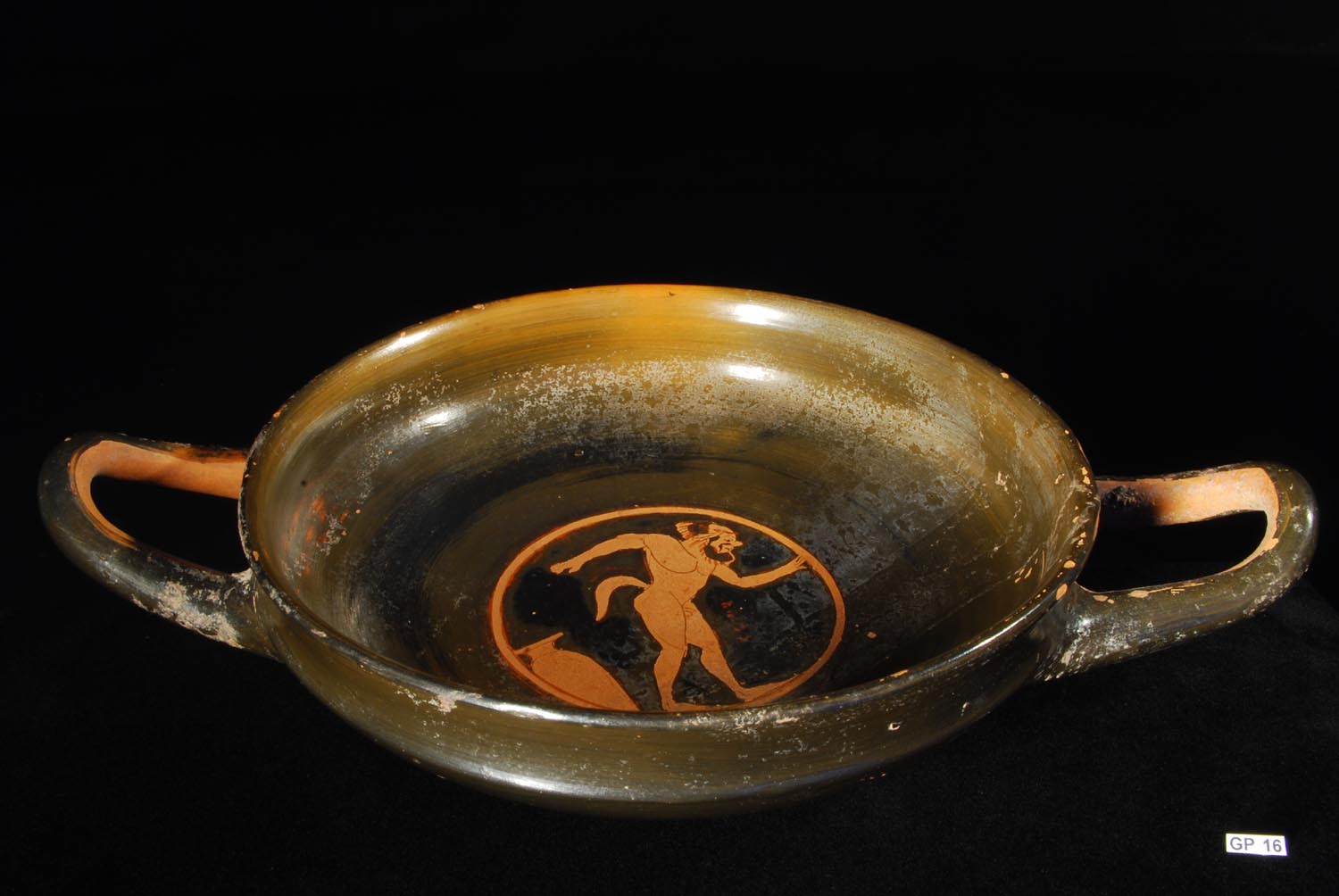
Catalogue No.: GP16
Title: Athenian Red-Figure Kylix
Date: 5th – 4th Century BC
Culture: Greek
Origin: Athens, Greece
Material: Fine terracotta with dark glaze
Dimensions: 55 mm (Height) x 292 mm (Width)
Description
This Athenian Red-Figure Kylix is a masterful representation of the classical Greek ceramic tradition, specifically during its peak between the 5th and 4th centuries BC in Athens. As a quintessential example of red-figure pottery, this kylix showcases the highly skilled artistry that ancient Greek potters were celebrated for. The vessel is primarily used in social and ritual contexts, particularly in the symposium—an integral part of Greek social life where literature, philosophy, and politics were discussed over drinks.
The central tondo of the kylix is exquisitely detailed, depicting a bearded satyr in mid-motion, embodying the wild and unrestrained spirit associated with Dionysian festivities. The satyr, a follower of Dionysus, the god of wine, fertility, and ritual madness, is shown energetically clutching an amphora, perhaps in the midst of a frenzied dance. This vivid portrayal captures the essence of Dionysian cult rituals, which celebrated the physical and emotional release through wine and music.
The craftsmanship is highlighted by the use of dark red highlights against a rich, black glaze background, a technique that enhances the visual impact of the figure’s dynamic posture and expressive facial features. This contrast not only emphasizes the satyr’s vigorous movement but also enhances the emotional depth of the scene, inviting viewers to contemplate the cultural and religious significance of Dionysian worship in ancient Athens.
Moreover, the kylix’s form, with its shallow bowl and high-swung handles, is designed to facilitate the easy passing of wine among guests at a gathering, reinforcing its functional and communal role in ancient Greek society. The design and decoration of the kylix thus reflect both the artistic excellence of Athenian potters and the cultural practices of the time, making it an invaluable piece for understanding the interplay between art, society, and religion in classical antiquity.
Cultural Relevance
The kylix’s imagery, including the inscribed word “KALOS,” reflects the ancient Greek appreciation of beauty and virtue, integral to their artistic expression and public life. This piece serves as a window into the symposium culture, highlighting the social and religious fabric of ancient Athens where such vessels were central to communal and ceremonial wine drinking.
Provenance and Legality Documentation
Provenance History
Originating from the renowned cultural and artistic center of ancient Athens, this kylix exemplifies the pinnacle of Attic red-figure pottery. Known for its intricate figural decoration and refined finish, Attic pottery like this was not merely utilitarian but also held significant roles in both daily life and broader ceremonial contexts. This piece underscores Athens’ central role in advancing ceramic arts, which left a lasting impact on various Mediterranean artistic traditions. The craftsmanship evident in this kylix speaks to a sophisticated understanding of form and narrative in art, characteristics held in high esteem in Athenian society.
Legal Documentation
This kylix has undergone meticulous authentication processes, supported by detailed documentation that confirms its provenance and assures its authenticity. In line with stringent cultural heritage regulations, it has been legally exported from Greece, accompanied by all necessary permits and clearances. This rigorous adherence to legal and ethical standards ensures that the kylix meets international criteria for cultural artifacts, thereby affirming its status as a legitimately acquired and freely tradeable piece. The comprehensive verification process aligns with best practices as outlined in the Victor M. Pracas documentation, which emphasizes the importance of legal provenance in the stewardship of ancient artifacts.
Investment Consideration
This Athenian Red-Figure Kylix not only embodies the exquisite craftsmanship and historical authenticity of classical Greek art but also represents a significant cultural artifact with substantial investment potential. Originating from Athens, the epicenter of ancient art and philosophy, this kylix reflects the sophisticated aesthetic and technological advancements of the period. Its fine execution and the historical importance of Athenian red-figure pottery contribute to its intrinsic and increasing monetary value.
For collectors and institutions, acquiring such a piece means investing in a fragment of ancient history renowned for its influence on Western art and culture. The kylix’s provenance and the meticulous adherence to preservation and legal standards amplify its desirability, making it a standout candidate for notable public exhibitions and private collections. As such, it holds promising prospects for appreciation in value, driven by its rarity, documented authenticity, and cultural significance.
This artifact not only offers an opportunity to own a piece of ancient artistic heritage but also serves as a potential focal point for educational programs and scholarly research, further enhancing its value to investors who seek to combine cultural enrichment with financial gain.
Exhibition
This kylix has been prominently featured in exhibitions dedicated to exploring classical antiquity, emphasizing the artistic achievements of Athenian pottery and its influence on social customs. Its display helps educate visitors about the sophisticated artistry and cultural practices of ancient Greece.
Educational Value
The Athenian Red-Figure Kylix is an invaluable educational resource, providing insights into the ancient techniques of pottery, the symbolic language of Greek mythology, and the societal roles of such artifacts. It facilitates deeper understanding of ancient Greek culture, art, and mythology, particularly in the context of Athenian societal rituals.
References
Extensive scholarly literature on Athenian red-figure pottery, including studies by eminent archaeologists and historians, provides critical insights into the techniques and historical context of such works. These resources are invaluable for both academic research and public education, enriching the understanding of this kylix’s artistic and cultural significance.